
Last updated November 2, 2026
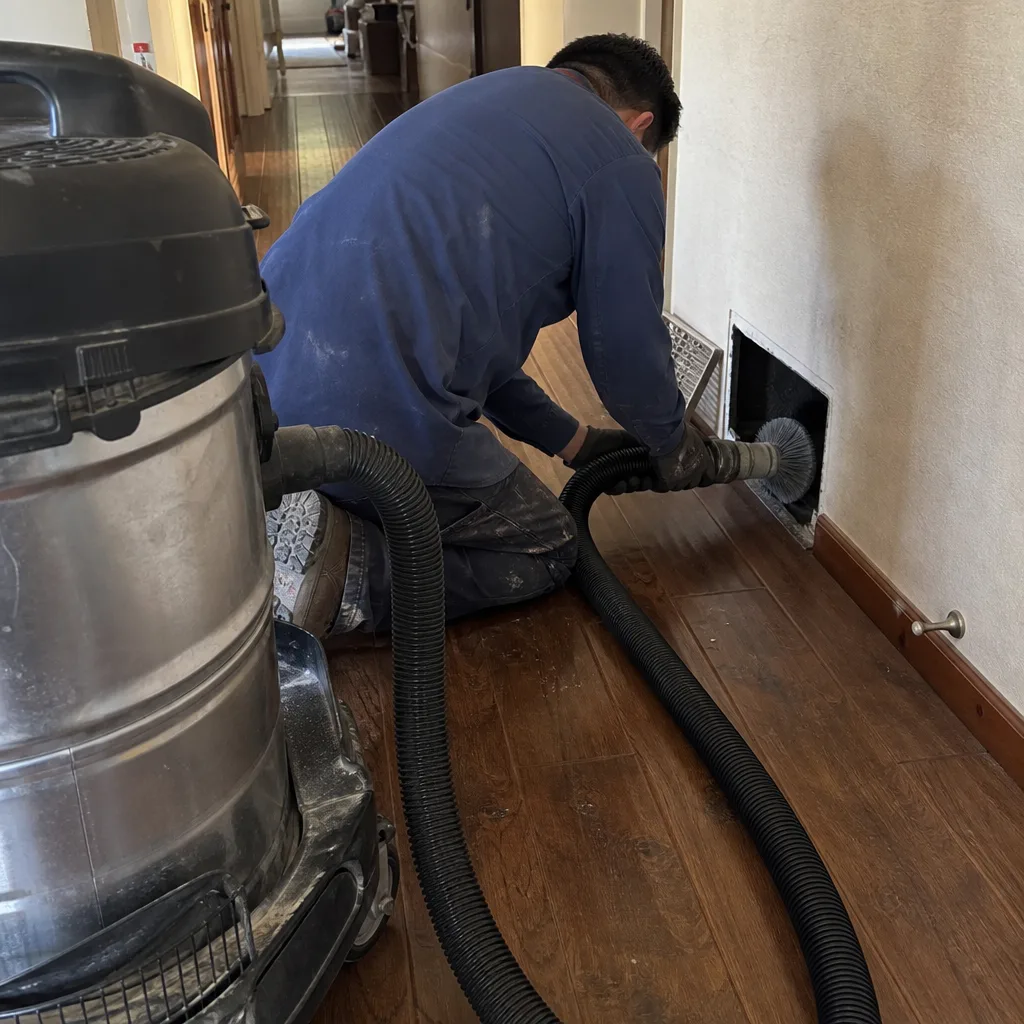
 Whole-home duct cleaning
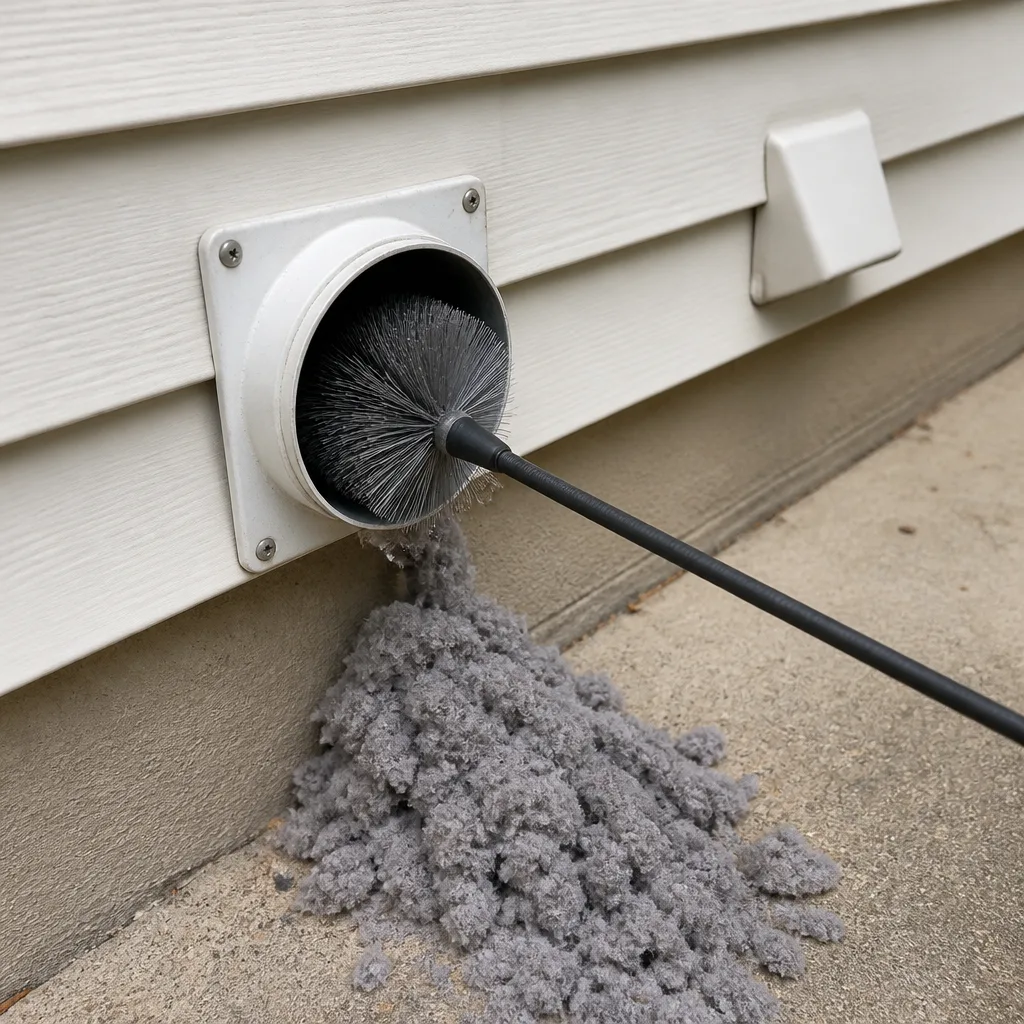 Dryer vent cleaning
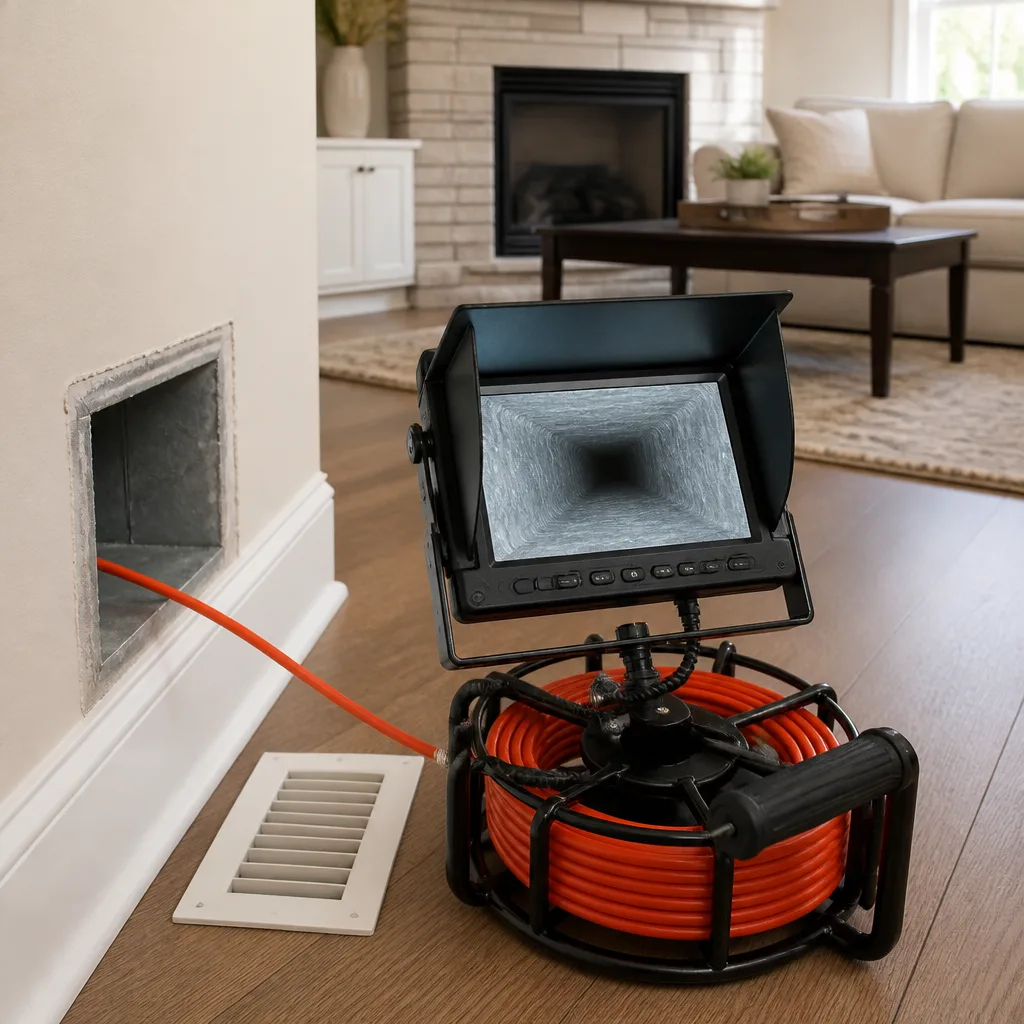 Camera inspection
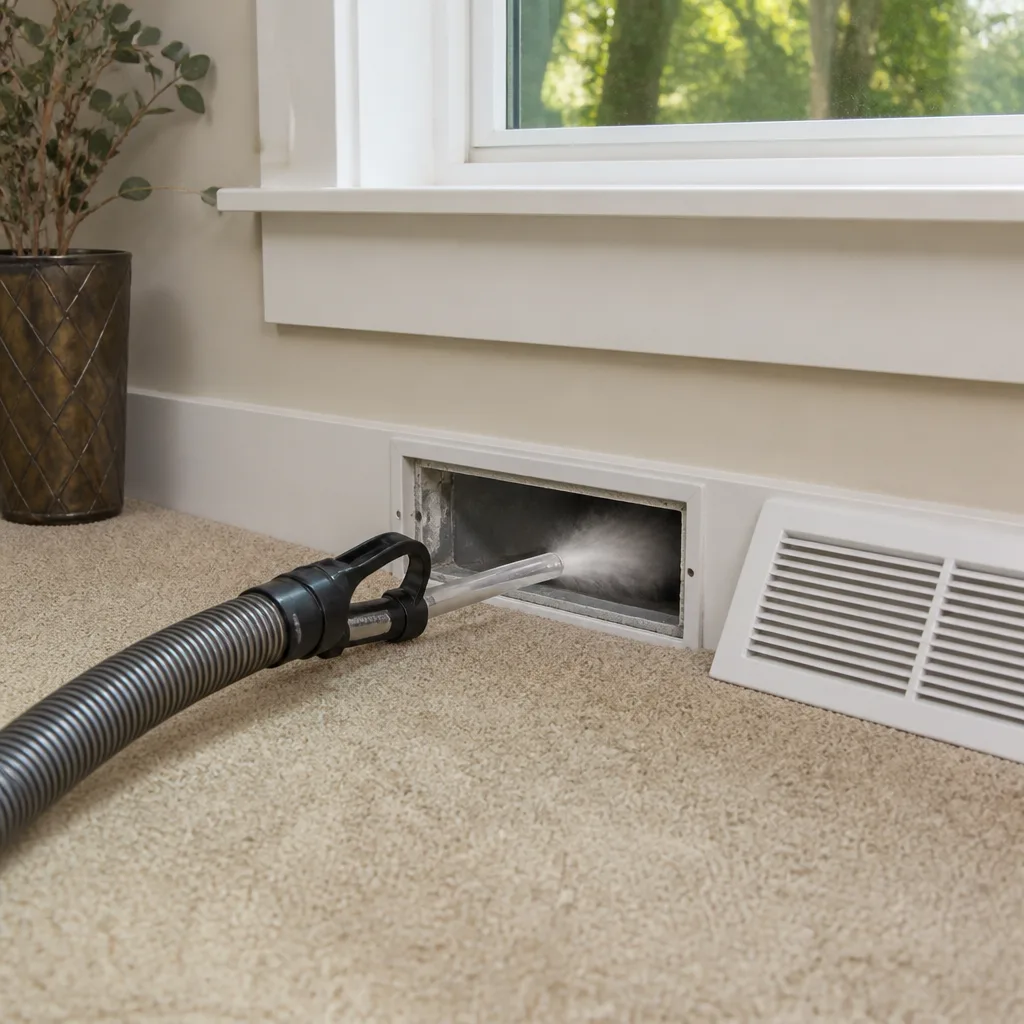 Sanitizing & deodorizing
Whole-system duct and dryer vent check with before-and-after photos - you see exactly what came out of your vents
That "$99 whole-house special" is a bait ad - the real number appears once they are in your hallway, or the "clean" is a shop-vac at the register. We photograph the inside of your ducts before and after instead.
The Complete Air Duct Cleaning Guide for Downey Homeowners
Most duct cleaning guides describe a process that takes 45 minutes. A proper full-system clean of a 1,500 sq ft Downey home takes three to five hours minimum. That gap isn’t upselling. It’s the difference between waving a vacuum hose at a vent cover and actually removing the accumulated debris from a duct system that, in many Downey homes, hasn’t been opened since the Eisenhower administration. This guide maps the complete process from pre-inspection to post-clean verification, so you know exactly what should happen, what equipment should be on the truck, and which questions separate a real full-system cleaning from a surface pass. Our Duct Cleaning Downey home service documentation follows this same protocol, and we’ve put everything we look for on paper here.
Styles & brands we work with
- Whole-home duct cleaning
- Dryer vent cleaning
- Camera inspection
- Sanitizing & deodorizing
Quick Answer
Air duct cleaning in Downey is a multi-hour, system-specific process that begins with a full inspection of your HVAC configuration, registers, duct material, and contamination level, then uses professional-grade agitation and HEPA-filtered negative pressure to remove debris without releasing it into your living space. Expect three to five hours for a typical 1,500 sq ft single-family home, with a full report and post-clean airflow verification before the crew packs up. Pricing varies by system complexity, not square footage alone, and the right company will tell you what’s actually in your ducts before recommending a single service.
Table of Contents
- Why Downey’s Housing Stock Changes the Cleaning Equation
- What Happens Before Any Tool Touches Your Duct
- Cleaning Methods: Contact Vacuum, Rotary Brush, and Negative Pressure Isolation
- Why HEPA-Filtered Negative Pressure Is Non-Negotiable
- The Step-by-Step Full-System Cleaning Protocol
- Post-Clean Verification: What Actually Confirms the Job Was Done
- Where Duct Repair and Cleaning Overlap
- Common Mistakes to Avoid
- When to Call a Professional
- Frequently Asked Questions
- The Bottom Line
Why Downey’s Housing Stock Changes the Cleaning Equation
A duct system is a physical object inside a physical building. The building’s age, construction method, and remodel history dictate what’s actually in there. Downey’s residential landscape is heavily weighted toward homes built between the 1950s and late 1970s, and that fact changes duct cleaning in ways most national guides never mention.
Homes from this era were built with specific HVAC assumptions. Many Downey homes constructed before 1975 used rigid galvanized steel ductwork with asbestos-containing tape or insulation wrap at the seams. That doesn’t automatically mean a hazard, but it does mean a cleaning crew needs to know what they’re looking at before they start agitating. Aggressive brushing on deteriorating wrap can release fibers that should never leave the duct interior. A proper pre-inspection identifies this condition and adjusts the method accordingly.
Homes from the 1980s onward are more likely to contain flex duct, the plastic-and-wire spiral tubing that replaced rigid steel in many additions and retrofits. Flex duct is cheaper and faster to install, but it’s structurally fragile. It crushes. It sags. It tears. And a rotary brush running through damaged flex duct at full speed can make a bad situation significantly worse. This is one reason we treat the inspection phase as the true starting point of Air Duct Cleaning in Downey, rather than a quick formality before the equipment starts moving.
The Southern California air quality layer adds another variable. Downey sits near the intersection of the 5, 605, and 105 freeways, and vehicle particulate is a constant. Open windows, door traffic, and even the static pressure differential created by your HVAC system pull fine road dust into the return side of the system. That dust bonds with moisture from coastal humidity and forms a paste that bakes onto duct walls in the furnace plenum. Dry-brush-only cleaning on this kind of adhered debris leaves most of it in place. Effective removal requires mechanical agitation followed by negative pressure extraction, not a glorified home vacuum running at a vent.
What Happens Before Any Tool Touches Your Duct
Any credible full-system cleaning begins with an inspection. Not a glance. A documented, step-by-step assessment that determines what the crew is dealing with before the first brush or vacuum hose goes in. In our experience, this pre-inspection phase is where the real differentiation between professional-grade work and basic pass-through cleaning shows up fastest.
Here’s what a technician should be checking before any cleaning begins:
- System configuration. Is this a single-zone system with one return, or a multi-zone setup with returns on each floor? Downey ranch homes often have a single central return in the hallway, while two-story additions frequently added returns without rebalancing the supply side. Cleaning method depends on this map.
- Duct material. Rigid steel, flex duct, duct board, or a mix? Each material has a different friction tolerance for agitation. Duct board insulation, common in plenum boxes from the 1970s, requires gentle contact and is vulnerable to water-based cleaning methods.
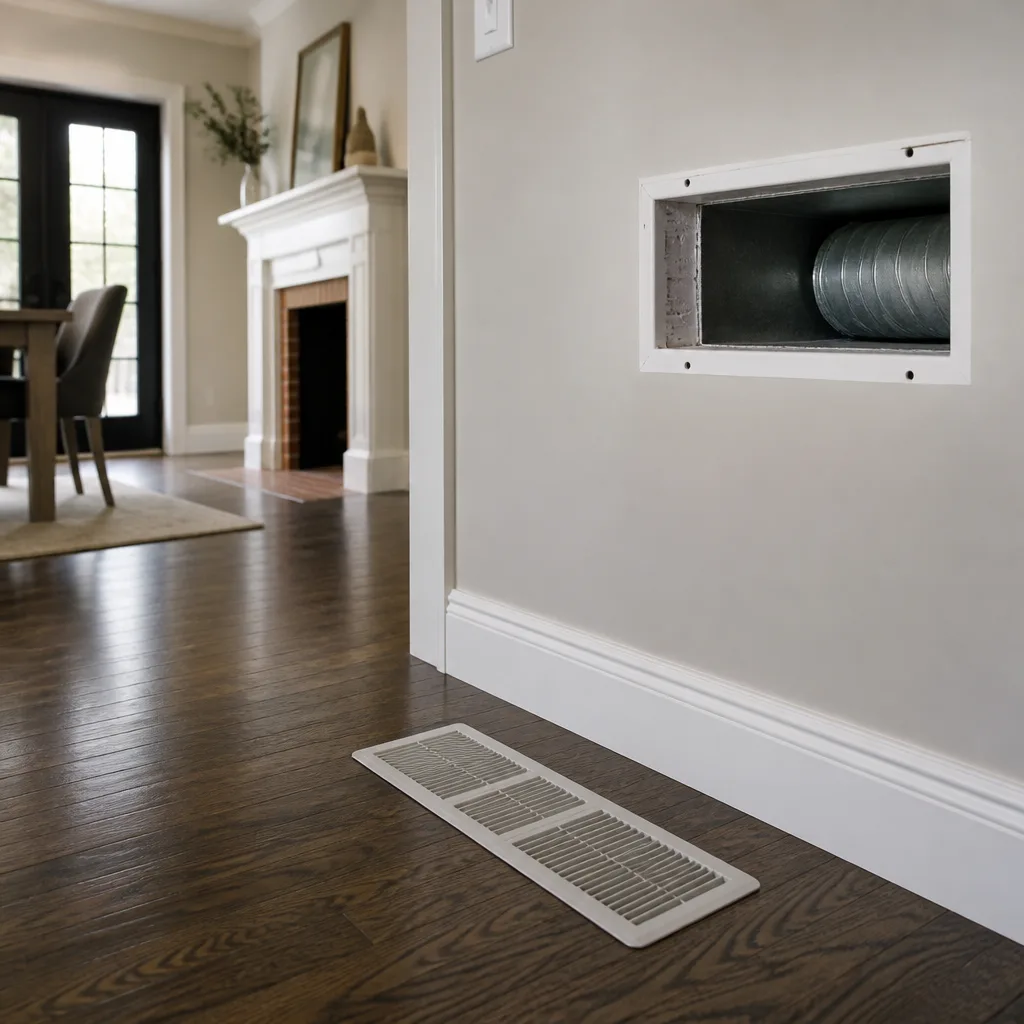
- Register count and condition. Missing registers, rusted registers, painted-shut registers. Every register is an access point, and uneven register condition often reflects uneven airflow problems deeper in the system.
- Evidence of water intrusion. Water staining on the duct exterior, rust at the seam lines, or darkened insulation around the coil area. Moisture changes everything: microbial growth, material degradation, and release of adhered debris that dry agitation won’t touch effectively.
- Pest activity. Rodent droppings in the return plenum, insect casings at register boots, or chewed flex duct. Pest intrusion is a contamination issue and, in some cases, a reason to recommend duct repair before cleaning.
- Filter condition and size. A crushed filter, wrong-size filter, or filter slot bypassing air entirely tells you what volume of debris has already made it past the intended barrier.
- Evidence of disconnected segments. Older Downey homes with original ductwork often have separated joints at the crawlspace level, especially after earthquakes or foundation settling. A disconnected supply duct means the system is pressurizing the crawlspace, not the bedroom.
If your technician doesn’t open every return, check the plenum, and ask about pressure differences you’ve noticed room to room, that’s a red flag. This is the stage where a company that offers Air Duct Repair in Downey has an advantage: they’re looking for damage and disconnection as part of the cleaning scope, not ignoring it because they can’t fix it anyway.
Cleaning Methods: Contact Vacuum, Rotary Brush, and Negative Pressure Isolation
There are three recognized approaches to residential duct cleaning, and the method your contractor selects should be a function of your specific system, not a default setting on their truck. Understanding these approaches is the single most useful thing a Downey homeowner can do before booking a service.
Contact vacuum cleaning is the entry-level method. A sustained vacuum source, often truck-mounted, connects to the duct trunk while a technician works the interior with hand tools, air whips, or a basic vacuum hose at each register. In a duct system with light dust accumulation and good structural integrity, contact vacuum cleaning can be effective. But on adhered debris, heavy contamination, or systems with long narrow branches, contact vacuuming alone leaves material behind because the vacuum doesn’t have sustained contact pressure across the full interior surface.
Rotary brush agitation pairs a motorized brush head with vacuum extraction. The Rotobrush system is a recognized industry standard here: a spinning brush physically dislodges caked material from duct walls while the vacuum simultaneously pulls it out. This method matters because many Downey homes have debris that has adhered to the duct surface over decades. Dust alone can be vacuumed. But pet dander, cooking oils, and freeway particulate baked onto a warm plenum wall require mechanical dislodging before extraction can work. We run Rotobrush and Nikro professional systems simultaneously because different duct geometries and contamination levels call for different head configurations, and one brush size doesn’t service every branch line in a retrofitted ranch house.
Negative pressure isolation is the third layer and, for occupied homes, the most important. The principle is simple: the duct system is sealed under negative pressure using a high-powered vacuum unit connected at the furnace or air handler, typically pulling 2,000 CFM or more. This means the duct interior is under suction while agitation happens. Any loosened material moves toward the vacuum, not into your kitchen. Without negative pressure isolation, brushing simply knocks debris loose and a portion of it enters the airstream and the living space instead of the collection unit. This is not a premium add-on. It’s the baseline for doing the work inside a home that people currently occupy.
Why HEPA-Filtered Negative Pressure Is Non-Negotiable
Here’s the sentence we repeat most often to Downey homeowners: if the cleaning equipment isn’t HEPA-filtered, you’re paying someone to aerosolize your debris indoors. That’s not an exaggeration. A standard shop vacuum filters down to roughly 30 microns on a good day. The particles that trigger allergic response, carry mold spores, and make their way into lung tissue are typically 0.3 to 10 microns. A HEPA filter captures 99.97% of particles at 0.3 microns. The difference isn’t marginal. It’s the entire point of cleaning indoor air systems in the first place.
Let’s be specific about what to confirm:
- The vacuum unit itself is HEPA-filtered at the exhaust. A powerful vacuum that filters inadequately just adds turbulence to the room. Ask what micron rating the filtration carries. The answer should be 0.3 microns or finer at 99.97% efficiency.
- The negative pressure machine is sized for your system. Light-duty residential units struggle to hold adequate negative pressure on longer branch runs. A 1,500 sq ft Downey home may have 150 linear feet of duct. The vacuum needs enough CFM capacity to maintain suction across that distance while agitation is happening.
- The crew uses containment barriers where appropriate. Return openings that connect to the vacuum should be sealed with plastic sheeting and tape, or fitted with proper access panels. Open holes create air bypass and reduce suction effectiveness at the far end of the system.
Some companies carry Abatement Technologies air-filtration equipment, the same category of gear used in environmental remediation and mold abatement work. That’s a meaningful signal: it means the company’s contamination standard is not “residential cleaning” but “containment and removal.” When you’re asking about filtration, you’re not being difficult. You’re asking whether the work will improve your indoor air or just move the problem from the ducts to the carpet.
The Step-by-Step Full-System Cleaning Protocol
Here’s what a complete, defensible full-system cleaning looks like from start to finish. This is the protocol we follow on every home, and it’s the standard we tell Downey homeowners to hold any contractor to. Note the time estimates per step; a 45-minute “cleaning” can’t possibly include half of this.
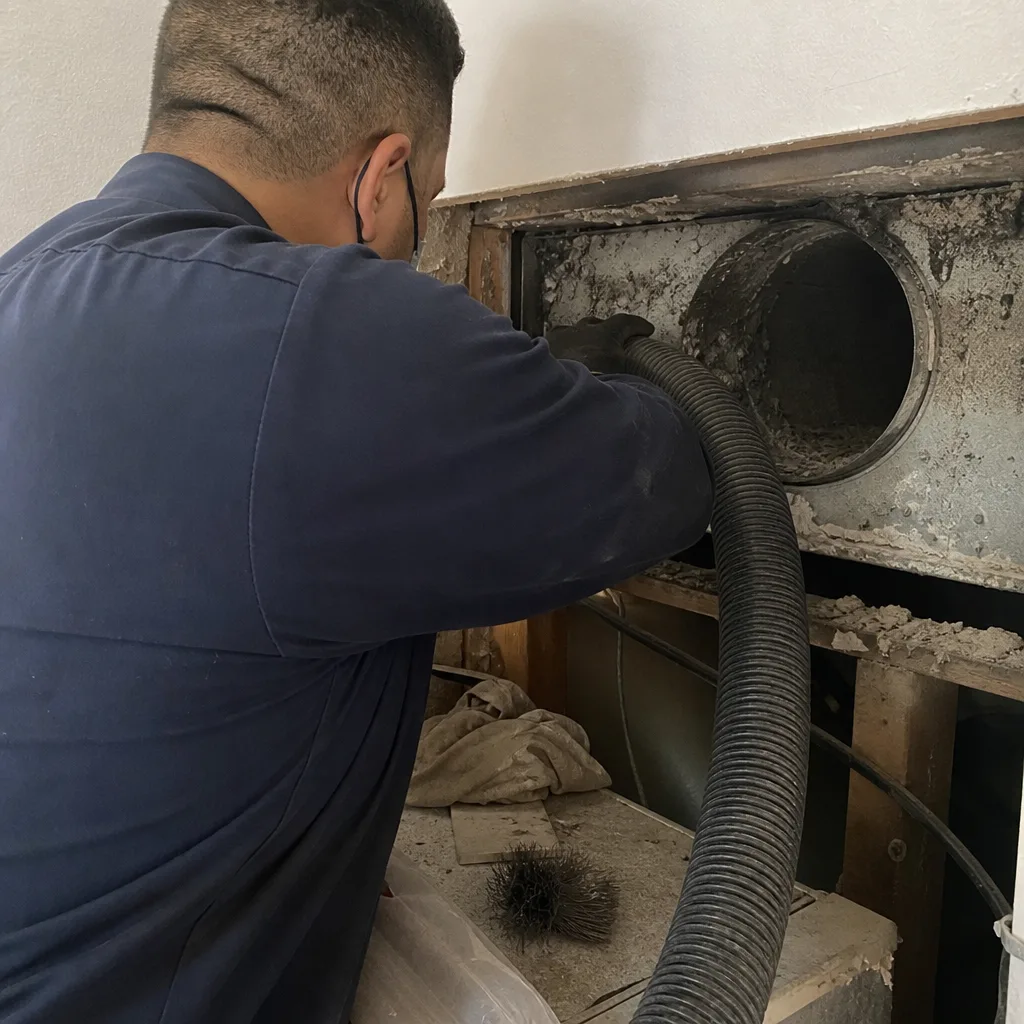
- System inspection and documentation (30-45 minutes). Access the furnace or air handler, locate the supply and return plenums, mark register positions, and inspect duct condition by borescope where access is limited. Photograph before-conditions at every access point.
- HVAC system protection (15-20 minutes). Power off the air handler. Seal the blower motor, coil compartments, and furnace controls against debris displacement. This step gets skipped often, and skipped protection leads to motors loaded with dust that fail within months.
- Negative pressure setup (30-40 minutes). Cut or open an access point at the supply and return trunk lines. Connect the HEPA-filtered vacuum unit to create negative pressure across the entire system. Confirm seal at all unused openings.
- Supply side mechanical agitation (60-90 minutes). Work each supply branch with rotary brush agitation suited to the duct material. Rigid steel tolerates full-speed brushing. Flex duct requires slower rotation or hand-tool agitation to prevent liner tearing. Register boots are cleaned from the room side as well as the duct side.
- Return side cleaning (45-60 minutes). Returns carry the largest particle load because they see unfiltered air from living spaces. Clean return grilles, return boots, and the return trunk with attention to bends where debris accumulates. The return plenum is typically the most contaminated section of any Downey home, especially in older systems with a single central return.
- Plenum and air handler cleaning (30-45 minutes). Remove debris from the supply and return plenums. Clean the blower compartment with compressed air and vacuum extraction. Inspect the evaporator coil: a clogged coil can’t be fixed by duct cleaning alone, but it should be documented and reported.
- Filter replacement and slot sealing (10-15 minutes). Install a new filter sized to the actual filter slot. If the slot allows air bypass, install gasketing or recommend a filter-housing repair. Filter sizing errors are a leading cause of debris re-accumulation within six months.
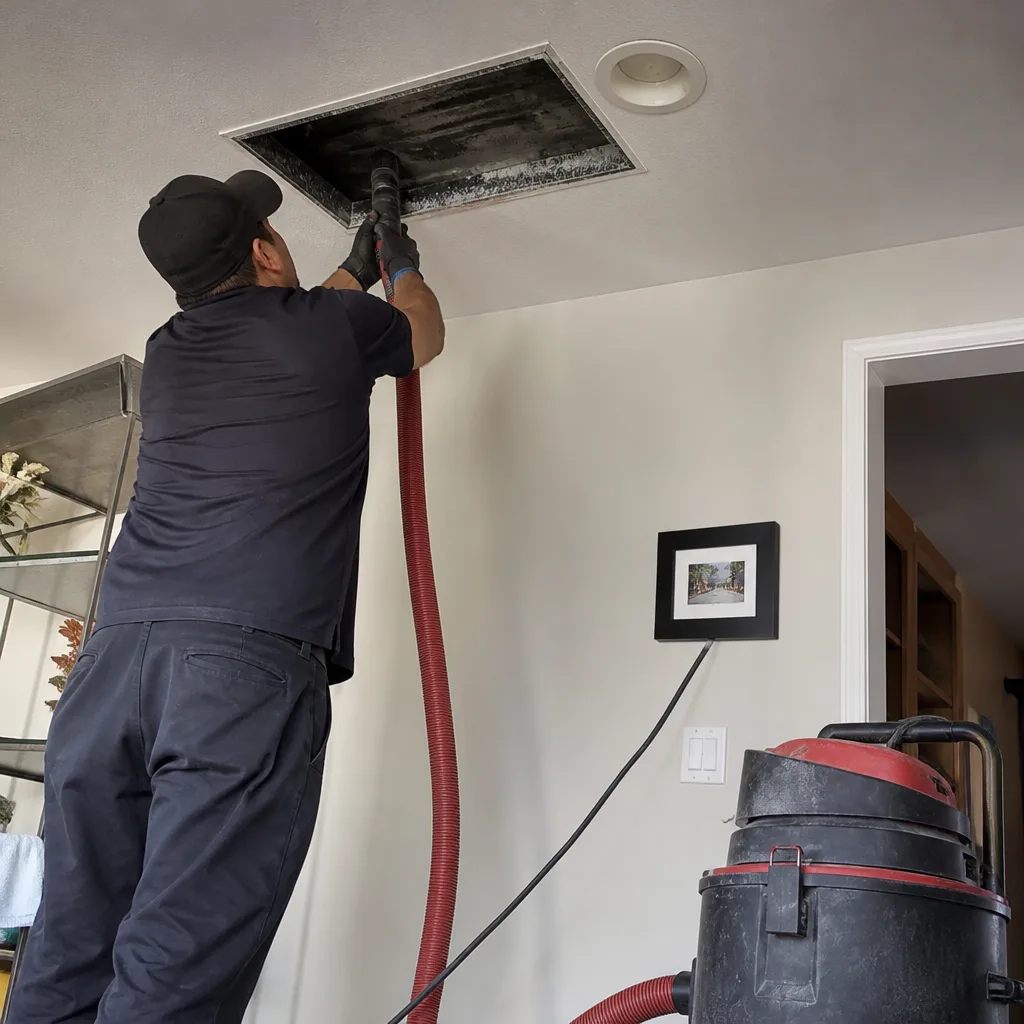
- Photographic documentation and register reinstatement (20-30 minutes). Replace all registers. Photograph after-conditions from the same angles as the before photos. Camera-scope the trunk line to verify removal visually and document any remaining damage identified earlier.
- Airflow verification (15-20 minutes). Test airflow at each register with an anemometer and compare against expected values based on system design. Flag any register with significantly low flow and note possible causes: collapsed flex duct, disconnected segment, or sediment blocking a branch line.
- Final walkthrough and report (15-20 minutes). Review before-and-after photos with the homeowner. Explain any damage found, any repairs recommended, and any airflow imbalances measured. Leave a written or digital record of what was done.
Total time for a typical 1,500 sq ft Downey home: three to five hours. If a quote promises significantly less, the protocol above is not the protocol being quoted.
Post-Clean Verification: What Actually Confirms the Job Was Done
“Trust us, it’s clean” is not a deliverable. Verification matters more in duct cleaning than in almost any other home service because the work product is hidden inside a wall cavity. Here’s what legitimate verification looks like and what you should request from any contractor in Downey.
Airflow measurement at registers. After a proper cleaning, static pressure drops and air velocity at each supply register increases. A technician with an anemometer can measure feet per minute at each register and compare to the pre-clean baseline. This isn’t just about proving the cleaning happened; it’s how you identify a crushed flex duct that’s been silently choking one bedroom for years. If airflow didn’t change at all after the cleaning, that’s a flag to investigate.
Visual inspection with a camera scope. A borescope inspection after cleaning is not a gimmick. It’s the direct evidence most homeowners never receive. The camera should show the full interior of the trunk line, the branch takeoffs, and the register boots. Clean metal looks like metal, not like a thin film of gray. Flex duct interior should show its plastic liner clearly. If debris patches remain in visible areas, the cleaning wasn’t completed to an acceptable standard.
Smell test before and after. A system with significant contamination has a characteristic smell: musty, dusty, or that particular “hot dust” odor the first time the furnace kicks on. After a proper cleaning, that odor should be gone. Not masked with a deodorizer left at the register, not temporarily covered by running the fan, but actually gone. If chemicals and fragrances are part of the service, that’s usually a red flag: legitimate cleaning doesn’t need to cover up the result.
Before-and-after photographs of the same access points. If the company can’t show you images of what was removed, you have no basis to evaluate the work. Every credible full-system cleaning should include photographic documentation from inside the plenum and trunk line. Ask for it. A company that does this work properly will volunteer the images.
Some companies also service and install air quality systems from Honeywell and Aprilaire as an extension of their cleaning work. That’s worth noting because it signals an investment in post-clean air quality, not just a one-day service call. The systems are different: Aprilaire focuses on whole-home filtration and humidity control, Honeywell on filters, ventilators, and UV treatment. Which is appropriate depends on your home’s specific air profile, and it’s a conversation to have after the cleaning results are known, not before.
Where Duct Repair and Cleaning Overlap
The logic of full-system cleaning doesn’t stop when the vacuum shuts off. A clean duct system with a separated joint at the crawlspace will re-contaminate within weeks because the system was never isolated. Downey homes that have experienced earthquakes, settling, or decades of temperature cycling often have separated duct segments, crushed flex, or flaking seam tape. These are structural issues that cleaning alone can’t fix.
Here’s where the combined scope matters. A cleaning-only contractor who finds a disconnected supply branch in the crawlspace has two choices: ignore it and leave the homeowner with a clean system that’s already pulling crawlspace air, or refer the work to another contractor who has never seen the system. A full-system provider can address the disconnection as part of the same service call, which changes the math on cost and sequence. The repair happens before final cleaning verification, because a repaired duct still needs to be cleaned after work disturbs the area.
We treat repair as a core part of our service scope, not a side task. That includes crushed flex duct replacement, access panel installation, seam resealing at the plenum, and register boot replacement. The point isn’t to turn cleaning into a repair upcharge; it’s to ensure that when we tell you the system is clean, it has a realistic chance of staying clean. For property managers handling tenant turnover, that distinction is significant: a clean system that re-contaminates in 90 days just means another service call when the next tenant complains about dust. For homeowners, it means the investment lasts. For both, it’s the same principle: air duct repair is part of the cleaning equation, not a separate decision.
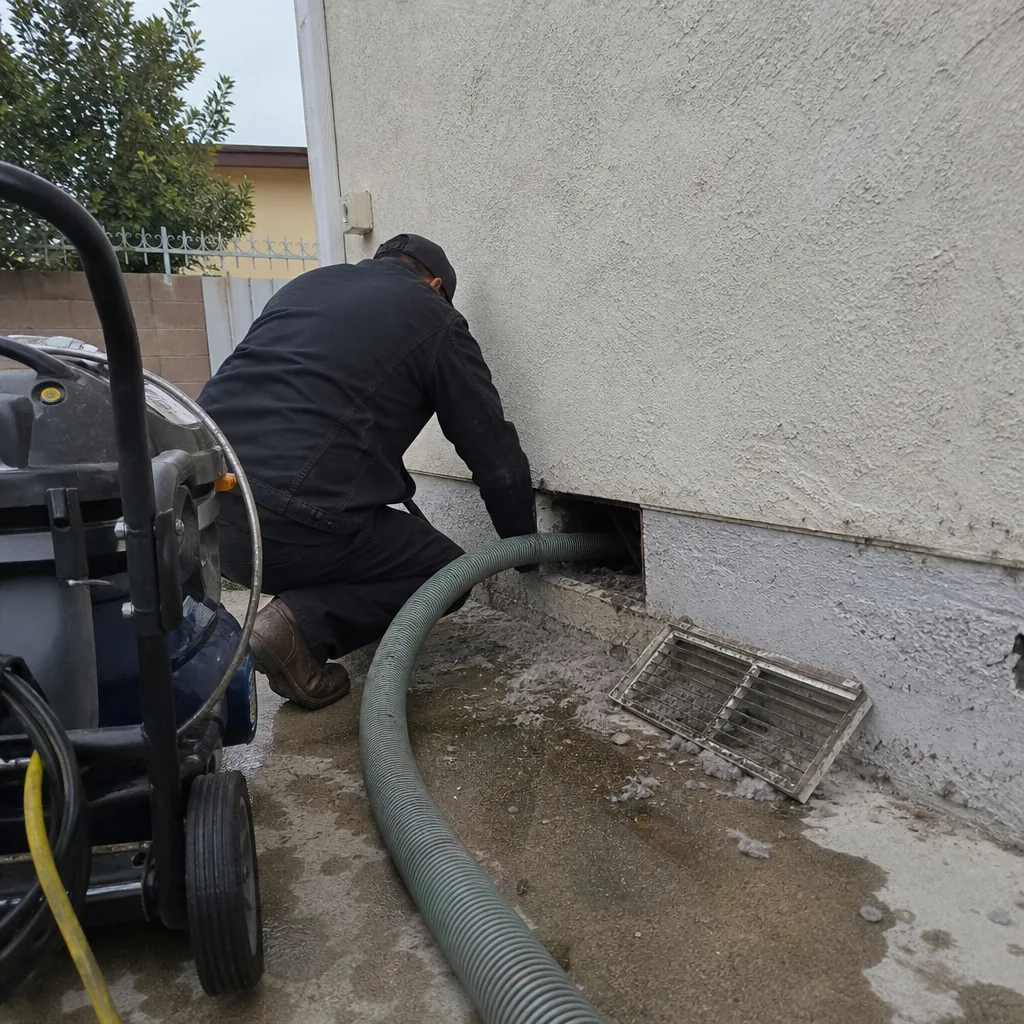
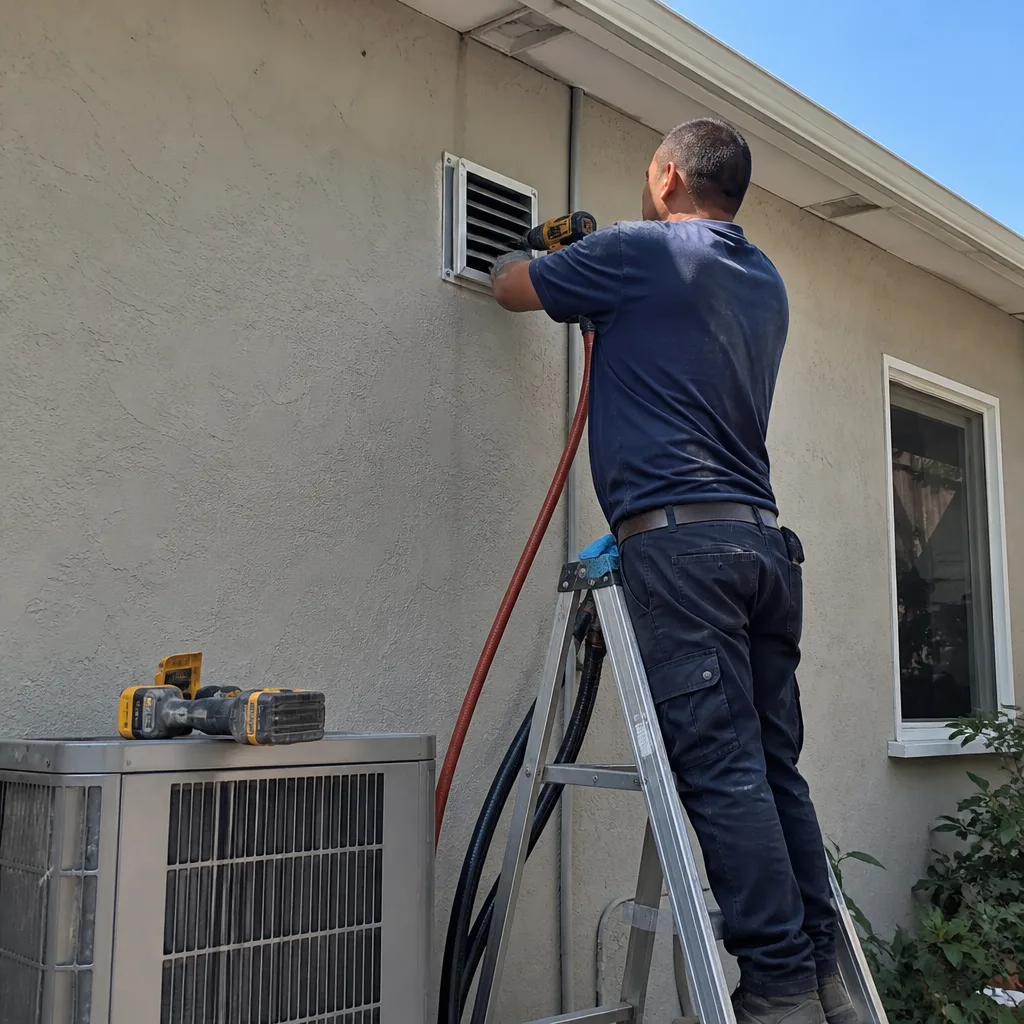
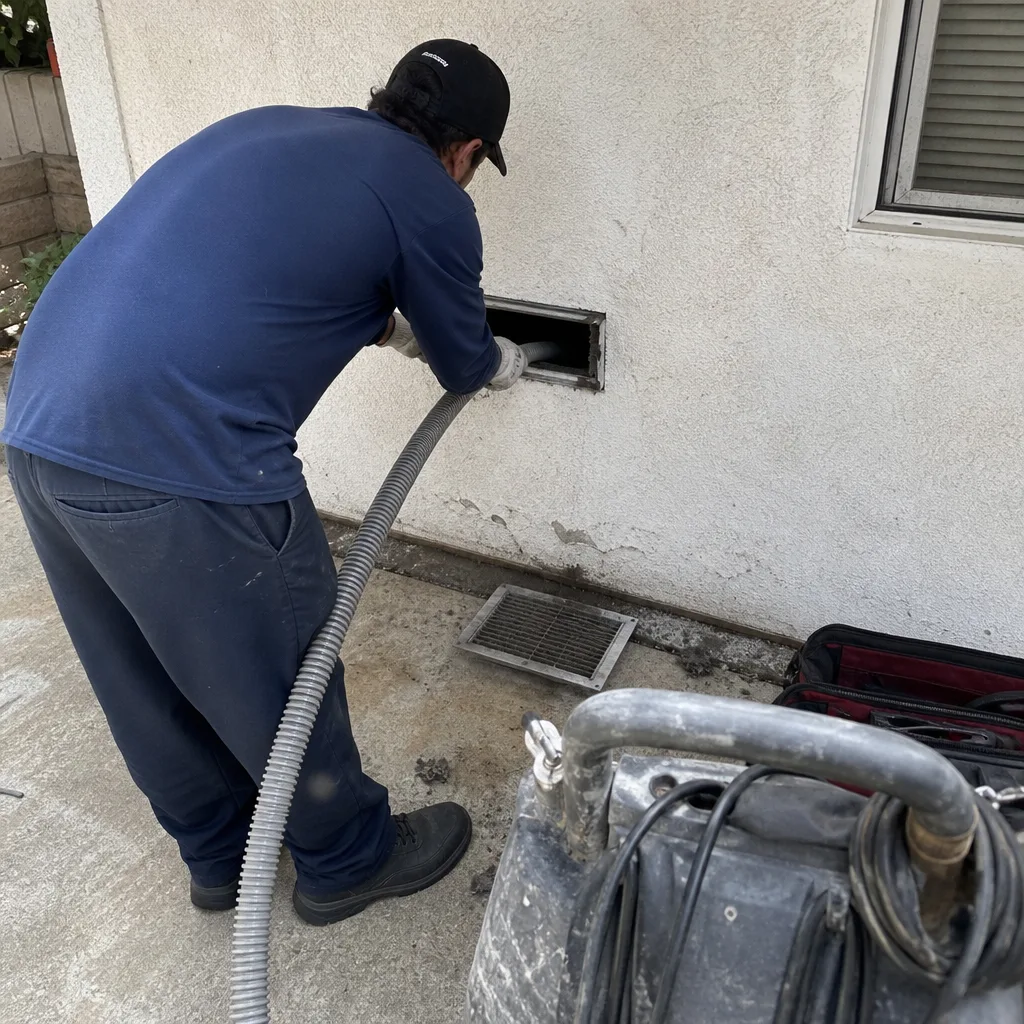
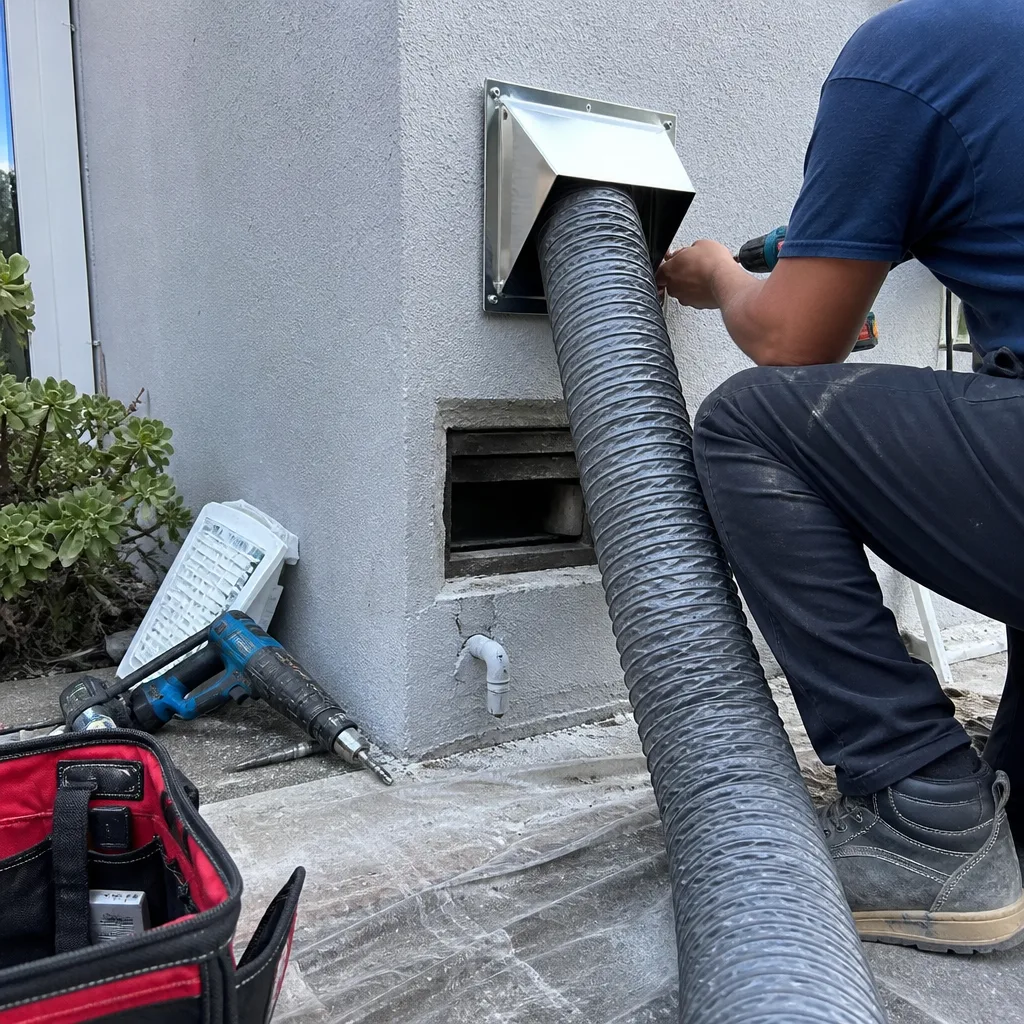
Dryer vent cleaning carries a different risk profile that’s worth a moment here. Dryer vents are a fire hazard. Lint is combustible, and a blocked vent raises exhaust temperatures into the ignition range for accumulated lint. Most homeowners never think about their dryer vent until the dryer stops drying, but the fire risk builds long before performance degrades noticeably. It’s a separate system from HVAC ductwork, but it’s a duct, and we include it in the full-home duct scope. If you’re having your HVAC ducts cleaned and your dryer vent has never been serviced, that’s the time to address it. Dryer Vent Cleaning in Downey is a faster service than full HVAC cleaning, but the inspection protocol is similar: access point confirmation, material check, interior condition, and exhaust flow verification at the exterior termination.
Common Mistakes to Avoid
- Accepting a quote over the phone without an inspection. Duct cleaning pricing depends on system configuration, access difficulty, and contamination level. A phone quote with no system inspection is a marketing number, not a real estimate. If they won’t look at the system, they can’t tell you what it needs.
- Hiring a company that only uses a vacuum and brush at each register. This is entry-level contact cleaning, and on a multi-decade-old Downey system with adhered debris, it won’t remove the material that matters most. Ask what equipment is on the truck and how negative pressure is created.
- Falling for deodorizer fragrances as a proxy for cleaning. If the post-clean smell is perfume and not neutral air, the cleaning likely didn’t happen to the standard it should have. A clean system doesn’t smell like anything.
- Skipping the filter conversation. A clean duct system with a bypassed filter slot is a temporary improvement. The filter is the front line. If the cleaning company never checks filter fitment and bypass, they’re leaving the most important variable unaddressed.
- Ignoring low airflow in one specific room. Downey homes with additions often have one bedroom that’s always hot or cold. That’s usually a duct problem, not an AC problem. Cleaning without measuring register airflow misses the diagnostic signal entirely.
- Choosing price over protocol. Duct cleaning is not a commodity. The differences between a $199 special and a real full-system cleaning are not aesthetic; they determine whether your system stays clean for 90 days or five years.
- Assuming every provider handles dryer vents and repairs. Most cleaning-only companies won’t touch a crushed duct or a clogged dryer vent. You’ll end up coordinating multiple contractors for what should be one system inspection. A single provider covers the full duct scope.
When to Call a Professional
You’re ready for a professional duct cleaning when you can point to a specific, observable problem: visible dust accumulating on registers within days of cleaning, a musty odor from the system on startup, unexplained allergy symptoms when the AC runs, inconsistent room temperatures, or a home renovation that generated drywall dust and debris. You’re also ready if your home has never been cleaned. Downey homes built in the 1950s and 1960s often have decades of accumulated material in the return plenum, and there’s no household filter that removes what’s already inside the system.
If you’re not sure whether you need the full service, start with an inspection. Duct Cleaning Downey offers free estimates in Downey, and the inspection will tell you what’s actually in your system before you commit to a single service. Call (855) 382-4683 and ask what we’d recommend based on what we find.
Frequently Asked Questions
A proper full-system cleaning of a 1,500 sq ft home takes three to five hours, not including the pre-inspection. Homes with complex layouts, old duct material, or significant contamination can run longer. Any service promising 45 minutes is not performing a full-system clean.
Full-system cleaning in Downey typically runs in the $400 to $900 range for a single-family home, depending on system size, access difficulty, and contamination level. Prices below $200 usually indicate a surface-level register cleaning rather than a full-system protocol. The honest way to get a real number is an inspection, not a phone quote. Call (855) 382-4683 for a free estimate that’s based on your actual system, not a square-footage chart.
Yes. Without HEPA-filtered negative pressure, agitation loosens debris and a portion of it enters your living space instead of the collection unit. HEPA filtration at 0.3 microns and 99.97% efficiency is the baseline for occupied-home cleaning, not an add-on feature.
For most Downey homes, every three to five years is a reasonable interval, but the right answer depends on your specific conditions. Homes near major freeway arteries, homes with pets, homes with smokers, and homes where filters have been inconsistently maintained may need cleaning more frequently. If you can see dust accumulation on registers within weeks of wiping them, that’s a stronger signal than any calendar.
They’re separate systems. Air duct cleaning addresses the HVAC supply and return network that moves conditioned air through your home. Dryer vent cleaning addresses the exhaust duct that carries hot, lint-laden air from your dryer to the outside. Dryer vents are the more urgent fire risk; HVAC ducts are the more persistent air-quality issue. We handle both under one service relationship.
Sometimes, yes. Low airflow in a specific room often traces to a collapsed flex duct, a disconnected branch, or a buildup blockage in that specific run. Cleaning may resolve blockage-based problems, but structural damage requires repair. This is why airflow measurement at each register before and after cleaning matters. If the problem persists after cleaning, the issue is structural, and a combined cleaning-and-repair provider can address it without a second contractor.
The Bottom Line
Duct cleaning in Downey is not a single-service commodity. It’s a system-specific process that starts with inspection, continues with equipment matched to your duct material and contamination level, and finishes with verification that the work actually happened. The homes in this city, many built before most current air quality concerns existed, need a standard higher than a basic vacuum pass. If you’re going to invest in the service, hold the contractor to the full protocol: pre-inspection, negative pressure isolation, HEPA filtration, post-clean documentation, and airflow verification. That’s the difference between clean ducts and a clean invoice.
Written by the team at Duct Cleaning Downey, serving Downey since 2017.
See the difference
 Before
 After
 Before
 After
 Before
 After