
Last updated November 2, 2026
 Whole-home duct cleaning
 Dryer vent cleaning
 Camera inspection
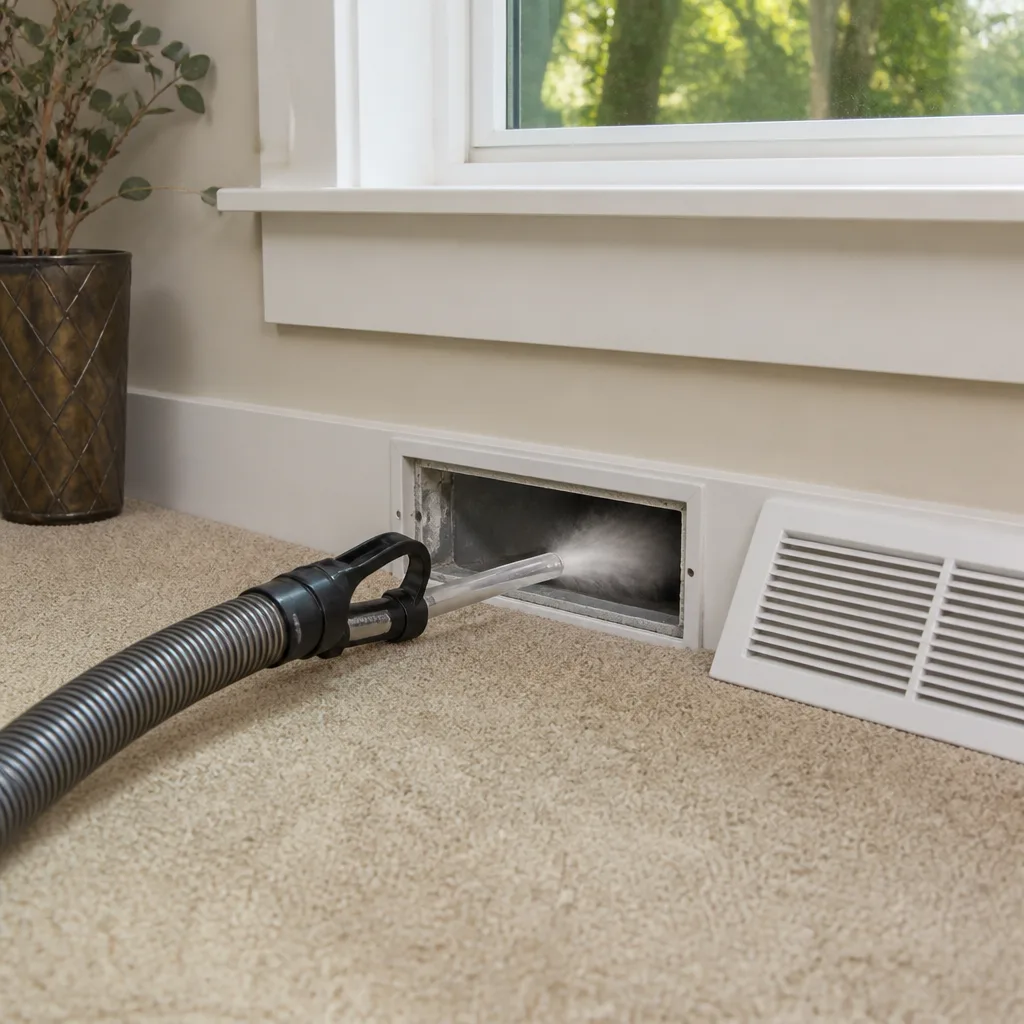 Sanitizing & deodorizing
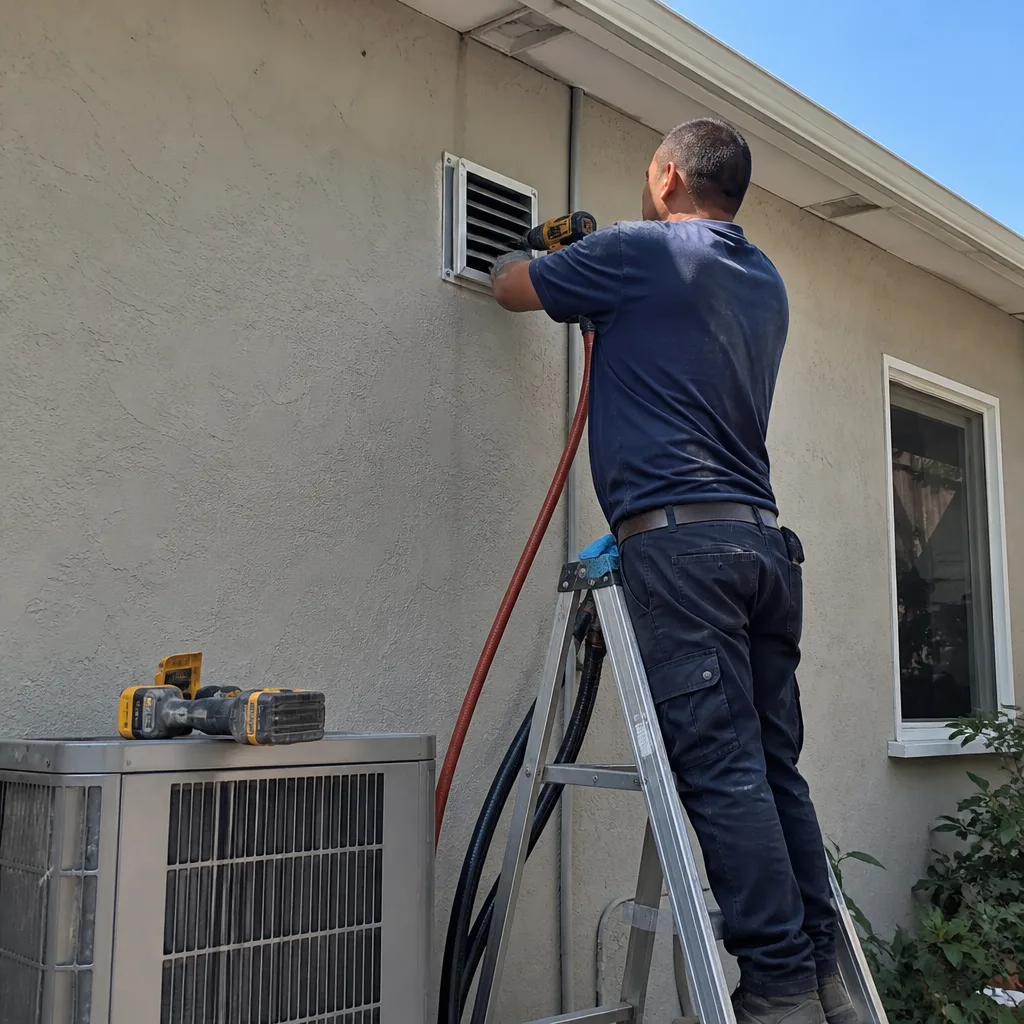
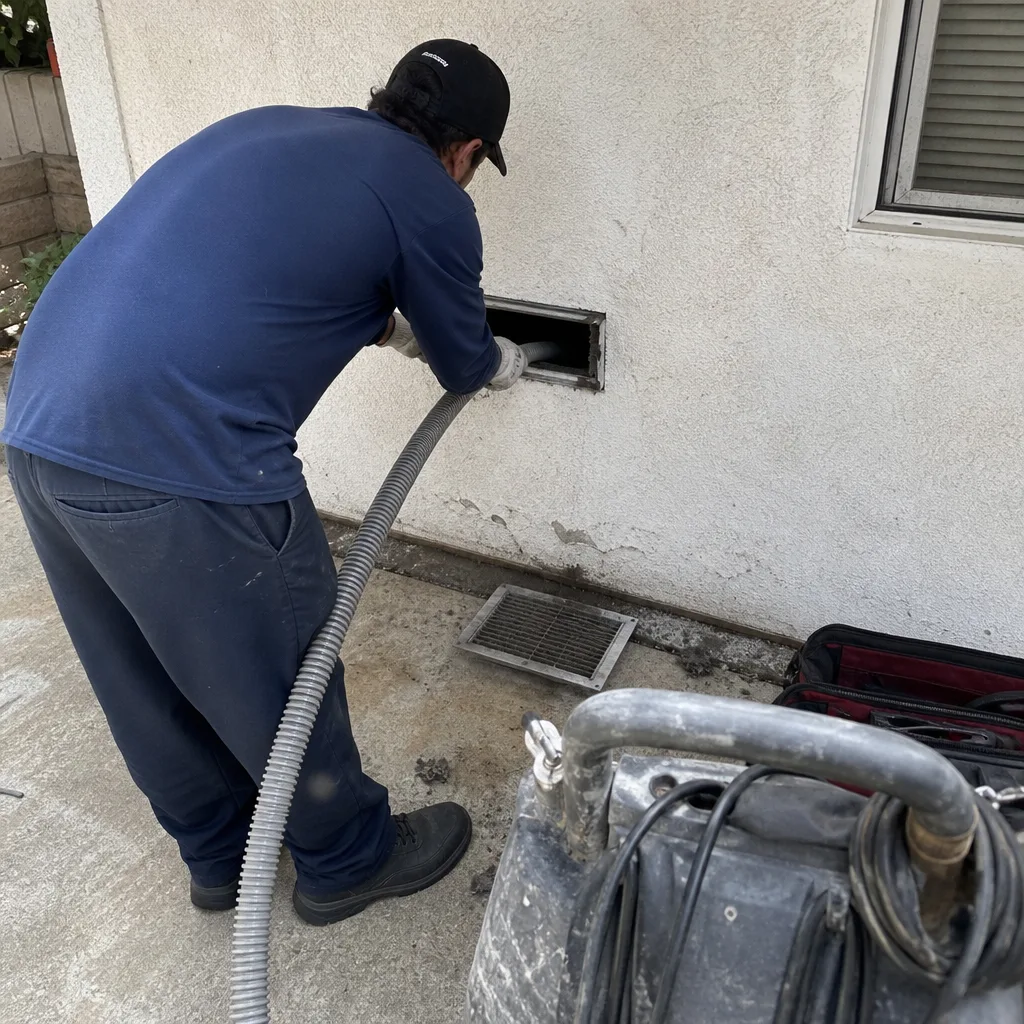
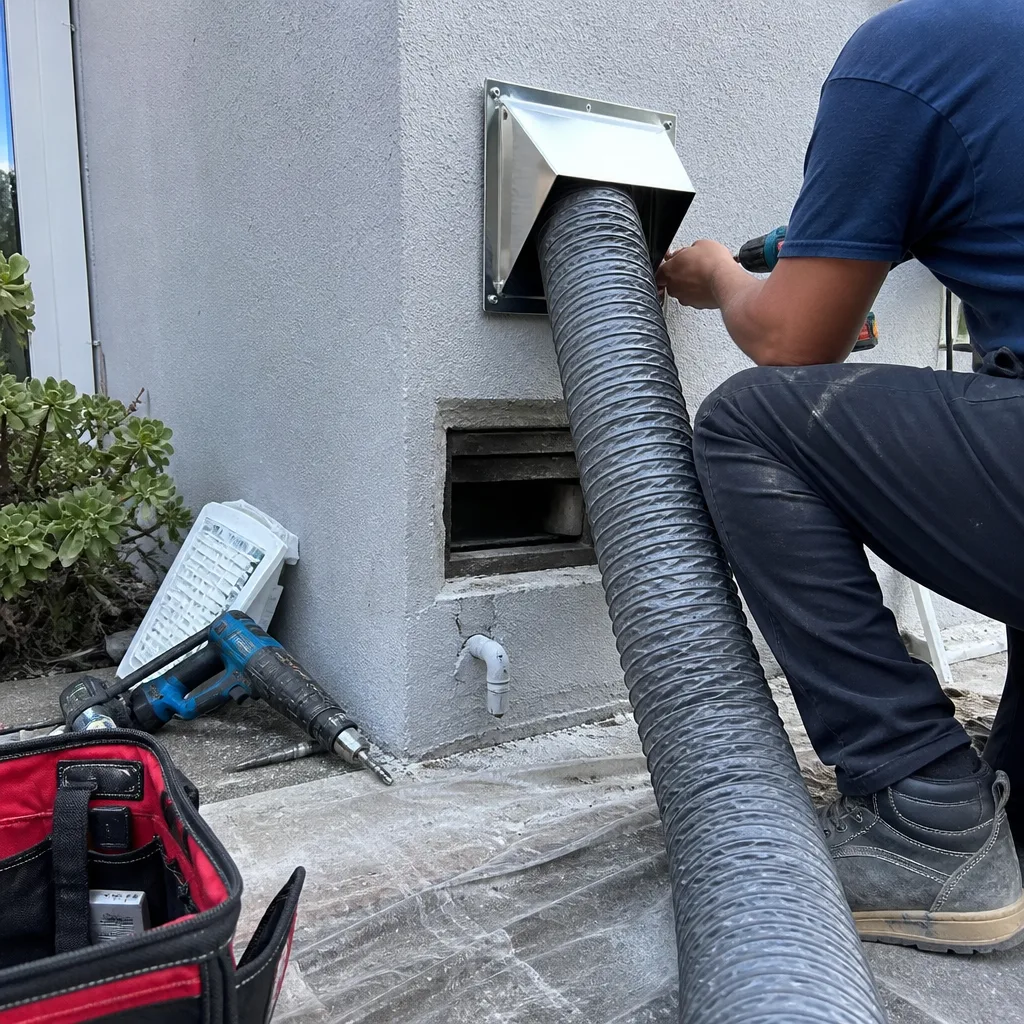
Whole-system duct and dryer vent check with before-and-after photos - you see exactly what came out of your vents
That "$99 whole-house special" is a bait ad - the real number appears once they are in your hallway, or the "clean" is a shop-vac at the register. We photograph the inside of your ducts before and after instead.
DIY vs Professional Air Duct Cleaning: The Downey Homeowner’s Decision Guide
A $300 rental HEPA shop vac and four hours of register cleaning will leave your vent covers spotless and roughly 90% of the debris load exactly where it was: in the trunk lines, return plenum, and blower housing that a standard hose cannot physically reach. We’ve opened enough duct systems across Downey to know what lurks past the first bend. This guide will show you the real boundary between what a motivated homeowner can accomplish and what requires professional negative-air equipment, so you can decide whether to grab a vacuum or pick up the phone.
Quick Answer
DIY air duct cleaning in Downey is genuinely useful for light register cleaning, post-move-in surface work, and single-room contamination, but it cannot address the trunk lines, plenums, or blower housing where most debris lives. Professional cleaning using Rotobrush and Nikro negative-air systems removes the full contamination load, including particulate that a shop vac simply pushes deeper into the system. If your ducts have mold, post-construction dust, or flex duct that collapses under vacuum pressure, call Air Duct Cleaning in Downey before you do anything else.
Styles & brands we work with
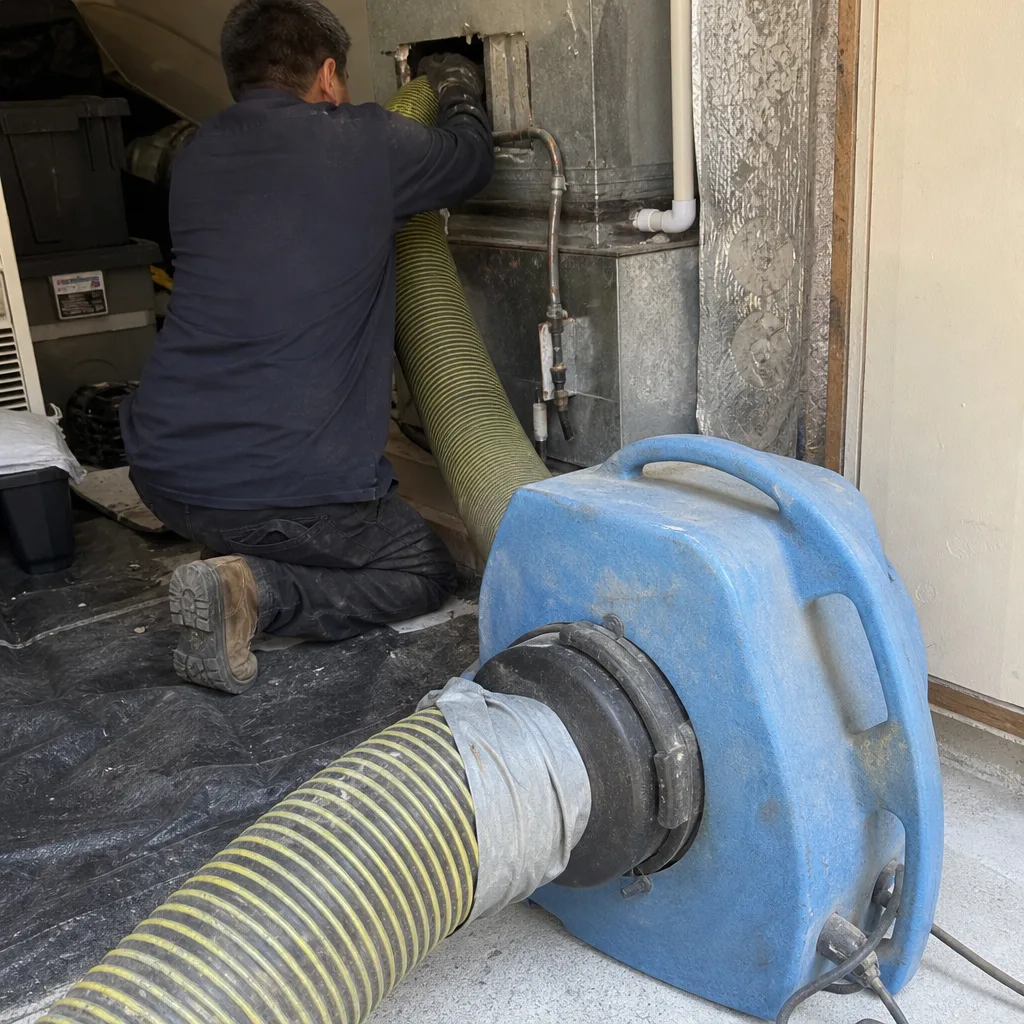
- Whole-home duct cleaning
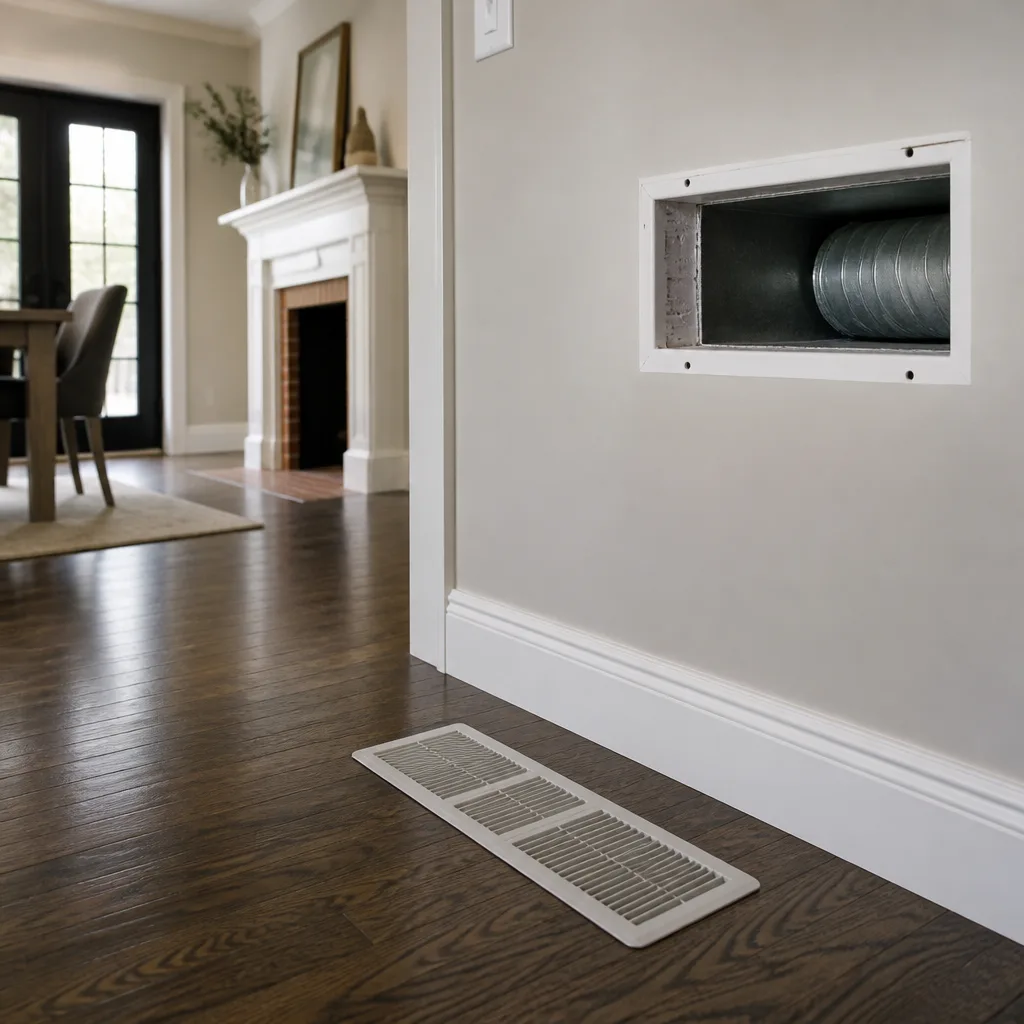
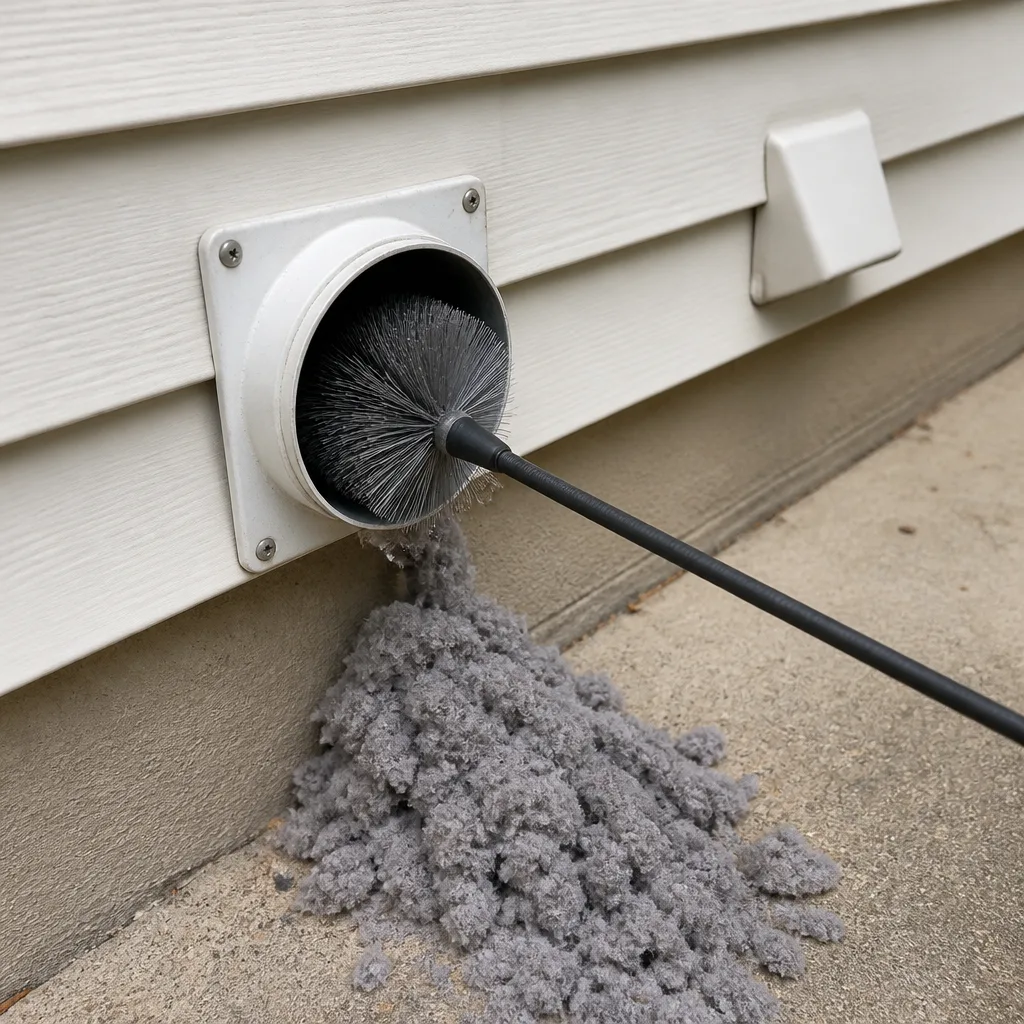
- Dryer vent cleaning
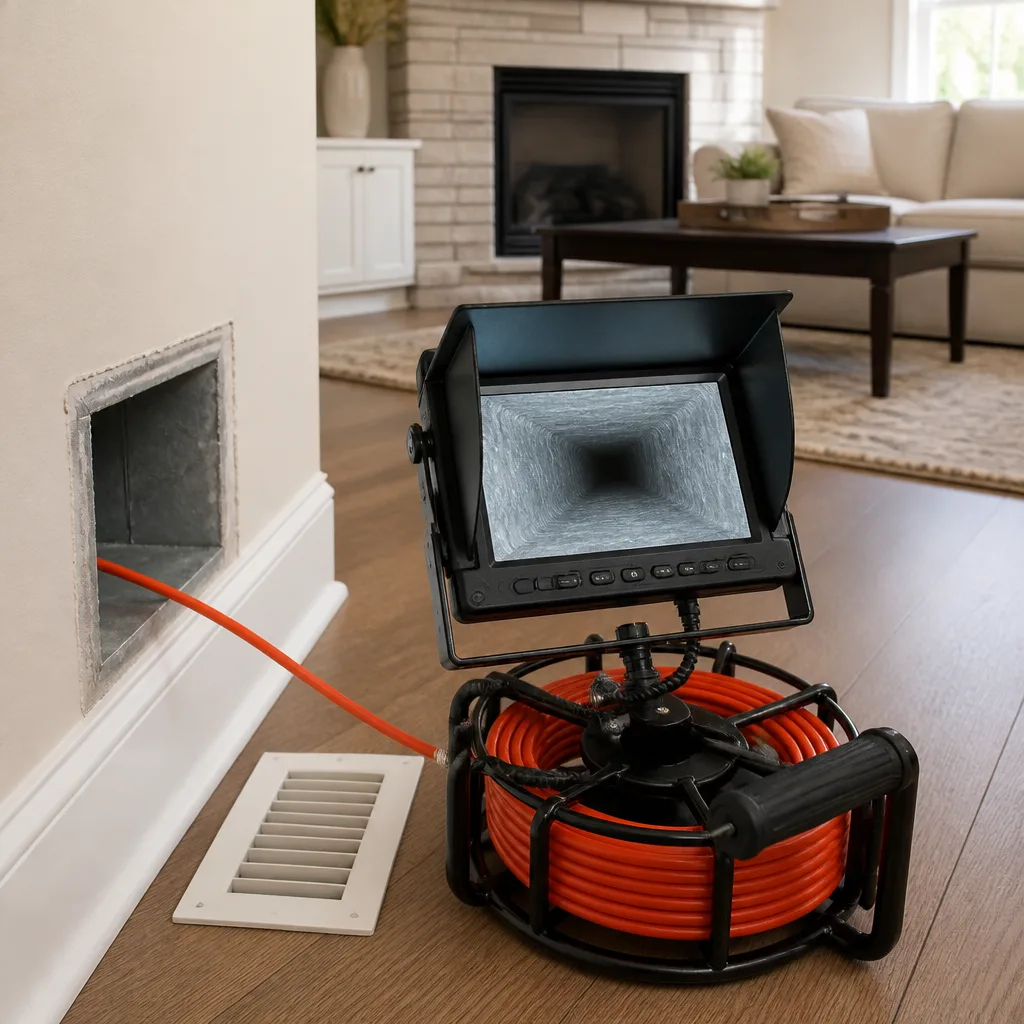
- Camera inspection
- Sanitizing & deodorizing
Table of Contents
- What DIY Actually Reaches (and What It Doesn’t)
- Why Negative Air Pressure Is the Real Difference
- Three Scenarios Where DIY Is Genuinely Sufficient
- Three Scenarios Where DIY Is Counterproductive
- What to Do Between Professional Cleanings
- Equipment Comparison: What You Rent vs What We Run
- Downey-Specific Factors That Change the Equation
- Cost Context: DIY Outlay vs Professional Scope
What DIY Actually Reaches (and What It Doesn’t)
The average forced-air duct system in a Downey home runs 40 to 80 linear feet of main trunk line with multiple branch runs feeding each room. Your register covers, the first 12 to 18 inches of visible duct behind them, and the inside surface of the return grille are the only components a homeowner can meaningfully access with available tools. That’s roughly 5 to 10 percent of the system’s interior surface area, which is why register cleaning creates an illusion of thoroughness while leaving the actual debris reservoir untouched.
Here’s what a motivated DIYer can actually clean:
- Register covers and boots – the visible metal or plastic grilles and the first few inches of duct behind them. This is where pet hair, surface dust, and visible debris collect first.
- Return grille surface – the large intake vent, usually in a hallway, that catches airborne lint, hair, and dust before it enters the system.
- Accessible flex duct openings – in some Downey homes with accessible attic runs, the first bend of flex duct can be wiped from the inside using a damp microfiber cloth on a flexible wand.
- The blower compartment door – if you’re comfortable opening the air handler cabinet, the visible interior surfaces can be wiped down, though this does not address the blower wheel itself.
What a shop vac cannot reach: the full length of trunk lines, the return plenum (where the densest accumulation forms), the blower wheel fins, the evaporator coil, and every branch run beyond the first bend. In our experience with older Downey homes, particularly those built before 1985, trunk lines often run through inaccessible crawlspaces or tight attic clearances where no residential vacuum hose can navigate effectively.
Why Negative Air Pressure Is the Real Difference
A shop vac produces suction at the nozzle but exhausts back into the room, which means it re-aerosolizes fine particulate as fast as it captures it. Negative air pressure, by contrast, seals the duct system and draws contamination toward a single collection point using a high-volume vacuum unit connected directly to the trunk line. The result is containment: dust, mold spores, and debris are pulled into sealed filtration, not scattered back into your living space.
The physical distinction matters for one simple reason. When you vacuum a register with a shop vac, the airflow is moving from the room, through the register opening, into the hose. But the trunk line behind that register is a long, dark channel with its own air currents. Debris lodged 20 feet downstream doesn’t feel your vacuum at all. It stays put. The negative-air method reverses the pressure gradient across the entire system, so contamination moves toward the collection point from every branch simultaneously. That’s the difference between cleaning what you can see and cleaning what’s actually there.
Our equipment at Duct Cleaning Downey includes both Duct Cleaning Downey home service area coverage and purpose-built Rotobrush and Nikro systems that run this negative-air process continuously. The Nikro unit alone moves air at volumes that dwarf any rental equipment, and both systems feed into HEPA filtration rather than exhausting back into the room. For Downey homeowners dealing with construction dust, pet dander buildup, or post-water-damage particulate, contaminated air containment is the whole game.
Three Scenarios Where DIY Is Genuinely Sufficient
We’re not here to tell you that every situation demands professional equipment. There are narrow, specific cases where DIY register cleaning is the right move, and understanding them will save you money without compromising air quality.
1. Light Register Cleaning Between Professional Services
If you had your ducts professionally cleaned in the last 12 to 18 months, the system is not loaded with contamination. What you’re seeing on register covers is surface dust that accumulated since the last cleaning. In this scenario, removing the covers, washing them with warm water and mild dish soap, and wiping the visible boot interior with a damp cloth is exactly what the system needs. This is maintenance, not remediation, and it extends the interval between professional visits. We recommend it to our customers all the time.
2. Post-Move-In Surface Work
Just moved into a Downey house and want to start fresh? Before you unpack, the register covers and return grilles in a previously occupied home have accumulated surface grime that belongs to the prior residents. A thorough DIY wipe-down of every visible vent, combined with replacing the HVAC filter, gives you a clean baseline without requiring a full professional cleaning. This works because move-in surface dirt is, by definition, on the surface. The deeper system condition is unknown, but the visible layer is manageable.
3. Single-Room Isolated Contamination
If one room has visible debris in the register, maybe from a bathroom renovation or a pet that favors one corner, and you can see the contamination within the first few inches of the boot, a careful DIY approach works. Remove the cover, use a HEPA-filtered vacuum with a narrow crevice tool to extract visible debris from the accessible portion, then wipe the boot walls. The key is that you’re addressing a localized, visible issue, not pretending to clean the entire system. If the debris is deeper than you can see, stop and call us before you push it further down the branch line.
Three Scenarios Where DIY Is Counterproductive
There are situations where a shop vac actively makes the problem worse. Understanding these boundaries is what separates smart homeowners from expensive mistakes.
1. Mold Presence
If you suspect mold in your ductwork, which in Downey’s marine-influenced climate often follows a roof leak, condensation problem, or bathroom exhaust issue, do not vacuum it yourself. A standard shop vac filter does not capture mold spores at the micron level required for safe removal, and the exhaust side of the vacuum will aerosolize viable spores throughout the room. Professional mold-contaminated duct cleaning requires HEPA filtration at the collection point and often antimicrobial treatment, neither of which is achievable with rental equipment. If you see dark staining, persistent musty odor from the vents, or moisture in the ducts, this is a professional-only scenario.
2. Post-Construction Debris
After a remodel or new construction in Downey, duct systems are frequently loaded with drywall dust, sawdust, and debris that settled during the build. This fine particulate is exactly what destroys blower motors and clogs evaporator coils. A DIY vacuum pass will remove the loose surface layer but leave the heavy fine-particle load settled in the trunk lines and return plenum. Worse, disturbing this dust without full-system negative air sends a plume of construction particulate back into the freshly renovated living space. We regularly see this in Downey’s active remodeling market, and the only real fix is a professional full-system extraction.
3. Systems with Flex Duct
Many Downey homes built or retrofitted in the last 30 years use flexible insulated duct for branch runs. Flex duct contains a thin plastic inner liner supported by a wire coil. Applying standard vacuum pressure to these runs can collapse the liner, which then becomes a permanent airflow restriction or tears under continued use. Rotobrush and Nikro systems are calibrated to clean flex duct without collapsing it, because the equipment is designed around duct-system physics, not brute suction force. If your home has flex duct and you attempt DIY cleaning with a powerful shop vac, you risk damaging the very system you’re trying to improve.
What to Do Between Professional Cleanings
The smartest homeowners in Downey don’t clean their own ducts deeply, they manage the recontamination layer so professional cleanings last longer and cost less over time. Here’s the maintenance protocol we recommend, in order of impact:
- Replace your HVAC filter every 60 to 90 days with a MERV 8 to MERV 13 filter. Write the install date on the filter frame with a permanent marker. A loaded filter no longer catches particulate, it feeds it back into the system and starves the blower of airflow.
- Wash register covers quarterly. Remove them, soak in warm water with dish soap, dry completely before reinstallation. This takes 20 minutes and prevents visible grime buildup that migrates backward into the boot.
- Inspect the return grille monthly and wipe any visible accumulation. The return is the inlet to the entire system, and a loaded grille means everything downstream is working harder to pull air through a dirty screen.
- Vacuum the immediate area around each register with a HEPA-filtered household vacuum once a month, so the air being pulled into the return isn’t carrying surface dust from the floor.
- Run the bathroom exhaust fan during and 20 minutes after every shower. In Downey, where humidity is a constant factor, this single habit prevents moisture migration into ductwork through the return path.
- Seal the filter access door tightly after every filter change. A poorly seated filter door pulls unfiltered air into the blower housing, which is the hardest component to clean once contaminated.
These six steps are the practical layer that makes professional cleaning intervals longer and results last longer. They don’t replace professional cleaning, but they make every dollar spent on it work harder.
Equipment Comparison: What You Rent vs What We Run
The equipment gap is the single most important variable in this decision, and it’s not subtle. Rental equipment from a home center is designed for general purpose debris collection. Professional duct-cleaning equipment is purpose-built for contained airflow, high-volume particulate capture, and access to the full length of a duct system. Here’s the direct comparison:
| Capability | Rental Shop Vac (HEPA) | Rotobrush / Nikro System |
|---|---|---|
| Air volume (CFM) | Usually 150-350 CFM | 1,000-4,000+ CFM at the collection unit |
| Filtration | Single HEPA filter cartridge, no secondary containment | Multi-stage HEPA filtration with secondary filter bank |
| Duct penetration | First few feet of branch lines only | Full trunk line length, all branch runs, plenums, and blower housing |
| Containment | Exhausts back into the room, re-aerosolizes fine particulate | Negative air pressure sealed to the system, contamination pulled to collection point |
| Agitation | None beyond nozzle contact | Powered rotary brush and compressed air agitation that loosens adhered debris |
| Flex duct safety | High collapse risk under strong vacuum | Calibrated to clean flex duct without liner collapse |
| Camera inspection | None | Before and after visual verification of trunk lines and hard-to-reach areas |
We also run Abatement Technologies air-filtration equipment on select jobs, which is the same category of gear used in environmental remediation. For Downey homeowners with contamination concerns beyond routine dust, like post-water damage or suspected mold, this filtration standard is what separates a cosmetic cleaning from an actual air-quality intervention.
Downey-Specific Factors That Change the Equation
Downey sits in the Los Angeles Basin, which means your duct system faces specific environmental challenges that homeowners in drier inland cities don’t contend with. Understanding these local factors will help you make a better DIY-versus-professional decision.
First, Downey’s proximity to the coast means marine-layer humidity flows through your return air path for months at a time. That moisture doesn’t just sit in the air, it deposits on cool duct surfaces, especially in the return plenum where air velocity drops. Dust that arrives dry becomes glued to duct walls when humidity is present. That’s why Downey duct systems often show a different contamination profile than inland systems: a damp, adhered layer rather than loose, fluffy accumulation. A DIY vacuum pass does not remove adhered contamination. It removes only the loose top layer.
Second, several Downey neighborhoods have mature tree canopies that generate heavy pollen and leaf litter. Homes near Furman Park, Wilderness Park, or the Rio San Gabriel area see elevated organic particulate matter in their returns during spring and fall. This organic material, combined with basin humidity, creates the conditions for microbial growth if it sits too long. Regular filter changes help, but organic buildup in the return plenum requires professional extraction.
Third, Downey’s housing stock is largely mid-century. The common architectural styles, stucco exteriors with crawlspace or attic HVAC distribution, mean duct runs tend to be long, with multiple bends, and often inaccessible from inside the living space. These systems are not designed for homeowner access. The trunk lines in many Downey homes are tucked into tight attic clearances or under subfloor framing where a shop vac hose cannot physically navigate.
These local factors don’t mean every Downey home needs immediate professional cleaning. They mean the DIY calculus is different here than in a dry, new-construction subdivision. Humidity, tree canopy, and mid-century duct geometry all push the viable DIY window narrower.
Cost Context: DIY Outlay vs Professional Scope
Let’s talk numbers, honestly. A HEPA shop vac rental from a home center in the Downey area typically runs $80 to $150 per day. A decent HEPA filter cartridge costs $40 to $80 if you’re buying instead of renting. By the time you’ve purchased safe cleaning supplies, microfiber cloths, and a crevice tool kit, you’re looking at a $150 to $250 outlay for the DIY route. And remember what that buys: register covers and visible boot interiors only.
Professional whole-system air duct cleaning in Downey, depending on square footage, number of registers, and contamination level, is a different value proposition entirely. The entire duct system, every trunk line, every branch run, the return plenum, the blower housing, and the evaporator coil access point are addressed in a single visit with negative-air equipment and mechanical agitation. The Dryer Vent Cleaning in Downey service, when bundled with duct cleaning, addresses the fire-risk component that DIY register work completely ignores.
The real cost comparison is not rental versus professional. It’s what happens when DIY leaves the actual contamination load untouched. A blower motor loaded with fine particulate runs hotter and fails sooner. An evaporator coil coated in dust loses efficiency, which translates directly to higher Southern California Edison bills. And flex duct collapsed by an overzealous vacuum creates a permanent airflow restriction that requires repair. The $150 DIY project can easily become a $1,500 repair bill, and we’ve seen that sequence more times than we care to count.
If your ducts need Air Duct Repair in Downey because of damage, either from a prior DIY attempt or from age and wear, that service addresses the structural integrity of the system. We find and fix compromised ductwork instead of leaving you to source a separate contractor. It’s the difference between spotting a problem and leaving it unresolved.
Common Mistakes to Avoid
- Vacuuming without a HEPA filter. A standard shop vac exhausts fine particulate straight back into the room, which means you’re redistributing the dust you’re trying to remove. In a Downey home with the windows closed and the AC running, that’s an actively counterproductive move.
- Pushing debris deeper into branch lines. When you insert a vacuum nozzle into a register boot and push too far, you dislodge debris from the visible area and send it downstream where it becomes inaccessible without professional negative-air extraction. What you can’t see, you can’t clean.
- Ignoring the return plenum. The return side of the system carries unfiltered air, so it accumulates contamination faster than the supply side. DIYers clean registers, which are the supply outlets, and completely miss the return, which is where the actual loading occurs.
- Cleaning an active mold situation with household equipment. Disturbing mold without HEPA-grade containment turns a localized problem into a whole-house spore distribution event. This is the single most dangerous DIY error in the duct-cleaning category.
- Using chemical duct fresheners after cleaning. Spraying fragrance into the ducts masks odor but adds volatile organic compounds to the air stream. If your ducts smell, the source needs removal, not covering.
- Forgetting to change the filter after DIY work. The filter captured whatever the vacuum kicked loose during your cleaning session. Leaving it in place means that captured particulate becomes a contamination source for the next 60 days.
- Attempting to clean accessible flex duct with a household vacuum attachment. Flex duct liners are thin and easily torn. A tear in an attic run leaks conditioned air into unconditioned space and pulls insulation particulate into the air stream. Professional equipment is calibrated to avoid exactly this damage.
See the difference
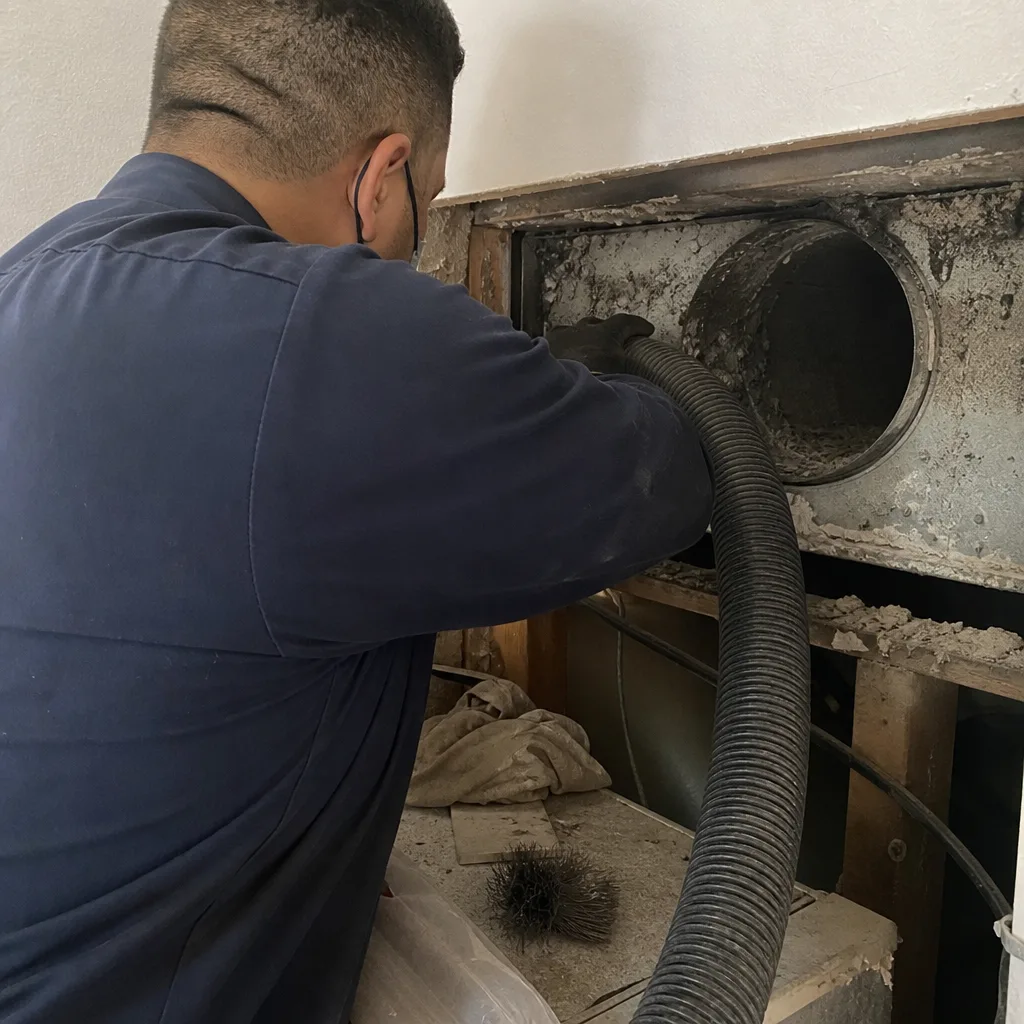 Before
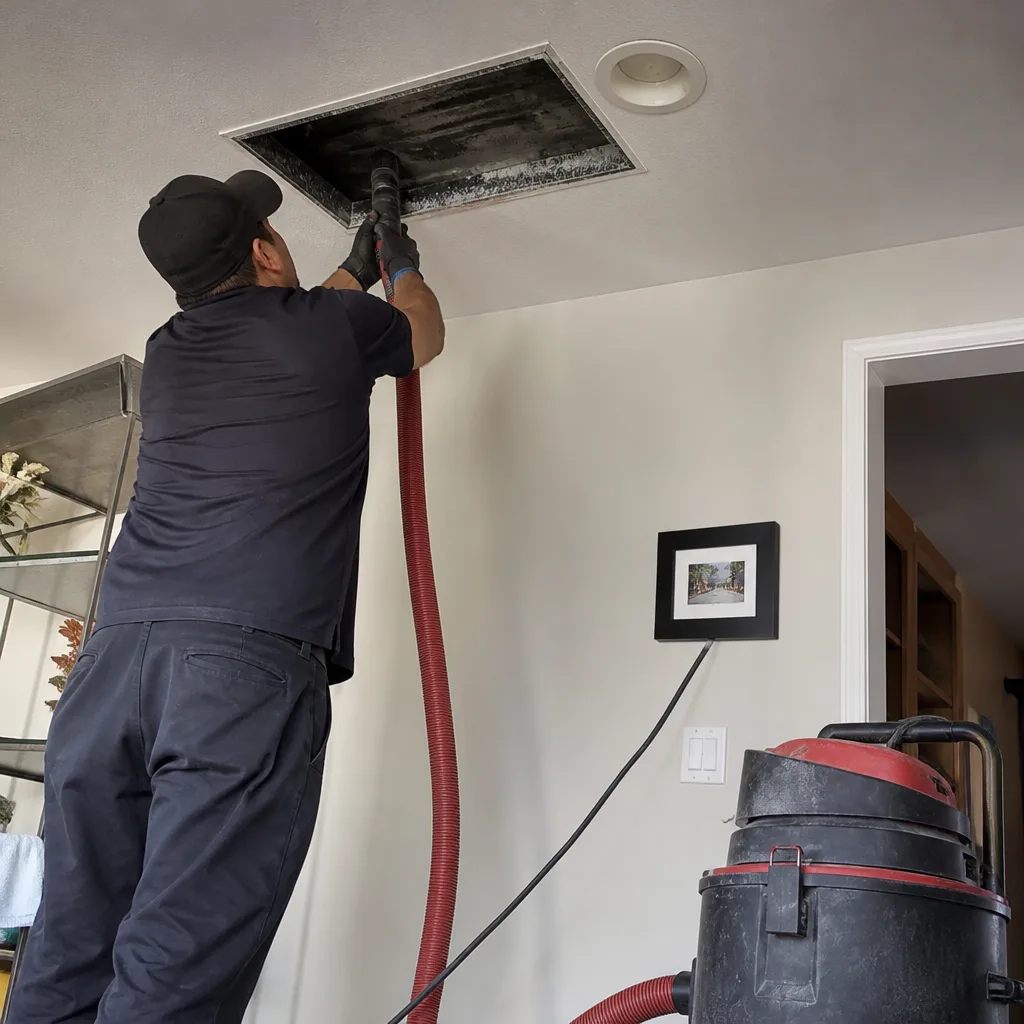 After
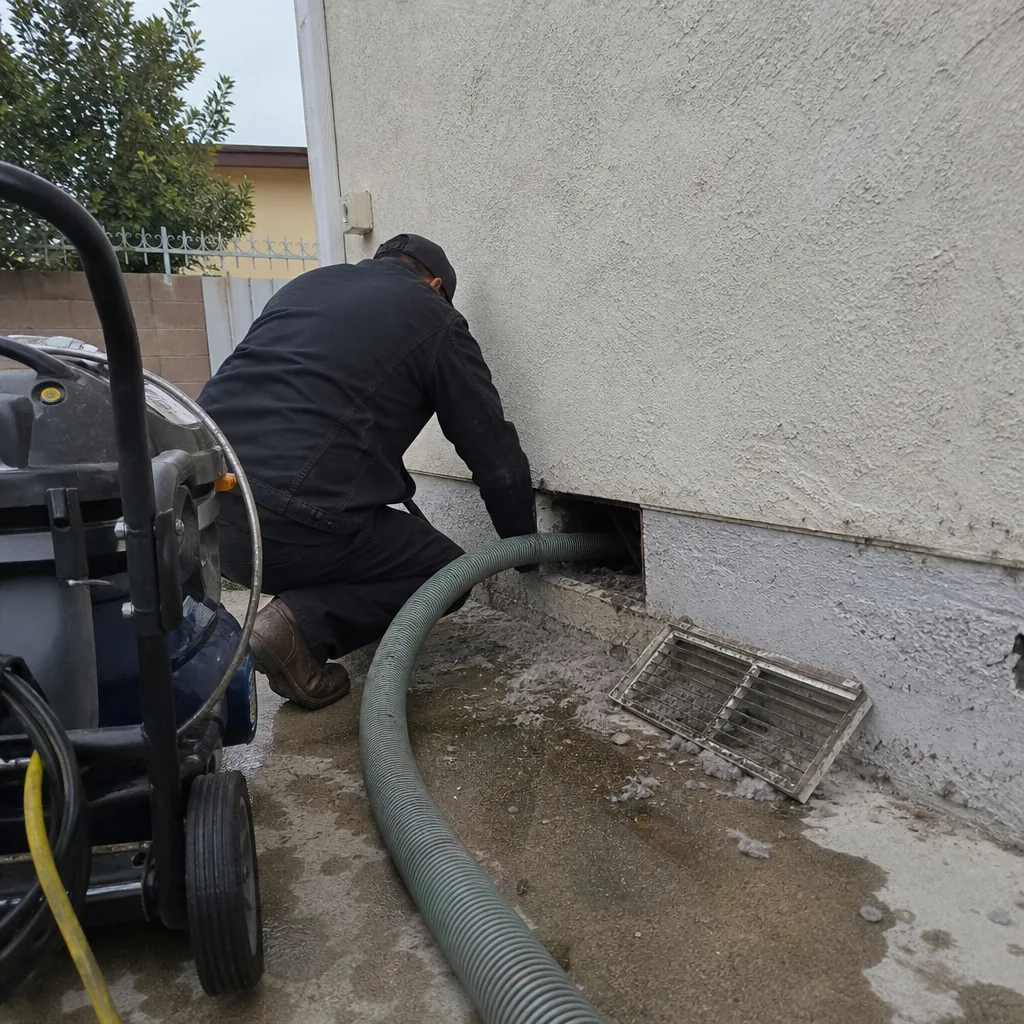 Before
 After
 Before
 After
When to Call a Professional
Call a professional when you can see mold, when construction debris has settled into the system, when the home has flex duct runs, when the return plenum shows heavy accumulation, when you smell persistent musty odor from the vents, or when the last professional cleaning was more than three years ago and you haven’t maintained the registers in the interim. These scenarios require negative-air extraction and, in some cases, duct repair that homeowner equipment cannot provide.
Duct Cleaning Downey offers free estimates in Downey for all three service categories: air duct cleaning, dryer vent cleaning, and air duct repair. Call (855) 382-4683 to schedule an assessment. We’ll inspect the system, show you what’s there, and give you a straight answer about what needs professional attention and what you can handle yourself.
Frequently Asked Questions
Professional air duct cleaning in Downey typically costs several hundred dollars for a whole-home system, with final pricing determined by square footage, register count, contamination level, and whether dryer vent cleaning or duct repair is bundled. Call (855) 382-4683 for an exact quote, estimates are free and we provide one flat price before any work begins.
You can clean register covers and visible boot interiors with a shop vac, which addresses surface debris but not the trunk lines, return plenum, or blower housing where the majority of contamination lives. A shop vac produces positive pressure that re-aerosolizes fine particulate back into the room, which is why it’s suitable for light maintenance between professional cleanings but not for full-system cleaning.
Visible dust accumulation on register covers, persistent household dust that returns within days of cleaning, musty odor from the vents when the system runs, reduced airflow from specific registers, and heavy pet dander are all indicators that the system has accumulated contamination beyond surface level. In Downey’s humid climate, adhered debris on duct walls requires mechanical agitation to remove, which is a professional-only process.
The air duct cleaning industry has a legitimate bait-and-switch problem, which is why we quote one flat price per system before work begins, no per-vent pricing, no teaser coupons. We use Rotobrush and Nikro negative-air systems with HEPA filtration, and we show you the interior of the ducts before and after so you can verify the work was actually done.
Most Downey homes benefit from professional duct cleaning every 3 to 5 years, with homes that have pets, smokers, recent construction, or residents with respiratory conditions on the shorter end of that range. Between cleanings, quarterly register washing and regular filter changes extend the interval by preventing surface contamination from migrating into the system.
Professional duct cleaning removes accumulated particulate that re-enters the air stream every time the HVAC system runs, which can reduce allergy symptoms for sensitive individuals, especially in Downey homes where pollen and marine-layer moisture create a higher organic particulate load. However, cleaning is part of the solution, not all of it. Running a Honeywell or Aprilaire air-filtration system, which we install and service, provides ongoing particulate capture between cleanings.
The Bottom Line
DIY air duct cleaning has a legitimate niche in Downey homes, but it’s a narrow one. Register cleaning between professional visits, post-move-in surface work, and isolated single-room contamination are all manageable with a HEPA-filtered vacuum and some elbow grease. Everything else, the trunk lines, return plenum, blower housing, flex duct runs, mold situations, and post-construction debris, requires the negative-air pressure and mechanical agitation that only professional Rotobrush and Nikro equipment delivers. The smartest move is to understand the boundary, handle the surface layer yourself, and call a professional when the contamination is deeper than the visible boot. That combination keeps your indoor air clean and your system running efficiently without throwing money at problems you can solve with a washcloth.
Written by the team at Duct Cleaning Downey, serving Downey since 2017.