
Last updated November 2, 2026
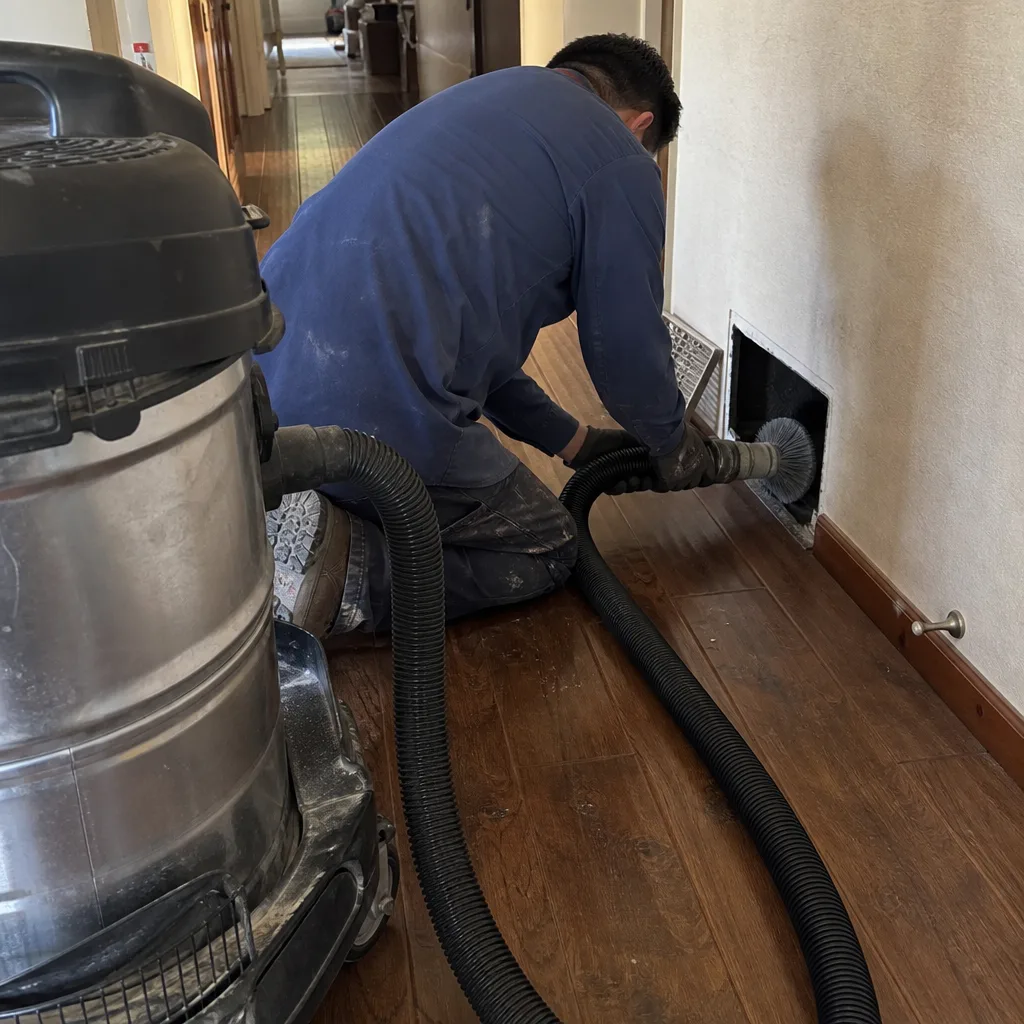
 Whole-home duct cleaning
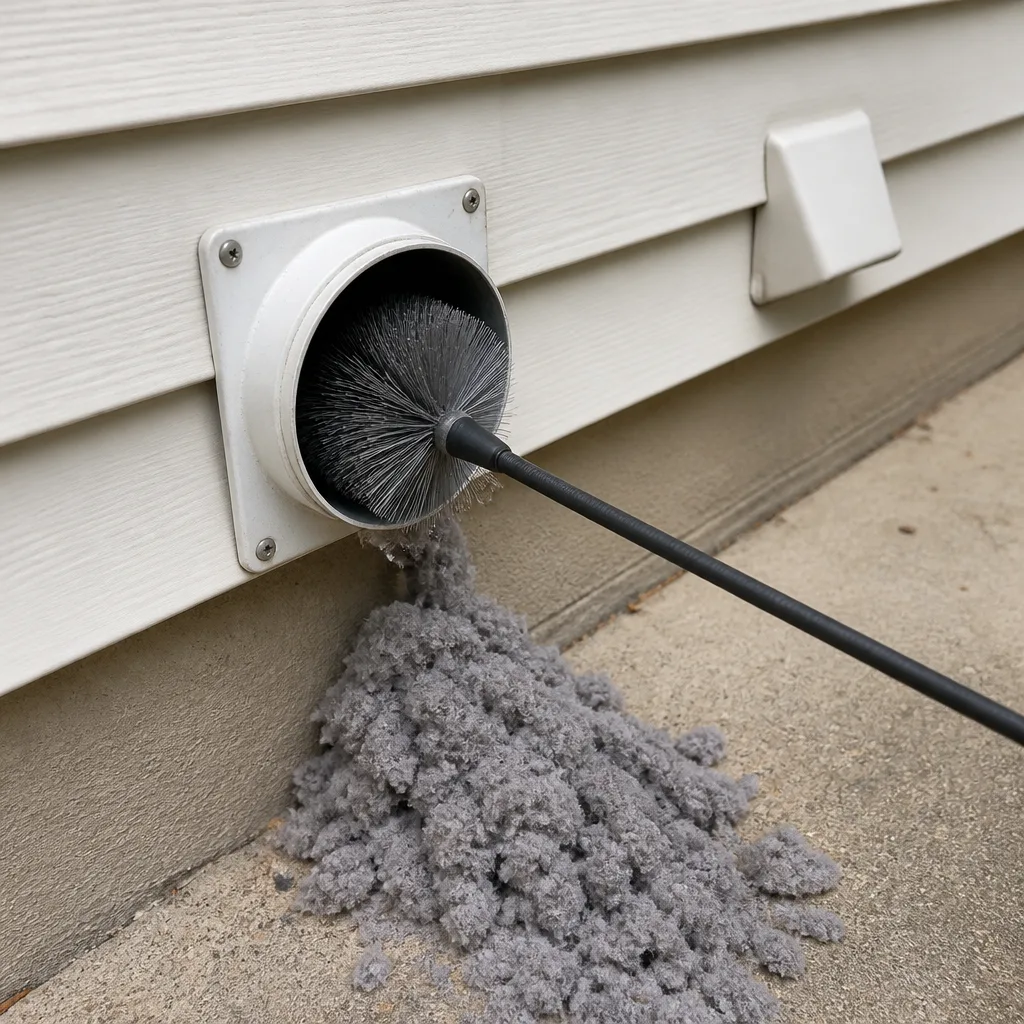 Dryer vent cleaning
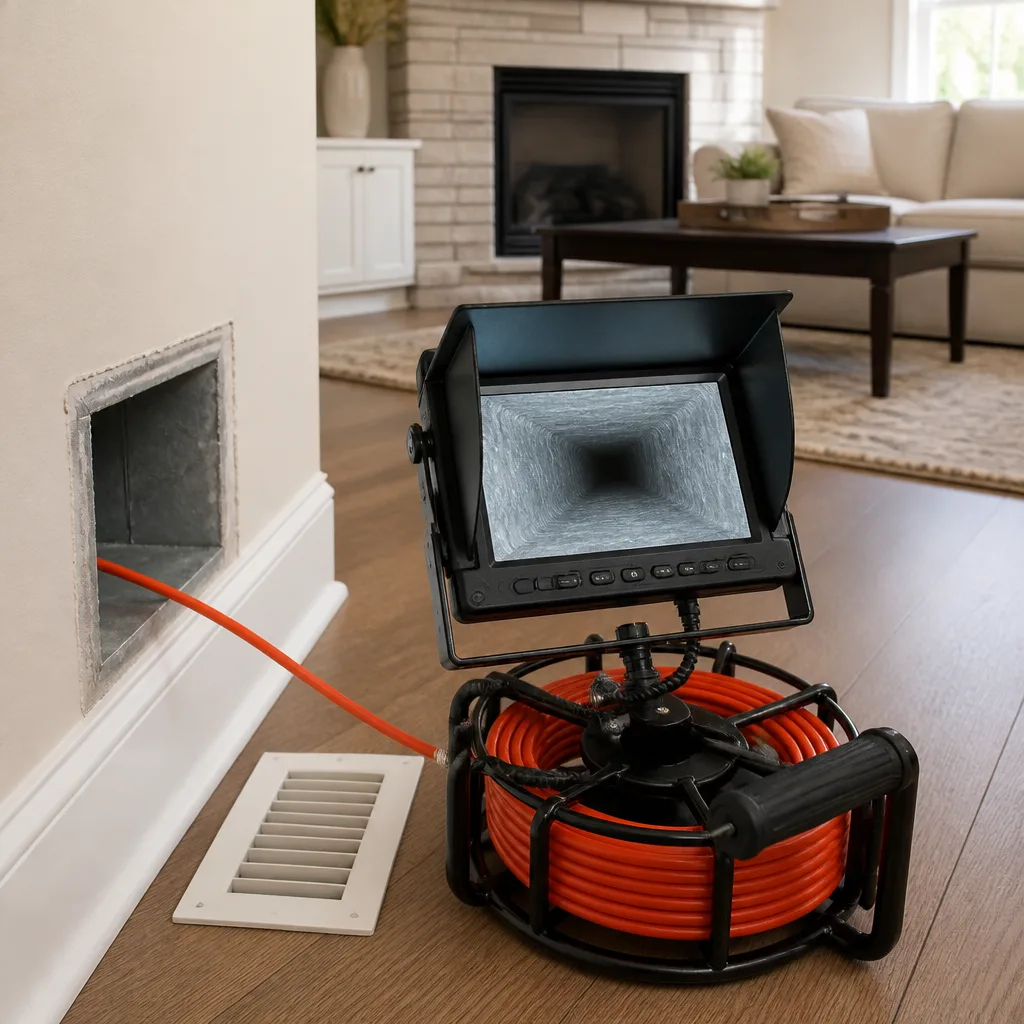 Camera inspection
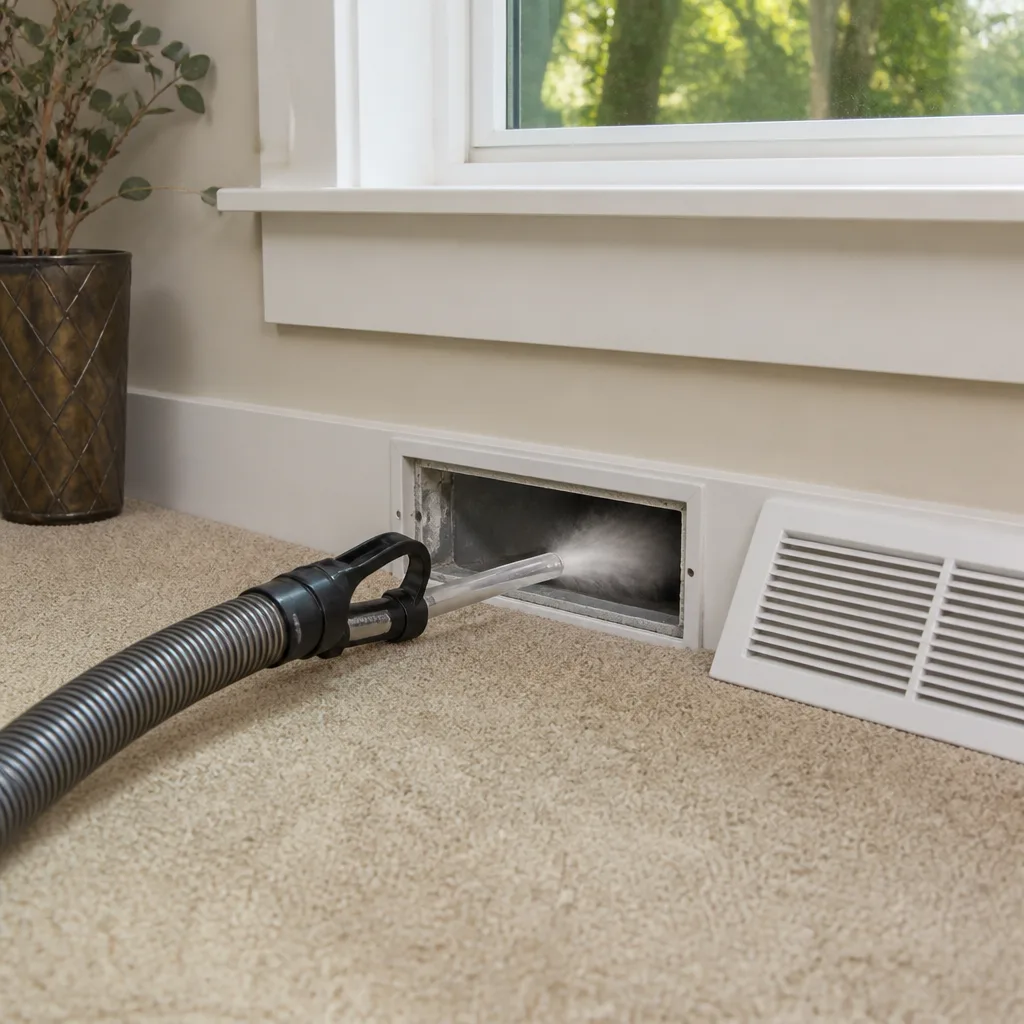 Sanitizing & deodorizing
Whole-system duct and dryer vent check with before-and-after photos - you see exactly what came out of your vents
That "$99 whole-house special" is a bait ad - the real number appears once they are in your hallway, or the "clean" is a shop-vac at the register. We photograph the inside of your ducts before and after instead.
Seasonal Air Duct Cleaning Care for Downey: Year-Round Homeowner’s Guide
The 3,300-square-foot house on Burns Avenue had its ducts cleaned in March. By the time September rolled around, the homeowner called us back convinced the first job was a failure. Dust was settling on furniture within two days of wiping. The problem wasn’t the cleaning. It was the timing. Downey doesn’t have four textbook seasons, but it absolutely has four distinct contamination events that hit ductwork in sequence. Most homeowners clean their ducts “every few years” with no logic behind the timing. Anyone who ran their AC through August and then left windows open during October’s Santa Ana winds just pushed two separate contamination cycles through the same uncleaned system. This guide maps the Downey year not by months, but by what’s actually entering your registers.
Quick Answer
Seasonal Air Duct Cleaning in Downey means scheduling service around four specific events: pre-AC startup (May), post-peak summer (September), post-Santa Ana wind events (November), and post-winter heating (March). Most Downey homes do best with one full-system cleaning annually, timed in September after the AC has run hard and before Santa Ana winds start. Households with pets, allergy sufferers, or recent renovation work often need a second pass in March or May.
Styles & brands we work with
- Whole-home duct cleaning
- Dryer vent cleaning
- Camera inspection
- Sanitizing & deodorizing
Table of Contents
- Downey’s Four Duct-Relevant Seasons: Not What the Calendar Says
- May: The Pre-AC Startup Inspection That Prevents Summer Problems
- September: Why Post-Peak Summer Is Downey’s Primary Cleaning Window
- November: Santa Ana Winds and What They Leave Behind in Your Ductwork
- March: The Post-Heating Cycle Cleaning Most Homeowners Skip
- Wildfire Smoke Particulate: Why It Behaves Differently Inside Ductwork
- The Case for a Separate Pre-Summer Coil and Blower Cleaning
- Filter Selection by Season: Why the Wrong MERV Rating Accelerates Contamination
Downey’s Four Duct-Relevant Seasons: Not What the Calendar Says
Pull up any national air duct cleaning guide and you’ll get the same advice: clean in spring or fall. Generic advice for generic climates. Downey sits in USDA hardiness zone 10b with a Mediterranean climate that produces a very specific contamination rhythm. Our team has worked on homes across Downey, from the older stock near Florence Avenue to the newer developments east of the 605, and the pattern holds everywhere.
Here’s what actually cycles through Downey ductwork each year:
- May through August: AC runs daily. Return ducts pull household dust, pet dander, and skin cells into the system continuously. The evaporator coil condenses moisture, which captures passing debris. By Labor Day, most Downey systems carry a measurable layer of compacted material on the coil and blower wheel.
- September through November: Santa Ana winds arrive. Windows open for “nice weather.” Exterior dust, freeway particulate from the 5 and 605 corridors, and wildfire smoke when present get pulled through window screens and into return grilles. This is a completely different contamination profile than summer: finer, drier, and more abrasive.
- December through February: Heating cycle runs. Any moisture that accumulated during summer has now dried and baked onto duct surfaces. The furnace blower re-suspends fine particles that settled during the cooling season. Homes in Downey that run gas furnaces see combustion byproducts circulate alongside regular dust.
- March through April: Shoulder season. System runs less. Dust settles. Mold risk is minimal in Downey’s dry climate, but rodent and insect activity in attic duct runs sometimes peaks during these cooler months before summer heat drives them out.
This is why a single March cleaning on Burns Avenue failed by September. The cleaning removed winter accumulation, then the AC ran all summer and rebuilt the contamination load. The homeowner’s indoor air quality wasn’t bad because the cleaning was inadequate. It was bad because the cleaning predated the house’s heaviest contamination season.
For context on what a full-system cleaning actually involves, see our guide to Air Duct Cleaning in Downey.
May: The Pre-AC Startup Inspection That Prevents Summer Problems
Every May, thousands of Downey homeowners flip their thermostat from “off” to “cool” without thinking about what happened inside the ducts since October. Dust settled. Maybe a rodent explored an attic run. The coil accumulated minor corrosion. Then the blower fires up and pushes all of it into living spaces within the first hour.
May is not a cleaning month for most homes. It’s an inspection month. Here’s a numbered approach we recommend:
- Replace the return-air filter before the first cooling cycle. A filter loaded with winter dust forces the blower to work harder from day one.
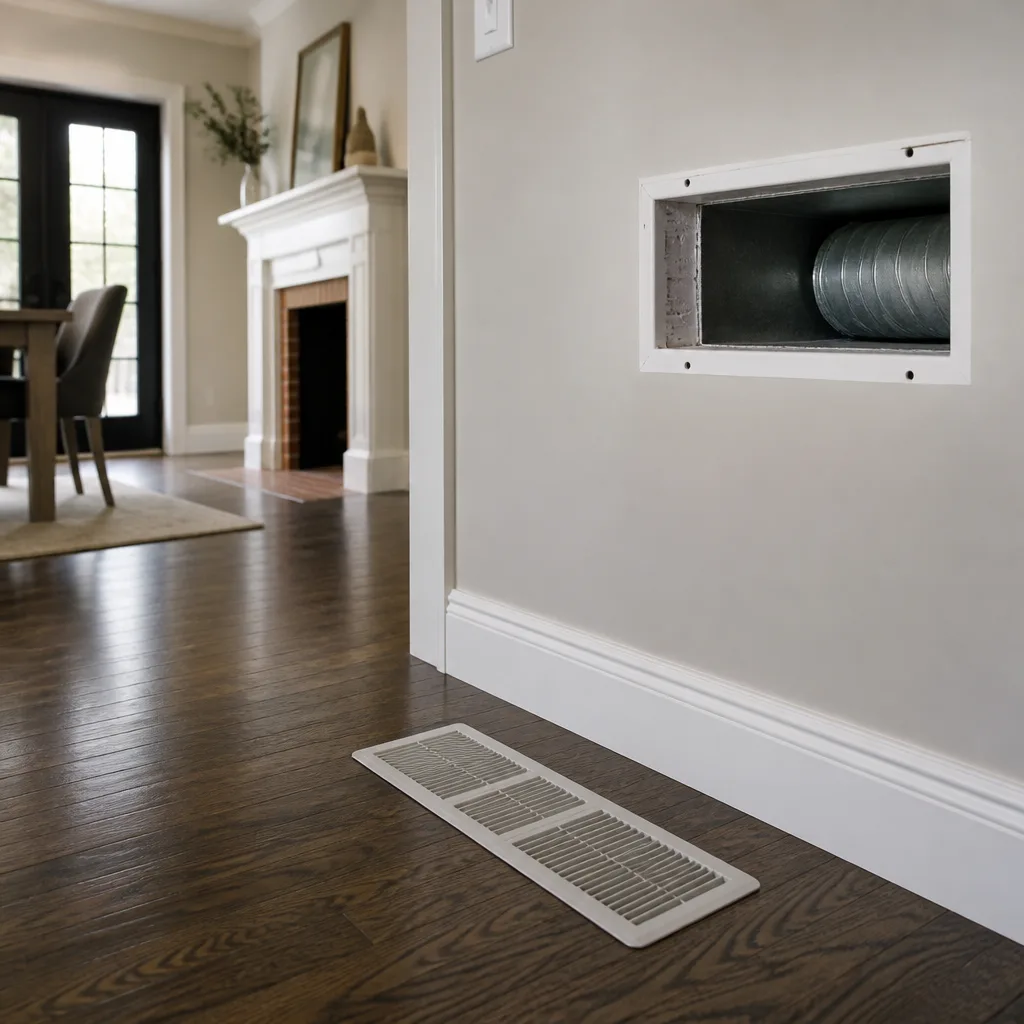
- Visually inspect supply registers with a flashlight. Look for visible dust accumulation on the register blades and inside the first few inches of visible ductwork.
- Run the AC for 15 minutes with windows closed. Note any musty smell, reduced airflow, or new rattles. All three indicate duct or coil issues that a basic filter change won’t fix.
- Check the condensate drain line. In Downey’s dry climate, it’s less of a clog risk than in humid markets, but a backed-up drain still puts moisture at the coil where debris collects.
If step 2 or 3 reveals problems, a May cleaning makes sense. If the system starts clean and runs normally, the smarter move is to schedule full cleaning for September and let May stay an inspection point. The exception is anyone planning summer renovation work, when drywall dust will guarantee a heavier downstream load.
Some homeowners confuse this May inspection with the deeper service we discuss in our Air Duct Repair in Downey guide. Inspection finds problems. Repair fixes them. Cleaning removes what accumulated. All three are related but distinct.
September: Why Post-Peak Summer Is Downey’s Primary Cleaning Window
September is the single most effective month to clean ducts in Downey. The logic is simple: the AC has just spent four months pulling household contaminants through every duct run, and the Santa Ana season hasn’t yet introduced the exterior contamination load. Clean in September, and you enter the windy season with a blank slate.
In our experience working on Downey homes, September cleanings remove a very specific profile of material. The bulk is household-generated: shed skin cells, pet dander (often substantial in multi-pet homes), textile fibers from carpet and upholstery, and pulverized food debris. But September also picks up a surprising amount of construction dust. Downey has seen significant multi-family and commercial development along Firestone Boulevard and Lakewood Boulevard corridors, and homes near active job sites draw concrete and drywall particulate through open windows during the summer.
A September full-system cleaning should include:
- Supply and return duct cleaning with mechanical agitation, not just vacuum. We run Rotobrush and Nikro systems simultaneously because that combination drags debris loose while extracting it, which is a different process from a single vacuum pass.
- Coil cleaning. By September, the evaporator coil in a Downey home that ran AC continuously from May has a compacted layer of matted dust and dried condensation residue. Cleaning ducts without cleaning the coil means the system re-contaminates within weeks.
- Blower wheel cleaning. Dust accumulates on the curved blades of the blower wheel, reducing airflow through every season. This is one of the most frequently skipped steps in budget cleanings.
- Air handler interior cleaning. The cabinet that houses the coil and blower is part of the airflow path. If it stays dirty, the system stays dirty.
What a September cleaning costs in Downey depends on system size and access, but a complete service that includes coil, blower, and all duct runs for a typical 2,000 to 2,800 square-foot home generally runs between $450 and $850. For a detailed breakdown, see our Air Duct Cleaning Cost Breakdown: The Downey Homeowner’s Reference for 2026. Smaller condos and apartments trend lower. Homes with multiple systems or extensive duct runs can push past $900. That’s the honest range: not the $99 coupon price that becomes a $600 invoice on the driveway, and not the $2,000 scare quote from a commission-driven outfit.
If you’re a property manager handling multiple Downey units, the September window also aligns with tenant turnover cycles that peak after Labor Day. Scheduling duct service during vacancy periods eliminates tenant disruption.
November: Santa Ana Winds and What They Leave Behind in Your Ductwork
Santa Ana winds are the single most underestimated duct contamination source in Downey. The National Weather Service regularly issues red flag warnings for Los Angeles County in October and November, and Downey sits squarely in the path. Winds from the northeast push desert dust, wildfire smoke, and freeway particulate across the LA basin, and homeowners respond by opening windows because the temperature is finally comfortable.
The result: a fine, dry, abrasive dust that behaves completely differently inside ductwork than standard household dust. Household dust is fibrous and organic. It clings to duct surfaces. Santa Ana dust is mineral-heavy and settles as a thin, even film. When the heating cycle starts, the blower re-suspends that film instantly. The first furnace run of the season is often when Downey homeowners notice a sudden dusting event on furniture, or a dry cough that appears within days of switching to heat.
A November post-Santa Ana cleaning is usually shorter and more targeted than a September full-system cleaning. If the system was cleaned in September, this follow-up can focus on:
- Return ducts near windows that were habitually open during wind events
- Supply runs serving bedrooms and living areas where dust accumulation is most visible
- Filter replacement with a higher-efficiency option for the remainder of fire season (more on filter selection below)
Not every Downey home needs this November pass. Homes with well-sealed windows, no pets, and occupants who keep the house closed during high-wind days can usually wait until March. Homes near the 5 or 605 freeway corridors, homes with older single-pane windows, and homes where anyone in the family has asthma or allergies are the strongest candidates for a November touch-up after the first major wind event of the season.
March: The Post-Heating Cycle Cleaning Most Homeowners Skip
March is the least intuitive cleaning month in Downey, which is exactly why so many homeowners skip it. The heating season in Downey is short and mild compared to the rest of the country. But a short heating season still cycles air through the furnace, and that air includes several contaminants specific to winter operation.
Gas furnaces in Downey produce combustion byproducts. Modern sealed-combustion furnaces are efficient and safe, but microscopic particulate from heat exchanger operation still enters the airflow over time. Homes with older furnaces see more of this. Add in the fact that winter is when Downey homes stay closed up, when pets spend more time indoors, and when holiday cooking introduces aerosolized grease into the return air, and a March cleaning makes clear sense for a specific subset of homes.
Who should schedule a March cleaning?
- Homes with furnaces older than 15 years. Older heat exchangers and less efficient burners produce more combustion residue. A March cleaning removes it before the AC season starts.
- Homes with indoor pets that shed heavily in winter. Many Downey homes have dogs and cats that spend more time inside from December through February. That dander enters the return ducts and stays there.
- Homes that did indoor renovation or holiday-season deep cleaning. Sanding, painting, and even aggressive vacuuming all introduce particulate that settles in ducts.
- Allergy sufferers who noticed winter symptoms. If anyone in the house had unexplained congestion or coughing during heating season, the ducts are a probable contributor.
For most other Downey homes, March is a filter-change and inspection month, not a cleaning month. The smart strategy is annual September cleaning with a March pass only when circumstances warrant. Our Duct Cleaning Downey home page explains the full scope of what our team handles for both scheduled cleaning and emergency callouts.
Wildfire Smoke Particulate: Why It Behaves Differently Inside Ductwork
Downey sits downwind of wildfire zones in the San Gabriel Mountains and, increasingly, in the hills above Orange County and the Inland Empire. When smoke drifts into the LA basin, it enters homes through windows, doors, and the HVAC system’s own fresh-air intake if one exists. What most homeowners don’t realize is that smoke particulate doesn’t just pass through ducts the way regular dust does.
Wildfire smoke particulate is extremely fine, often measuring 2.5 microns or smaller. That’s small enough to remain suspended in air for hours and small enough to penetrate deep into lung tissue. Inside ductwork, this fine particulate behaves differently than household dust in three specific ways:
- It penetrates deeper into the system. Standard household dust settles in the first few feet of supply and return runs. Smoke particulate travels the entire length of ductwork because it stays suspended longer.
- It bonds to moisture. During cooling season, the coil produces condensate. Smoke particulate drawn through the system gets captured by that moisture and creates a sticky residue on the coil surface that standard vacuuming won’t remove. This residue then serves as a capture surface for the next round of household dust.
- It resists standard cleaning. The fine, dry particulate from wildfire smoke embeds into the porous surface of flexible ductwork and the rough interior of fiberglass duct liner. Removing it requires agitation that standard vacuum-and-brush passes don’t deliver.
This is why equipment matters specifically during and after fire season. We run Rotobrush and Nikro professional duct-cleaning systems simultaneously because the combination of mechanical agitation and high-efficiency vacuum extraction is what actually dislodges smoke-embedded particulate from duct surfaces. We also carry Abatement Technologies air-filtration equipment, the same category of gear used in environmental remediation work. When a Downey home has been exposed to significant wildfire smoke, running HEPA-level filtration during and after the cleaning captures the fine particulate that agitation releases into the air, instead of letting it settle back onto floors and furniture.
If you ran your AC during a smoke event and did not clean afterward, that particulate remains in the system and re-releases during every subsequent heating or cooling cycle. The longer it sits, the more it bonds. A post-smoke-event cleaning is one of the clearest cases for scheduling service outside the normal seasonal rhythm.
The Case for a Separate Pre-Summer Coil and Blower Cleaning
Here’s a distinction that most national guides miss entirely: coil cleaning and duct cleaning are different tasks with different rhythms, and treating them as one service produces worse outcomes for Downey homeowners.
The evaporator coil sits inside the air handler and does the actual work of cooling air. As warm air passes over it, the coil condenses moisture, which captures dust and debris that passes through the filter. Over a Downey summer, that coil accumulates a dense layer of matted material the same way a car’s radiator accumulates bugs on a long drive. The blower wheel, meanwhile, accumulates dust on its curved blades, which reduces airflow and forces the system to work harder to deliver the same temperature drop.
The coil and blower get dirty on a different timeline than the duct runs themselves. Duct contamination accumulates gradually as air passes through. Coil contamination accelerates during cooling season because the moisture cycle makes the coil a capture surface. In a Downey home that runs AC eight months a year, the coil can build a problematic layer in a single summer even in ducts that were properly cleaned in May.
The practical implication: if you clean ducts in March but skip the coil, you’ll run the AC all summer over a dirty coil, which re-contaminates the supply side of the system. If you clean the coil in May but skip the ducts, the blower pushes accumulated duct dust across a clean coil, fouling it before August. Both tasks need to happen together for a genuinely clean system, and the ideal time is after the heaviest cooling months, which puts a September full-service cleaning back at the center of the Downey seasonal plan.
Some systems also have secondary issues that cleaning alone won’t resolve. Disconnected duct runs, crushed flex duct, and unsealed joints all pull attic air into the system regardless of how clean the interior surfaces are. In those cases, cleaning without repair is a temporary fix. Our Air Duct Repair in Downey service addresses those structural issues as a standalone scope of work, which means a homeowner doesn’t have to hire two separate contractors to resolve one airflow problem.
Filter Selection by Season: Why the Wrong MERV Rating Accelerates Contamination
Filter advice is where generic HVAC guidance falls apart fastest for Downey specifically. National guides recommend MERV 8 to MERV 11 as a balanced range for most homes. That’s reasonable advice for someone in Ohio. It’s incomplete advice for someone in Downey running their system through Santa Ana season and annual wildfire smoke events.
The filter’s job is to capture airborne particulate before it reaches the coil and the supply ducts. The MERV rating measures how effectively it does that. Higher MERV ratings capture finer particulate, which is better for air quality but imposes more airflow resistance. In Downey’s climate, the right MERV rating changes depending on what’s coming through the system each season.
- Summer (May through September): MERV 8 to MERV 11 is appropriate for most systems. The contamination load is household-generated and relatively coarse. A MERV 11 filter captures pet dander and most household dust without starving the blower. Systems with properly sized ductwork can handle MERV 11 without measurable airflow reduction.
- Fire and Santa Ana season (October through December): This is when Downey homeowners should step up to MERV 13. Wildfire smoke particulate is fine enough to pass through MERV 8 filters almost unimpeded, which means the coil and ducts become the filter. MERV 13 captures smoke particulate and the fine mineral dust from wind events. If you have a Honeywell or Aprilaire media cabinet, this is the season to run the highest-efficiency filter the system is rated for.
- Winter (January through March): MERV 11 works for most homes. The heating cycle doesn’t produce the moisture-driven capture of cooling season, and the contamination load is lower. Filter resistance matters more in winter because the system is pushing heated air through the same ductwork, and any measurable airflow reduction means less efficient heating.
The wrong filter in the wrong season doesn’t just reduce air quality. It accelerates duct contamination. A MERV 8 filter during an October Santa Ana event lets fine dust into the supply ducts, where it settles and requires professional cleaning to remove. A MERV 16 filter in a system not designed for that resistance starves the blower, which causes the coil to freeze and the system to short-cycle, which leaves moisture in the ducts that captures more dust. Both mistakes compound over time.
If you’re replacing a filter, the appliance brand matters less than the rating and fit. Our team services and installs Aprilaire and Honeywell air-quality systems, and the seasonal guidance above applies across all of them. What matters is matching the filter to the season’s contamination profile and your system’s airflow capacity.
How Often Does Your Specific Home Need Cleaning?
Annual cleaning in September works for most Downey homes. But “most” hides meaningful variation. Two identical houses on the same street can have completely different duct contamination profiles depending on occupancy, pets, and activity. Here’s a practical self-assessment.
Your home is a strong candidate for annual cleaning only if ALL of the following are true:
- No indoor pets, or one short-haired pet with minimal shedding
- Two or fewer occupants
- No renovation or construction work in the last two years
- No smoking or vaping indoors
- No one in the household has significant allergies or asthma
- Windows stay closed during Santa Ana events and periods of visible smoke
- MERV 11 or better filters are replaced on schedule
Your home is a strong candidate for biannual cleaning (September plus March or May) if ANY of the following apply:
- Two or more indoor pets, especially cats or long-haired dogs
- Four or more occupants
- Any renovation, remodeling, or extensive drywall work completed in the last 18 months
- Smoking or vaping occurs indoors
- A household member has asthma, COPD, or significant environmental allergies
- The home sits near an active construction site, the 5, the 605, or another major particulate source
- Windows are regularly opened during Santa Ana season
- The system is older than 12 years and has never had coil or blower cleaning
This check is imprecise but directionally reliable. In our experience across Downey, pet-heavy households with open-window habits routinely show visible filter loading in half the time of pet-free households that keep windows closed. The loading rate on the filter is the best proxy for loading in the ducts, which is why we recommend checking filters monthly during heavy contamination seasons regardless of the rated replacement interval.
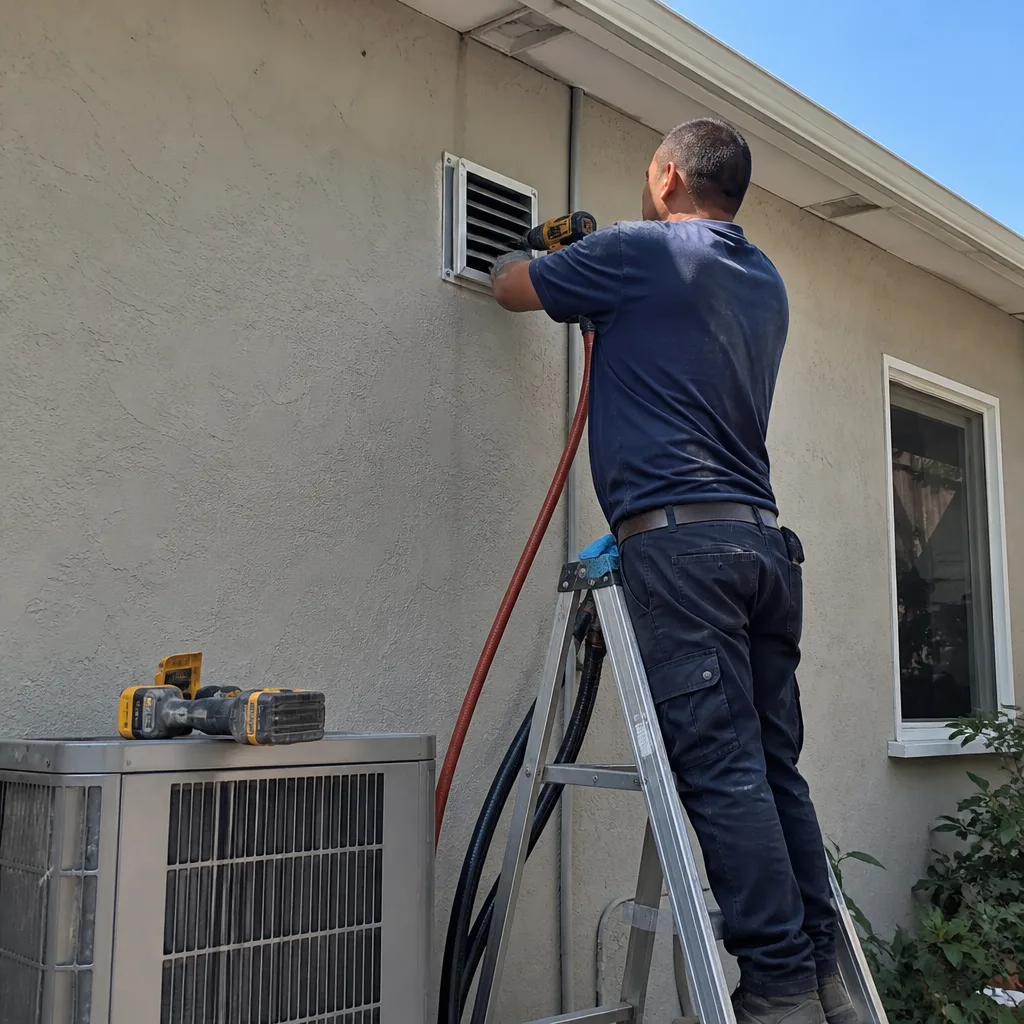
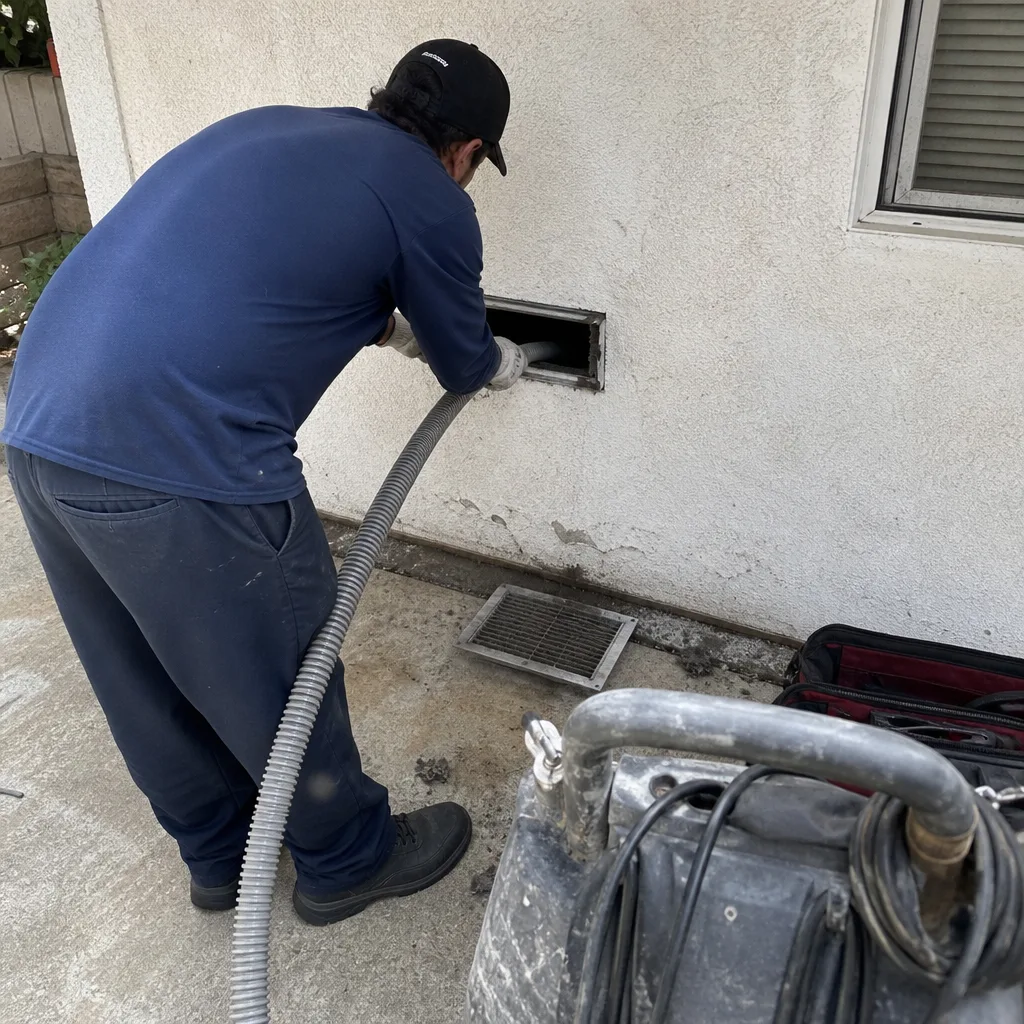
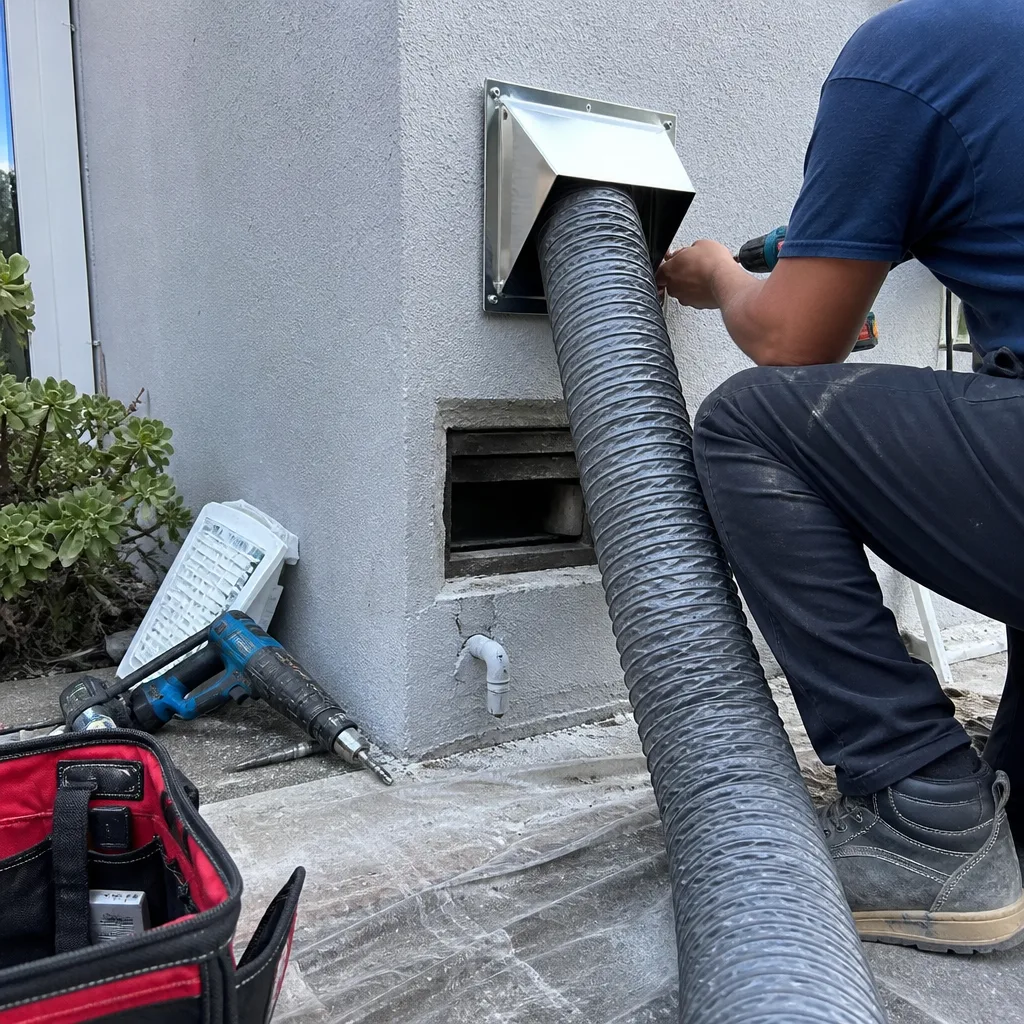
See the difference
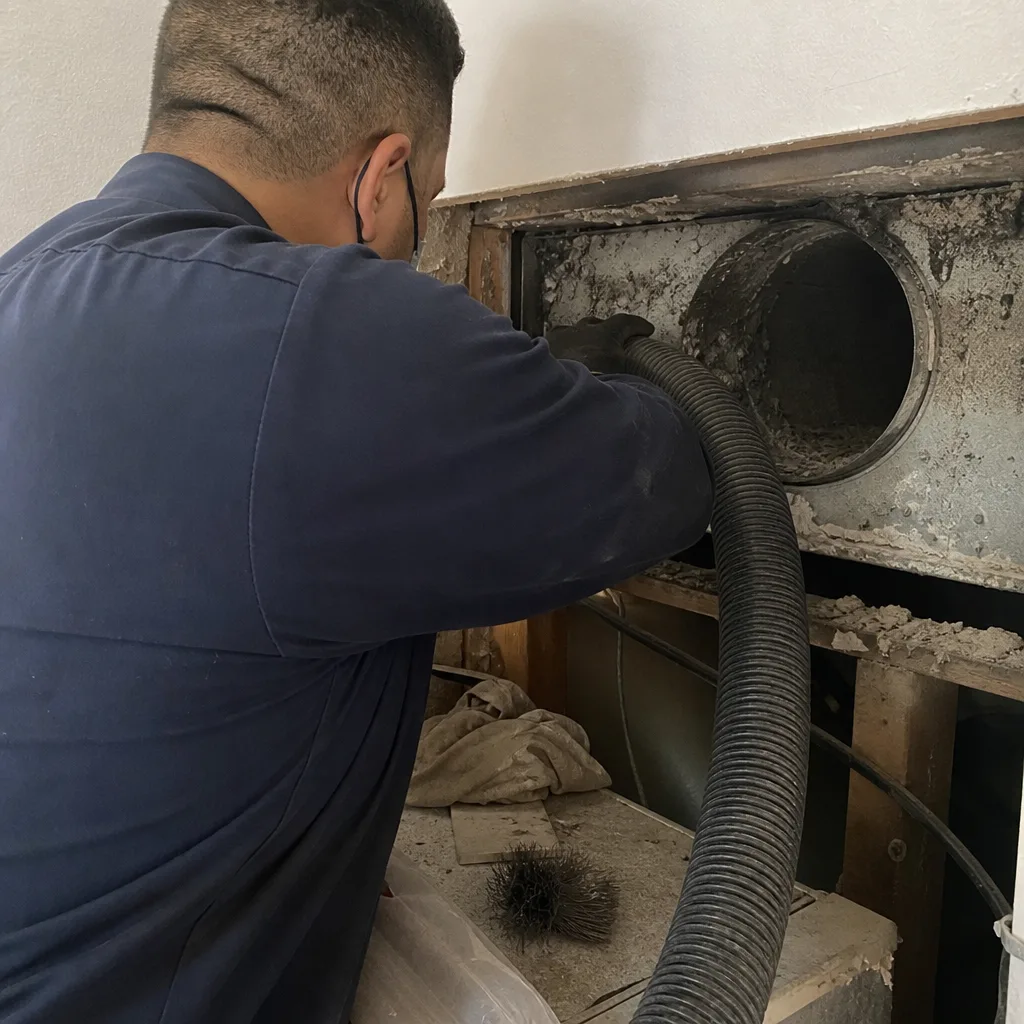 Before
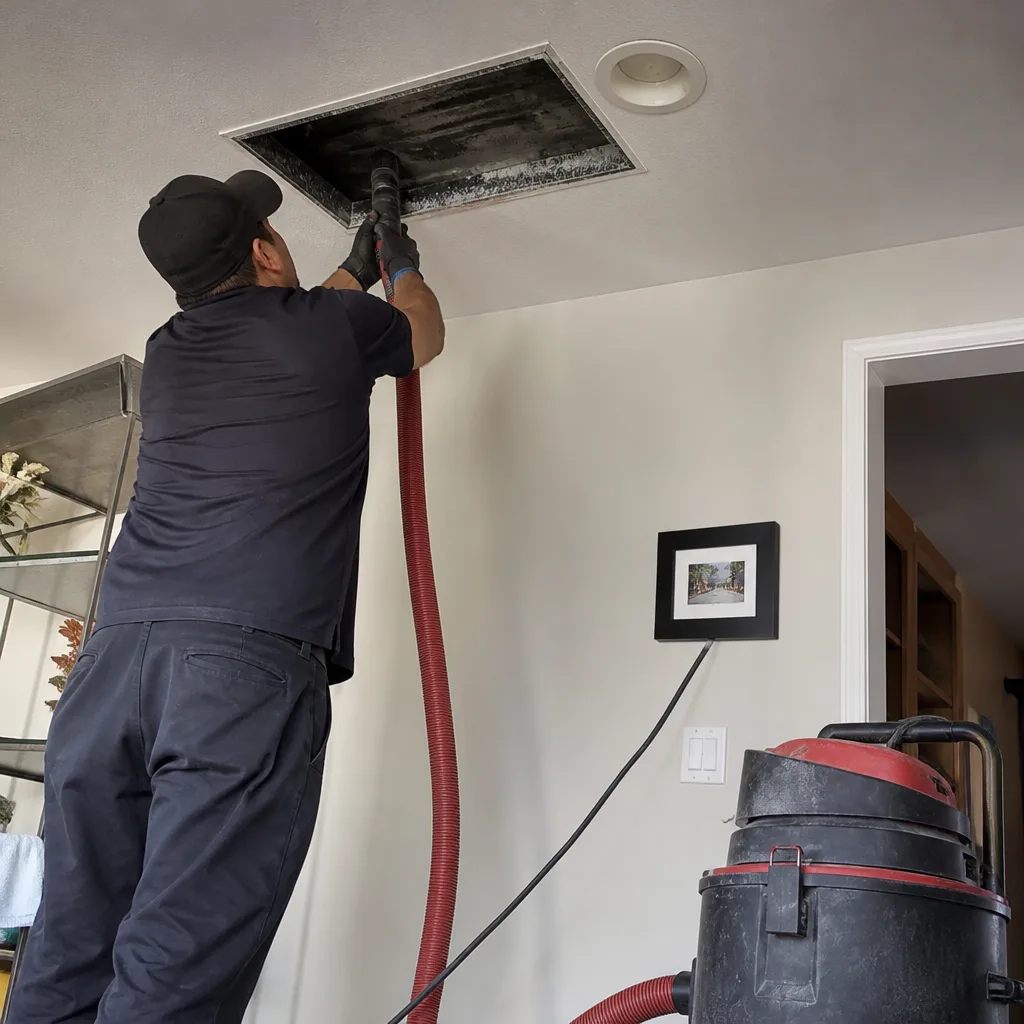 After
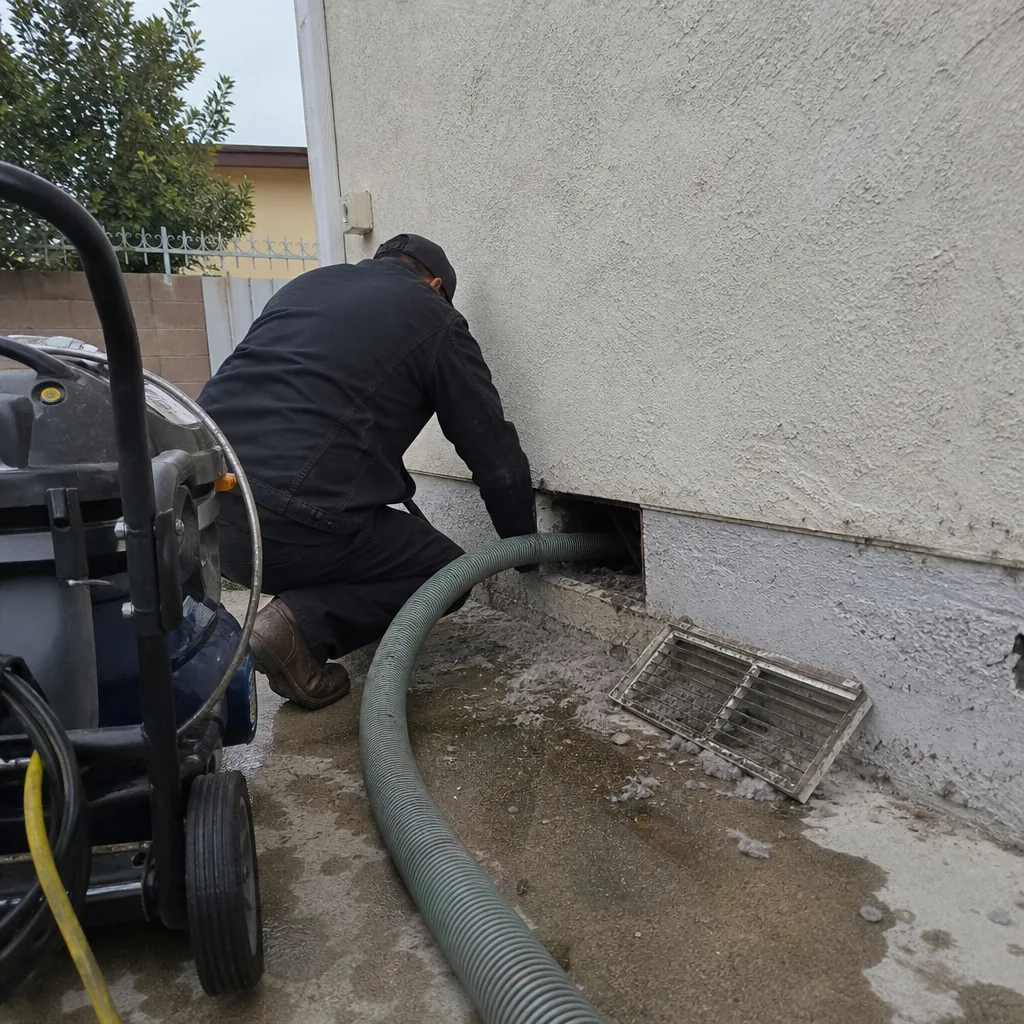 Before
 After
 Before
 After
Common Mistakes to Avoid
- Cleaning on a calendar schedule instead of a contamination schedule. March and September are both valid cleanings, but they serve different purposes. Cleaning in March before the AC season means running a dirty system through August. Cleaning in September after peak cooling means entering Santa Ana season with a clean system. If you only budget for one cleaning annually, September is the more defensible choice in Downey.
- Skipping the coil when you clean the ducts. The coil is the densest contamination point in the entire system. Cleaning duct runs while leaving the coil untouched means re-contaminating the supply side within the first month of AC operation. Any full-system cleaning in Downey should include the coil, blower wheel, and air handler interior.
- Using a low-MERV filter year-round and compensating with more frequent cleaning. A MERV 8 filter during Santa Ana season dumps fine dust into the supply ducts faster than any cleaning schedule can keep up. Stepping up to MERV 13 during October through December is cheaper and more effective than an extra cleaning pass.
- Trusting a coupon price without understanding scope. The $99 vent-clean special that becomes a $600 invoice after the technician “finds” a dirty coil is a known pattern in this industry. Reputable providers quote one flat price for the full system before work starts. If the price is too low to include coil and blower work, it probably doesn’t.
- Waiting for visible dust before scheduling service. By the time dust is visibly accumulating on furniture days after cleaning, the system has been loading for months. Duct contamination is invisible until it isn’t, and the visible stage is far past the point where a basic clean resolves it.
- Assuming window screens block exterior contamination. Screens block insects and some debris. They do not block fine particulate from Santa Ana winds, freeway traffic, or wildfire smoke. Homes in northwest Downey near the 5 corridor get measurable exterior particulate infiltration through standard window screens.
When to Call a Professional
Some duct situations are for a flashlight and a filter change. Others are not. Call a professional if you notice any of these specific conditions: visible mold growth on or around registers or the air handler, a persistent musty smell that worsens when the system runs, dust accumulating on furniture within days of cleaning, weak airflow from multiple registers, rodent or insect activity inside the ductwork, or a system that has run through a wildfire smoke event without a subsequent cleaning. None of these resolve with homeowner-grade intervention, and some get worse with delay. Duct Cleaning Downey offers free estimates in Downey; call (855) 382-4683 to schedule an assessment. We run Rotobrush and Nikro systems together, carry Abatement Technologies HEPA filtration equipment, and handle both cleaning and repair in a single visit when needed.
Frequently Asked Questions
A complete air duct cleaning in Downey, including supply and return ducts, evaporator coil, blower wheel, and air handler interior, typically runs $450 to $850 for a standard 2,000 to 2,800 square-foot home. Smaller dwellings trend lower, while homes with multiple systems or significant contamination can exceed $900. Be wary of quotes under $200, which almost never include coil or blower work. Call (855) 382-4683 for an exact quote on your system. Estimates are free.
Once annually is right for most Downey homes, timed in September after peak AC use. Homes with multiple pets, allergy sufferers, recent renovation, or regular window use during Santa Ana season often benefit from a second cleaning in March or May. No Downey home needs quarterly duct cleaning, regardless of what a sales script says.
Cheaper quotes usually cover less scope. A $99 or $150 “special” typically includes only vacuuming supply registers from inside the room, skipping the return side, the coil, the blower wheel, and the air handler entirely. Some operators use the low price to get in the door and then upsell the full service at a higher price than a straightforward quote would have cost. Compare quotes by scope, not by price, and confirm that coil and blower cleaning are included.
Reputable providers document the work with before-and-after photos of the duct interiors, the coil, and the blower wheel. You should receive these photos with your invoice. If a provider cannot or will not show photographic proof of the cleanest state of your system, treat that as a red flag. Ask before booking whether before-and-after documentation is standard practice.
For most Downey homes, air duct cleaning is a legitimate maintenance task that produces measurable improvements in airflow and particulate levels. The National Air Duct Cleaners Association recommends cleaning when visible mold is present, when ducts are infested with vermin, when registers show visible dust accumulation, or when occupants experience unexplained allergy symptoms. Homes that meet none of those conditions and have no pets or renovation history can go longer between cleanings. Explore our more guides & resources for seasonal maintenance tips. The service is not a scam, but the industry does contain operators who overstate the need and underdeliver on scope.
Dryer vents follow a different rhythm than air ducts. The dryer vent accumulates lint on a cycle determined by laundry volume, not HVAC usage. Most Downey homes need dryer vent cleaning annually, with larger households or those drying heavy fabrics like towels and blankets weekly needing it twice a year. The fire risk from a clogged dryer vent is unrelated to the air quality concern from dirty ducts, which is why our Dryer Vent Cleaning in Downey service is scheduled separately from air duct work. If you’re scheduling September air duct cleaning, adding a dryer vent check in the same visit is practical and often slightly cheaper than booking two separate appointments.
The Bottom Line
Downey’s duct contamination follows a predictable annual rhythm, and sensible maintenance follows the same rhythm. The core insight is simple: September is the primary cleaning month because it sits after peak AC loading and before Santa Ana season. March or May is the secondary window for homes with pets, allergies, or old furnaces. November matters only when major wind or smoke events actually occur. Filter strategy shifts with the seasons, and the coil and blower need attention on a different timeline than the duct runs themselves. A homeowner who understands this rhythm avoids overpaying for unnecessary cleanings and avoids living with a system that’s quietly redistributing months of accumulated particulate. If your home hasn’t been assessed by someone who looks at the whole system rather than just the registers, call (855) 382-4683 and we’ll tell you honestly what your system needs and what it doesn’t.
Written by the team at Duct Cleaning Downey, serving Downey since 2017.