
Last updated November 2, 2026
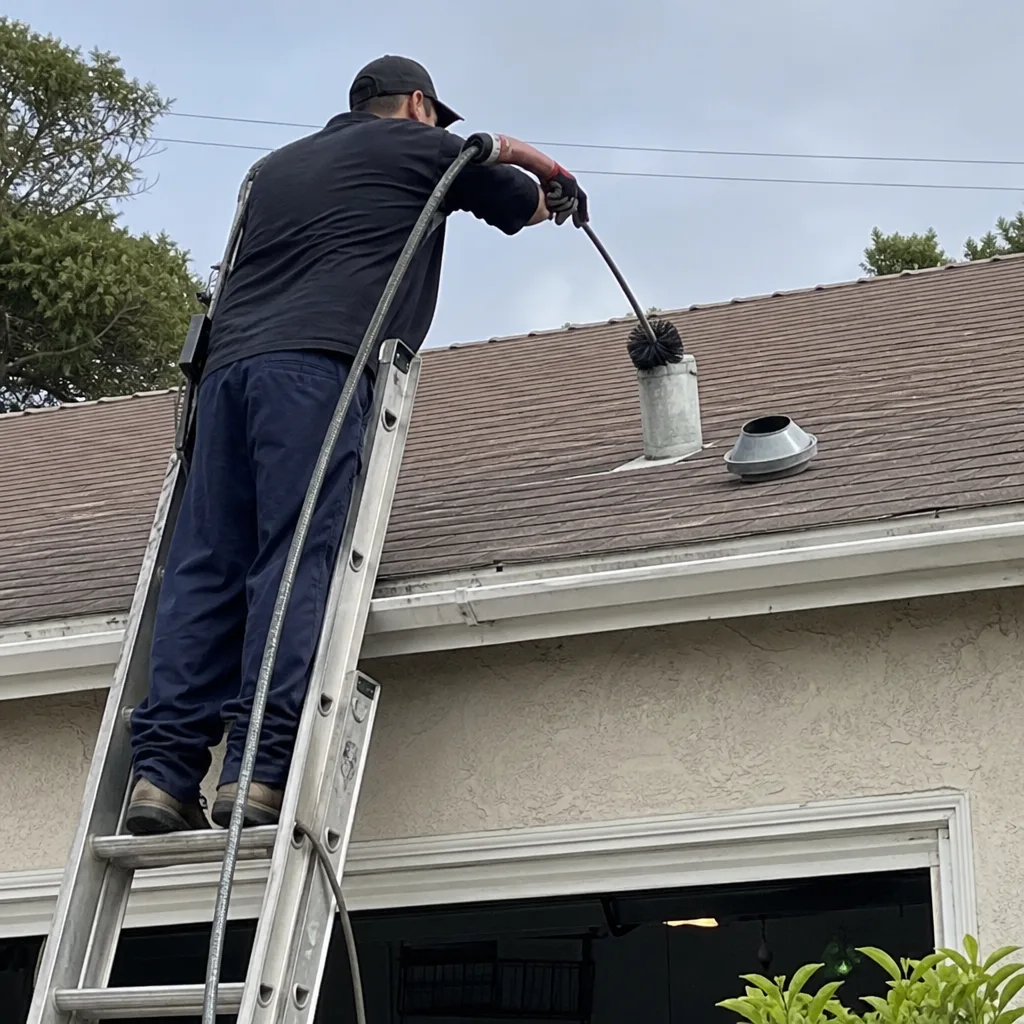
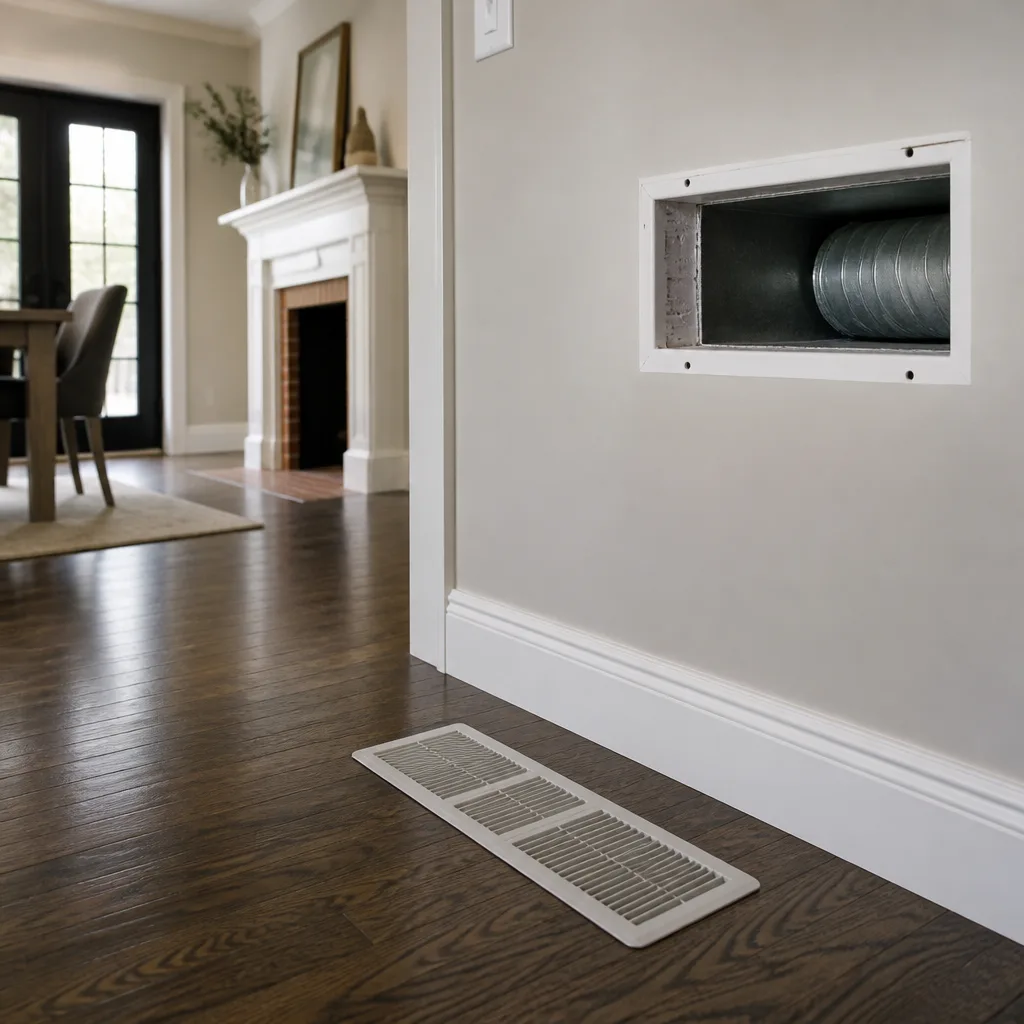 Whole-home duct cleaning
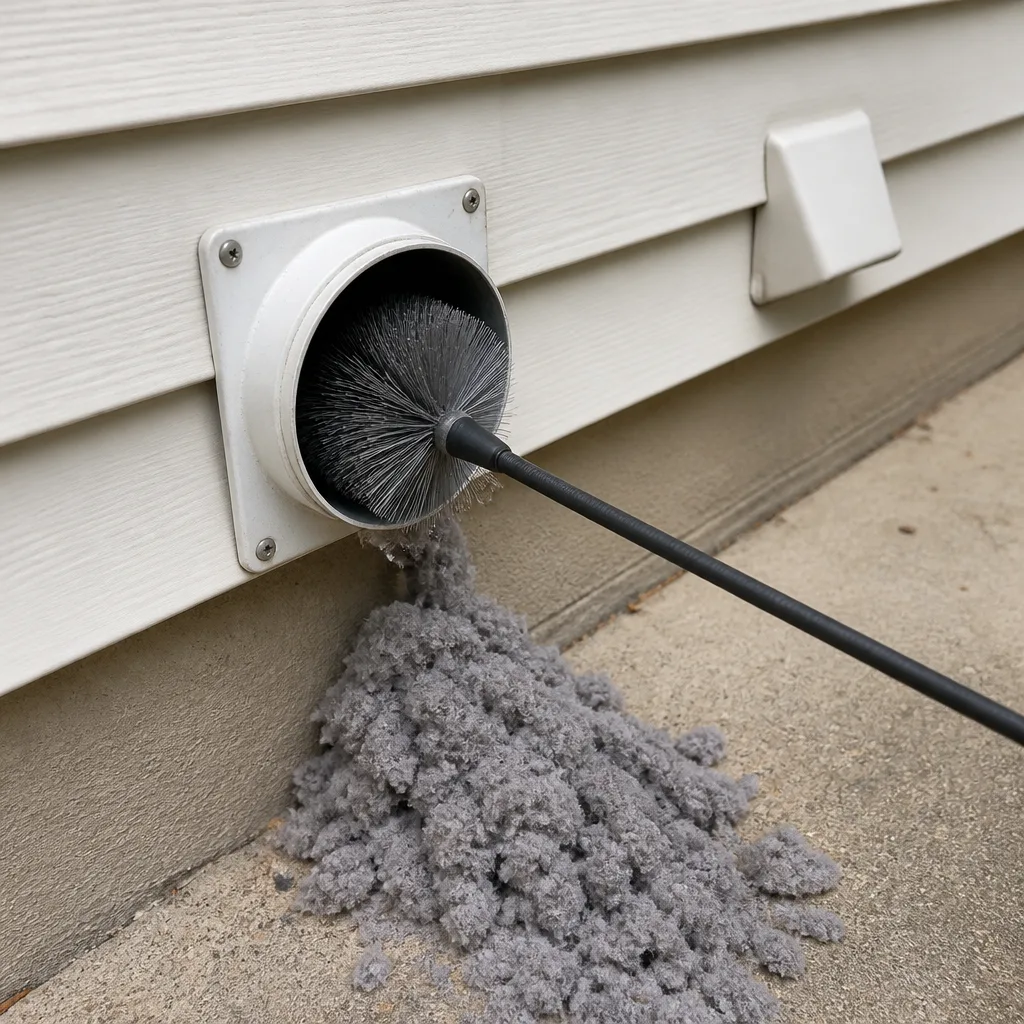 Dryer vent cleaning
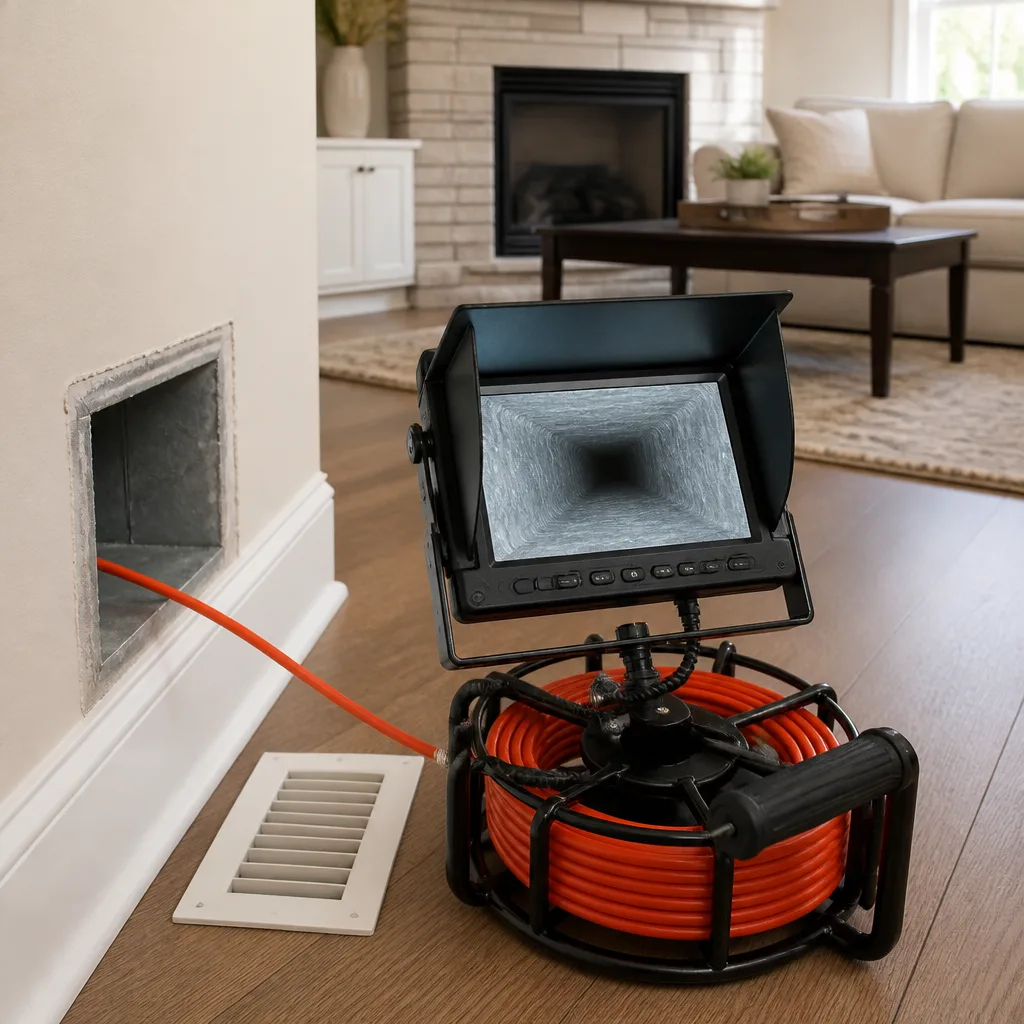 Camera inspection
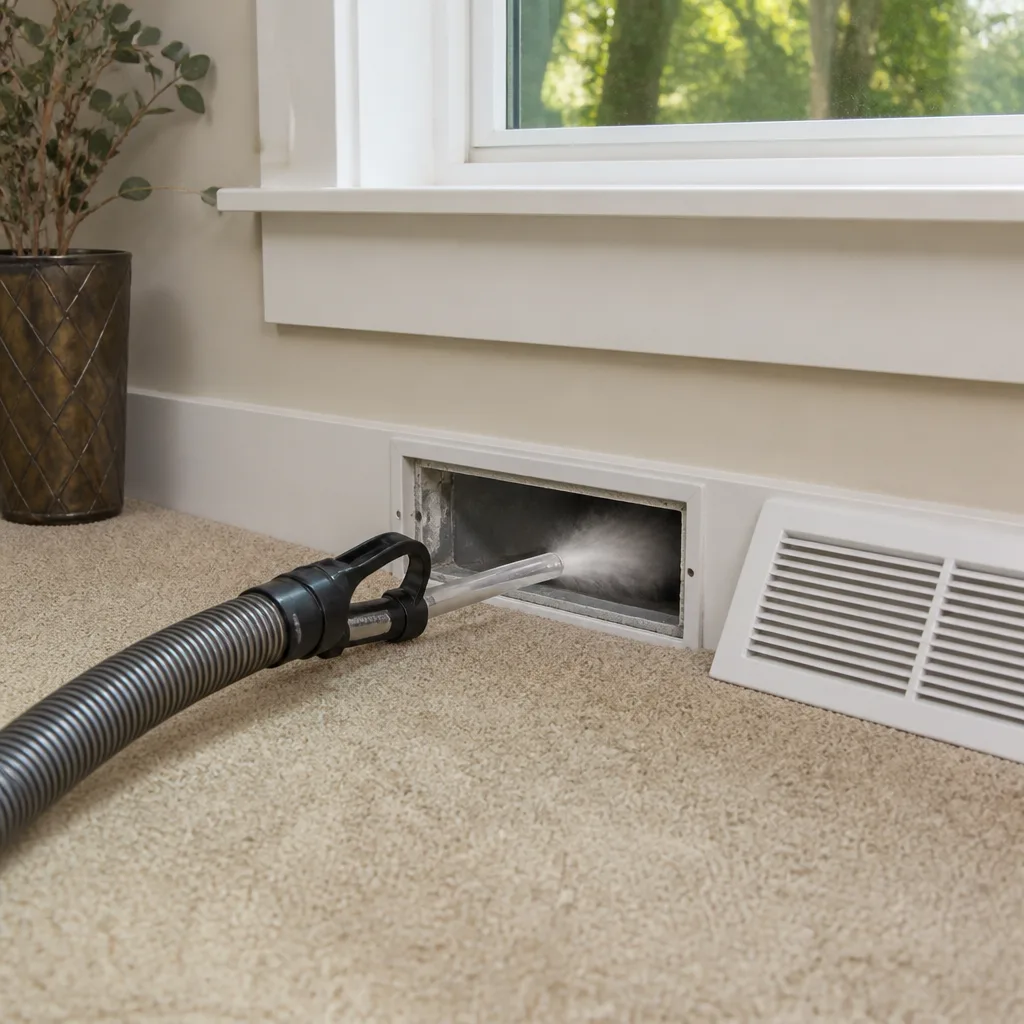 Sanitizing & deodorizing
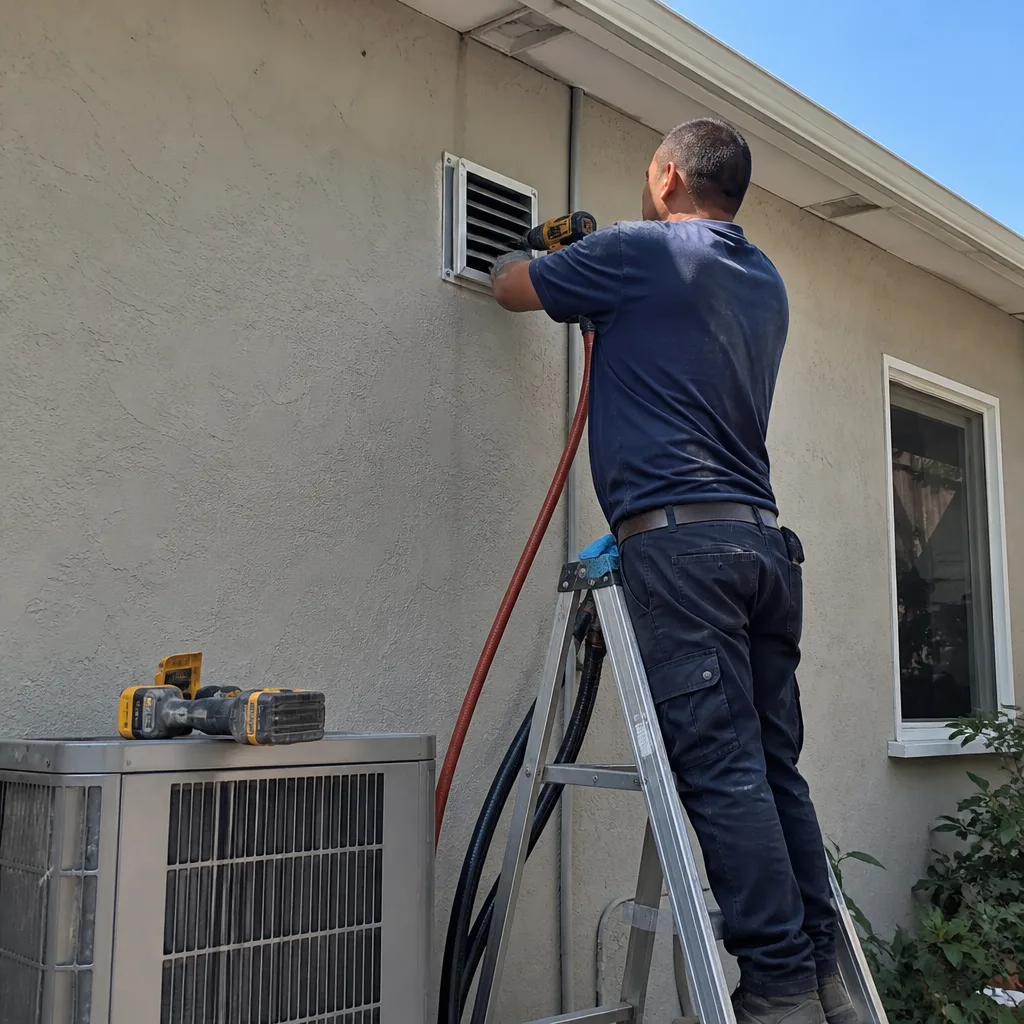
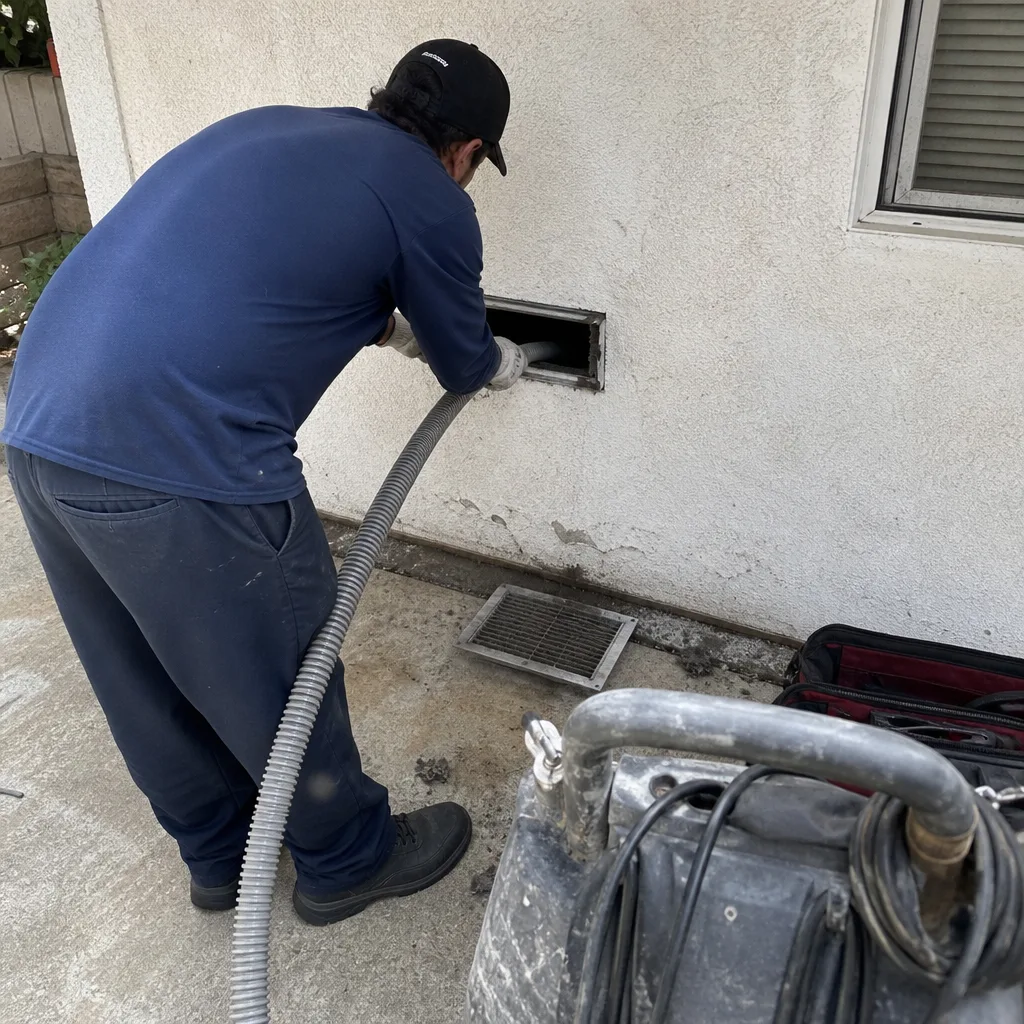
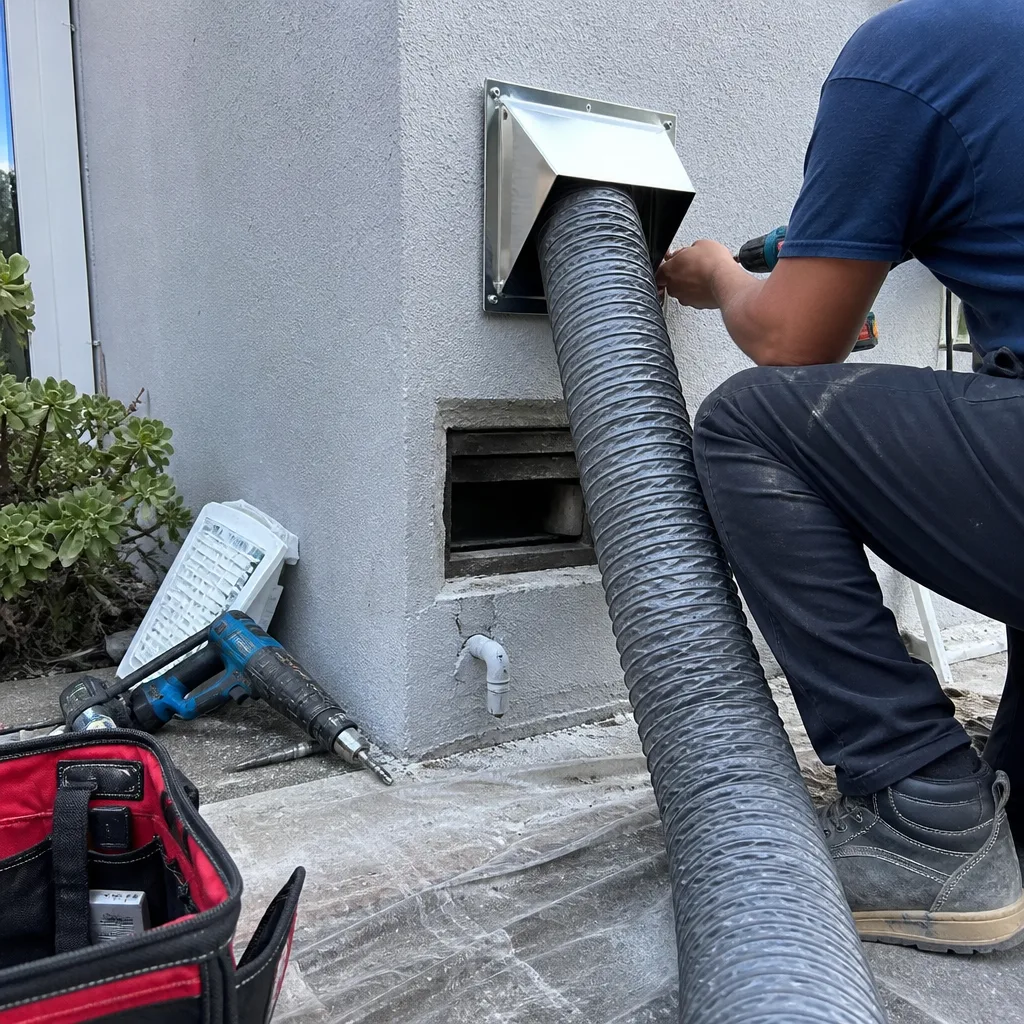
Whole-system duct and dryer vent check with before-and-after photos - you see exactly what came out of your vents
That "$99 whole-house special" is a bait ad - the real number appears once they are in your hallway, or the "clean" is a shop-vac at the register. We photograph the inside of your ducts before and after instead.
Air Duct Cleaning Emergency Preparedness Guide for Downey Homes
Wildfire smoke can push PM2.5 particulate matter into your home’s ductwork in under 24 hours, and once it settles inside the system, running your HVAC distributes that contaminant load through every room for months. In Downey, where wildfire smoke events, seasonal roof leaks, and occasional seismic activity all intersect, the ductwork that normally works invisibly behind your walls becomes a liability when an event hits. This guide covers what happens to your duct system during a wildfire, flood, roof leak, or earthquake, and the exact steps to take before, during, and after to keep a one-day contamination issue from becoming a month-long air quality problem. You’ll learn how to shut down and seal your HVAC during smoke events, what to document for insurance after water intrusion, and what a post-event duct inspection in a Downey home actually looks for.
Quick Answer
Emergency preparedness for air ducts in Downey means knowing how to shut down and seal your HVAC system during a wildfire smoke event, acting within 48 hours after water intrusion to prevent mold colonization inside ductwork, and getting a professional inspection after any earthquake that shifts framing or attic insulation. The three highest-priority items: register seals to close off your supply and return vents during smoke events, a documented photo record of any water damage for insurance purposes, and a duct specialist’s phone number on hand before an event occurs. Duct Cleaning Downey performs full-system duct inspections and cleaning in Downey with professional-grade Rotobrush and Nikro equipment, and we handle duct repair when an event has compromised the system.
Styles & brands we work with
- Whole-home duct cleaning
- Dryer vent cleaning
- Camera inspection
- Sanitizing & deodorizing
Table of Contents
- Wildfire Smoke and Your Ductwork: The 24-Hour Infiltration Window
- How to Shut Down and Seal Your HVAC System During a Smoke Event
- Post-Flood and Roof-Leak Protocol: The 48-Hour Mold Prevention Window
- What a Post-Earthquake Duct Inspection Looks For
- Documenting Duct Damage for Insurance Claims: What Adjusters Actually Require
- Building a Duct-System Emergency Kit
- When to Call a Professional
Wildfire Smoke and Your Ductwork: The 24-Hour Infiltration Window
Wildfire smoke isn’t just an outdoor problem. The particulate matter that makes smoke dangerous – PM2.5 and PM10 – moves through microscopic gaps in vent boots, return-air plenums, and even closed window seals. Once inside, the HVAC system pulls that smoke-laden air through the return ducts, where particles settle on the interior walls of the duct runs, the blower fan, and the evaporator coil. In our experience working on Duct Cleaning Downey home systems after regional fire events, the duct interiors often show a fine gray film that standard household filters missed entirely.
The timeline matters more than most homeowners realize. Within 24 hours of a smoke event, fine particulate begins embedding itself in the dust, pet hair, and fiberglass-lining residue already present inside most residential ductwork. That contamination doesn’t simply circulate out. The duct system’s interior surfaces are not smooth – they’re galvanized sheet metal with seams, joints, and accumulated debris that acts like a sponge for smoke particles. Once embedded, those particles off-gas and re-entrain into the airflow every time the system cycles, which means your family breathes the fire event for months after the sky clears.
Downey’s position in the Los Angeles basin means smoke from fires in the San Gabriels, the Santa Monicas, or even Orange County can linger for days. The same topography that keeps marine air pleasant in the summer also traps particulate layers over the area when fires burn. A standard fiberglass filter captures roughly 10 to 20 percent of PM2.5. A pleated MERV 8 filter improves that to around 50 percent. Neither is sufficient during an active smoke event, which is why the duct system itself must be addressed.
How to Shut Down and Seal Your HVAC System During a Smoke Event
During an active wildfire smoke event in Downey, the most important action is to prevent smoke from entering your ductwork in the first place. Here is the step-by-step protocol we recommend to homeowners:
- Set your thermostat to “Off” or “Fan Off.” Do not run the system in “Fan On” mode, which circulates air even when cooling or heating isn’t active. The blower motor pulls air from the return plenum regardless of heating or cooling demand, which means it actively draws smoky air into the ducts.
- Close all supply registers and return grilles. Register covers alone won’t stop smoke infiltration completely, but they reduce the passive draw significantly. For supply registers on floors and walls, magnetic register seals or temporary foil tape create a much tighter barrier.
- Seal the return air grilles first. Returns are the intake side of the system. If any grille is left open, the ductwork becomes a chimney that draws outdoor air through attic penetrations and wall cavities. Tape a piece of plastic sheeting or foil tape over the entire return grille face.
- Upgrade your filter temporarily during the event. If you must run the system for medical reasons, install the highest MERV rating filter your unit can accommodate. For most residential systems that’s MERV 11 or MERV 13. Do not go higher than your system manufacturer’s rating – exceeding it restricts airflow and can damage the blower.
- Seal the outdoor air intake if your system has one. Many newer Downey homes have a fresh-air intake pipe connected to the return plenum. Locate it (typically a 6-inch to 8-inch pipe terminating outside a garage wall or roofline) and temporarily block it during the event.
After the smoke clears, don’t immediately resume normal operation. The duct interiors should be assessed before the system runs again. Running the blower through contaminated ductwork re-entrains settled particles and distributes them into every room. A professional Air Duct Cleaning in Downey inspection after a smoke event includes pulling the registers, examining the plenum, and checking the blower compartment for particulate accumulation.
Post-Flood and Roof-Leak Protocol: The 48-Hour Mold Prevention Window
Water intrusion into a duct system follows a different but equally urgent timeline. Mold spores that land on wet organic material inside ductwork – dust, insulation fibers, insect debris – begin colonizing within 24 to 48 hours under the right temperature conditions. In Downey’s warm climate, where interior duct temperatures can sit between 70 and 85 degrees for much of the year, that colonization window is on the shorter end. If a roof leak, plumbing failure, or flood event has introduced water into your ducting, the first 48 hours are critical.
Here is the protocol to follow before calling a cleaner:
- Shut off the HVAC system immediately. A running system blows moisture-laden air through the entire duct network, spreading contamination beyond the initial intrusion point.
- Identify and stop the water source. If the leak is active, tarp the roof or shut off the supply line. Document everything with time-stamped photos before any water removal begins.
- Remove standing water from accessible areas. This includes drain pans, register boots, and any sections of exposed ductwork in a crawlspace or basement (less common in Downey, but present in some older homes). A wet/dry vac works for shallow water. Do not use the HVAC blower to dry water – it distributes moisture and spores.
- Open register covers and air out accessible duct sections. If you have a flex-duct run that has separated or sagged, opening the register and aiming a fan into the opening can help dry surface moisture. Do not attempt to disassemble ductwork yourself if metal components, screws, or foil tape are involved beyond removing a register cover.
- Call a duct professional within 48 hours. The inspection determines whether the water reached the duct interior, how much surface area is affected, and whether cleaning alone resolves the issue or whether duct section replacement is required.
What most homeowners don’t realize is that fiberglass duct liner and flex-duct inner walls absorb moisture differently than bare sheet metal. Sheet metal dries relatively quickly once airflow and humidity are normalized. Fiberglass liner and flex-duct polyethylene, by contrast, can hold moisture against the surface for days or weeks, creating an environment where mold continues to develop even after the visible water is gone. In cases like this, cleaning is unlikely to be sufficient – the affected section typically needs replacement. That’s why our Air Duct Repair in Downey service exists as a standalone offering. We don’t just clean contaminated ductwork; we identify and replace the compromised sections so the problem doesn’t re-establish itself.
What a Post-Earthquake Duct Inspection Looks For
Downey sits within the seismically active Los Angeles basin, roughly five miles from the Newport-Inglewood fault zone. Even moderate shaking – a 4.5 magnitude event ten miles away – can be enough to shift framing, displace attic insulation, and separate duct joints. Duct systems in Downey homes are typically installed in attics and crawlspaces, where the runs are suspended by strapping or resting on framing members. When a structure shifts, the strapping moves with it, but the duct runs themselves may not.
A post-earthquake duct inspection focuses on three specific failure modes:
- Joint separation. Duct sections connect with drive cleats or snap-lock seams. Seismic movement can pull these apart at the connection points, creating gaps where conditioned air escapes into the attic and unfiltered attic air is drawn into the system. Joint separation is visible as misaligned seams or gaps where foil tape or mastic has torn.
- Collapsed or kinked flex runs. Flex duct, used extensively in Southern California residential HVAC, is vulnerable to compression when strapping loosens or attic contents shift. A collapsed flex run can reduce airflow by 50 to 80 percent while looking outwardly normal from the register side.
- Debris infiltration from attic insulation displacement. If blown-in fiberglass or cellulose insulation shifts during an earthquake, it can enter the duct system through separated joints, torn flex outer liners, or registers that have lifted from their boots. Once inside, insulation particles circulate through the living space and embed in the coil.
These conditions are rarely visible from inside the living space. A temperature imbalance between rooms, an unexplained spike in dust, or a reduction in airflow at certain registers may be the only symptoms. That’s why a targeted post-seismic inspection is worth scheduling even if nothing appears wrong. The inspection typically takes 60 to 90 minutes and includes removing and examining registers, camera-inspecting main trunk lines, and checking the plenum connections.
Documenting Duct Damage for Insurance Claims: What Adjusters Actually Require
Insurance claims for HVAC and duct damage are frequently denied or underpaid because the documentation doesn’t meet the adjuster’s evidentiary standard. A claim that says “ducts are dirty after the fire” or “the earthquake might have loosened something” will not survive review. The documentation needs to establish causation, scope, and cost basis. Here’s what we’ve found actually works:
- Time-stamped photos and video of the event damage. This means the water staining on the ceiling above the register, the insulation displaced in the attic after the earthquake, or the smoke-stained walls around the return grille. Photos must be taken before any cleanup begins.
- Date-stamped documentation of the event itself. News reports, CalFire incident maps, or USGS shake maps that show the event date and severity. This establishes proximate cause – the adjuster needs to see that the event occurred and that your home was in the affected area.
- Photos of the duct interiors before cleaning. A professional duct inspection with a camera produces dated images of the contamination or damage inside the duct runs. These images are the single most important piece of evidence because adjusters rarely see duct interiors themselves and rely on contractor documentation.
- Measurements and condition reports. Document the linear feet of duct runs affected, the register count, the presence of fiberglass liner, and whether flex or rigid duct is involved. Specify which sections require replacement versus cleaning.
- Itemized contractor estimates. Separate cleaning costs from repair costs. An adjuster evaluating a $900 cleaning claim against a $4,600 replacement claim using the same documentation will process the first one much faster. Consolidating everything into one lump figure invites scrutiny.
If water intrusion is involved, include your home’s flood zone designation (available from FEMA’s flood map tool) and any Downey building department permit requirements if structural repair is needed. For smoke-related claims, note the specific fire event name and incident number when available. Property management customers in Downey will want to maintain a file with this documentation across multiple units, as the scope scales quickly when multiple HVAC systems are involved.
Building a Duct-System Emergency Kit
The homeowners who recover fastest from an HVAC contamination event are the ones who prepared before the event occurred. In Downey, where the realistic risks are wildfire smoke, seasonal roof leaks during winter storm events, and occasional seismic activity, a duct-system emergency kit is a reasonable and inexpensive investment. Here’s what we recommend keeping on hand:
- Register seal covers or magnetic register sheets for every supply register and return grille. Count your registers, measure them, and order seals sized to fit. During a smoke event, having these ready means the system gets sealed in minutes rather than hours while smoke infiltrates.
- A roll of foil tape (not duct tape – furnace foil tape rated for HVAC temperatures). Foil tape is the material used to seal duct joints and is effective for temporary register sealing. It holds up better than plastic sheeting on return grilles that may be irregularly shaped.
- A temporary high-MERV filter upgrade stored in a clean plastic bag. Know your system’s filter size and have one MERV 11 or MERV 13 filter ready for smoke events. Swap it out during the event, then discard it and return to your standard filter after professional cleaning.
- Contractor contact information printed and accessible. Keep the phone number of your duct specialist in the same folder as your insurance documents. After an event, phone lines and internet often get congested; a printed number is a small but meaningful advantage.
- A basic digital inspection camera or phone camera with a flashlight. If you can safely open a register (a screwdriver may be needed), photographing the visible section of ductwork before cleanup gives you a baseline for insurance documentation.
- A wet/dry shop vacuum with HEPA-rated filter if possible. For minor water intrusion, removing surface water before a professional arrives reduces secondary damage. Do not use a standard household vacuum – it recirculates fine particles into the air.
- Copies of previous duct cleaning and inspection records. If your ductwork was professionally cleaned previously, having the date, scope, and before-and-after photos from that service helps establish that contamination is from a specific event, not deferred maintenance.
We built this list from direct experience with Downey-area homes. The homes that had even simple register seals and foil tape on hand during the 2020 regional smoke events recovered substantially faster than homes that had to wait for supplies or improvise with blue painter’s tape and plastic wrap. The kit cost is under $100 for most homes, and the prevented damage is measured in thousands.
When to Call a Professional
Some conditions can be addressed by a homeowner: closing registers during a smoke event, documenting damage, removing surface water from an accessible drain pan. Other conditions require professional inspection. If you have experienced any of the following, call a duct specialist before running your HVAC system again:
- Your home was under a wildfire smoke advisory for more than 24 hours and the HVAC ran at any point during that period.
- Water from a roof leak, plumbing failure, or flood event entered a register, return, or the air handler compartment.
- Your home experienced a 4.0+ magnitude earthquake and you notice temperature imbalance, new dust, or reduced airflow.
- You see visible mold growth on or around a register, return grille, or the air handler.
- Your insurance company requests contractor documentation for an HVAC-related claim.
Duct Cleaning Downey offers free estimates in Downey – call (855) 382-4683. We inspect, document, clean, and repair using professional-grade Rotobrush and Nikro systems, the same equipment category used in remediation environments. For homes that need long-term air quality improvement beyond a single event response, we also service and install Honeywell and Aprilaire air-quality systems.
See the difference
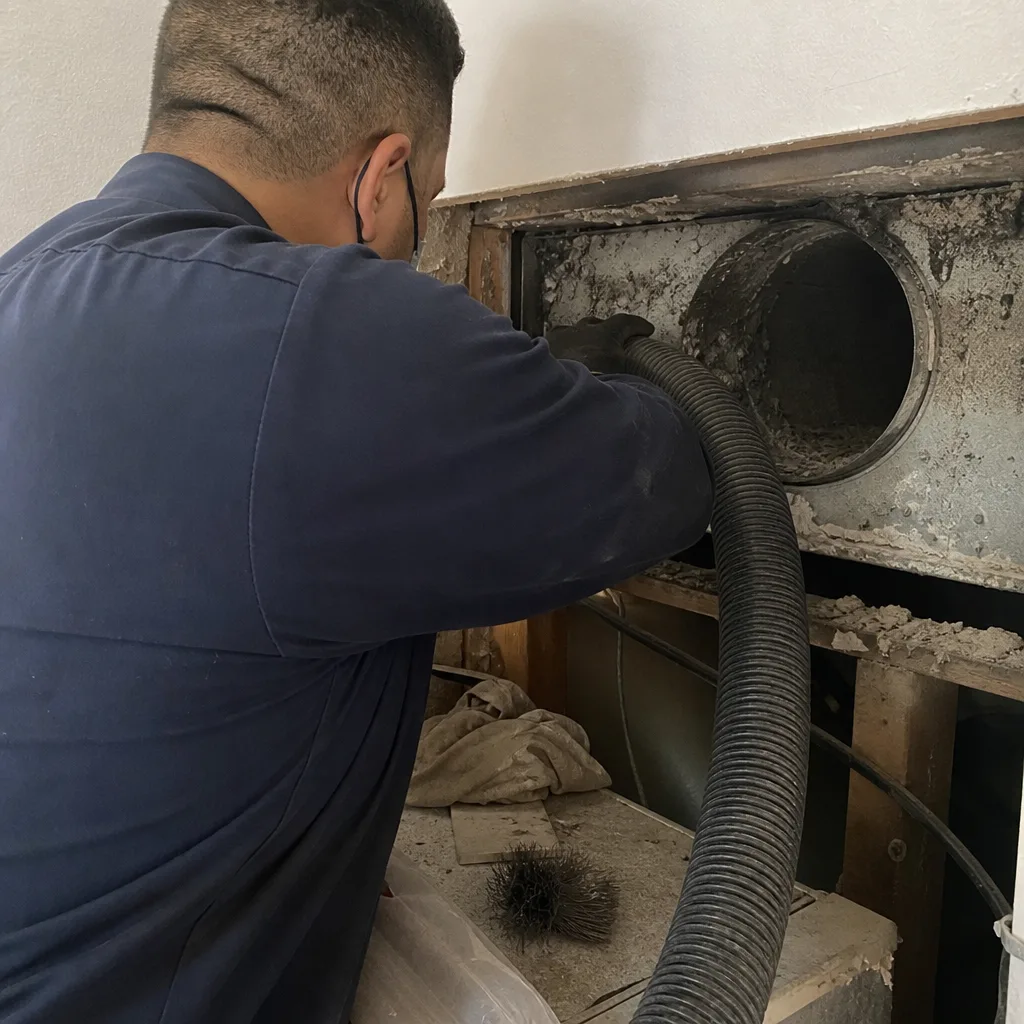 Before
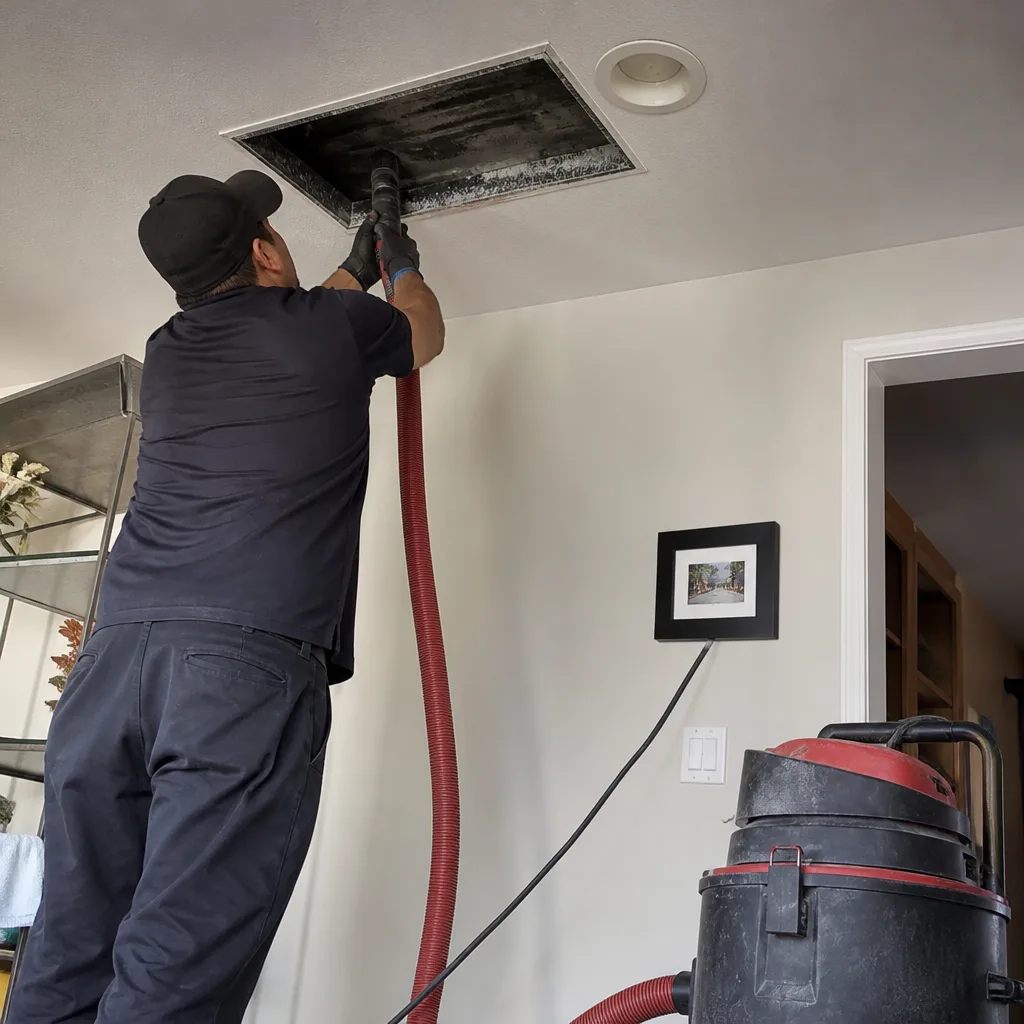 After
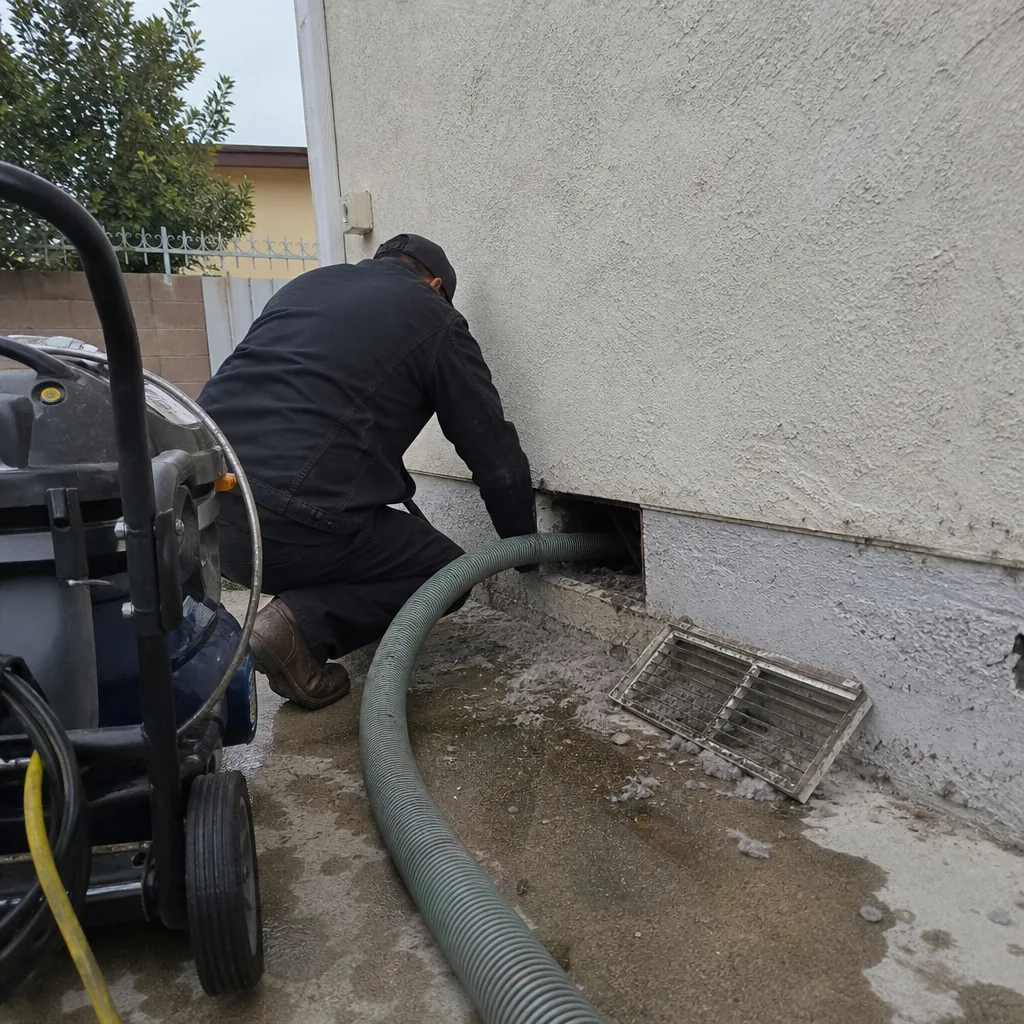 Before
 After
 Before
 After
Common Mistakes to Avoid
- Running the HVAC fan during a smoke event because “it filters the air.” A furnace filter is not a smoke filter. Running the system actively pulls smoky air through every penetration and distributes particulate across every room. Set the system to Off.
- Waiting more than 48 hours after water intrusion to inspect the ductwork. Mold colonization timing depends on temperature, moisture, and food source – but Downey’s warm climate accelerates the timeline. After 48 hours, the damage scope often expands from cleaning to replacement.
- Assuming a standard filter rating will handle wildfire smoke. A MERV 4 fiberglass filter captures almost no PM2.5. Even a MERV 8 pleated filter stops only about half of the fine particles that carry smoke contamination.
- Taking photos only after starting cleanup. Insurance documentation that shows a clean register and a dry ceiling proves nothing about the original event. Time-stamp photos before any water removal or debris cleanup.
- Treating visible register dust as the problem rather than a symptom. Dust at the registers means contamination has already traveled through the duct runs. The problem is inside the system, not at the vent cover. That’s the line where most cleaners stop – we don’t.
- Delaying post-earthquake inspection because the system “seems to be working.” Joint separation in an attic is invisible from the living space. Airflow loss of 30 percent feels like a mild inefficiency, not a failure. By the time the symptom becomes obvious, the energy loss and air quality impact have been accumulating for months.
- Choosing a cleaner based on a per-vent price quote without verifying equipment type. A vacuum-and-brush pass with residential-grade equipment will not remove smoke-embedded particulate from the duct interior walls. The Rotobrush and Nikro systems available through Air Duct Cleaning in Downey are the professional standard for contamination removal.
Frequently Asked Questions
A full-system air duct cleaning in Downey typically ranges from $425 to $850 for a standard single-family home with 10 to 16 registers, depending on system size, accessibility, and contamination level. Post-event cleaning – where smoke particulate or water intrusion has occurred – may run higher because the work includes deeper contamination removal and possibly duct repair. We quote one flat price per system before any work begins, so the number you’re quoted is the number you pay. Call (855) 382-4683 for an exact quote based on your home’s system.
No, and attempting to do so with a household vacuum or register brush will make the problem worse by dislodging settled particulate and recirculating it through your living space. Smoke PM2.5 contamination requires agitation methods and negative-pressure equipment that residential-grade tools can’t achieve. The interior surfaces of a duct system are beyond the reach of any DIY tool, and using improper equipment on fiberglass-lined or flex duct can damage the liner.
The reliable way to know is with a camera inspection of the trunk lines, branch runs, and plenum connections. From the living space, watch for registers that suddenly deliver less airflow, rooms that stay warmer or cooler than before, new dust accumulation near certain vents, or a whistling sound that wasn’t present previously. These symptoms indicate joint separation, collapsed flex runs, or displaced insulation inside the ductwork.
Coverage depends on your policy and the event classification. Water damage from a covered peril (burst pipe, storm damage to the roof) typically includes HVAC remediation if the damage is documented and the cost is itemized separately. Wildfire smoke claims are more difficult – most policies exclude gradual accumulation and require proof that the smoke event caused the contamination. Earthquake damage requires a separate earthquake policy or endorsement, not standard homeowners coverage. The documentation protocol in this guide is designed to meet the evidentiary standard for whatever claim applies.
For homes with no indoor air quality issues and no event exposure, every 3 to 5 years is a reasonable maintenance interval. Homes with pets, recent renovation work, smokers, or allergy-sensitive occupants in Downey’s dust-prone climate may benefit from every 2 to 3 years. After a wildfire smoke event, water intrusion, or earthquake, skip the calendar – schedule an inspection as soon as practical regardless of when the last cleaning occurred.
The difference is equipment, scope, and what gets left behind. A $99 whole-house duct cleaning typically involves a technician with a residential vacuum and a spinning brush at the register openings – an approach that removes surface dust but leaves particulate embedded in the duct walls and coil. Professional systems like Rotobrush and Nikro operate with negative-pressure extraction and agitation designed to dislodge and remove embedded contamination, including smoke particulate and mold-adjacent debris. If you’re comparing quotes, ask which equipment brands the company uses. If they can’t name the system, that’s your answer.
The Bottom Line
Ductwork is one of the few home systems that can remain invisibly compromised for months after an event – and every HVAC cycle during that period distributes the contamination further. The preparation is simple: know how to seal your registers, have foil tape and a high-MERV filter on hand, document everything with time-stamped photos, and keep a duct professional’s number accessible. The response protocol is equally straightforward: shut it down, don’t run it, document it, get it inspected. In Downey, where smoke events, storm-driven roof leaks, and seismic activity are recurring realities, a duct-system emergency plan isn’t an overreaction – it’s the difference between a cleaning visit and a full remediation. Dryer Vent Cleaning in Downey follows the same philosophy: inspect before it becomes an emergency, maintain before it becomes a fire risk. We clean it. We repair it. We improve it. For homes that have already experienced a contamination event, Air Duct Repair in Downey is the missing piece most cleaning companies can’t offer.
Written by the team at Duct Cleaning Downey, serving Downey since 2017.