
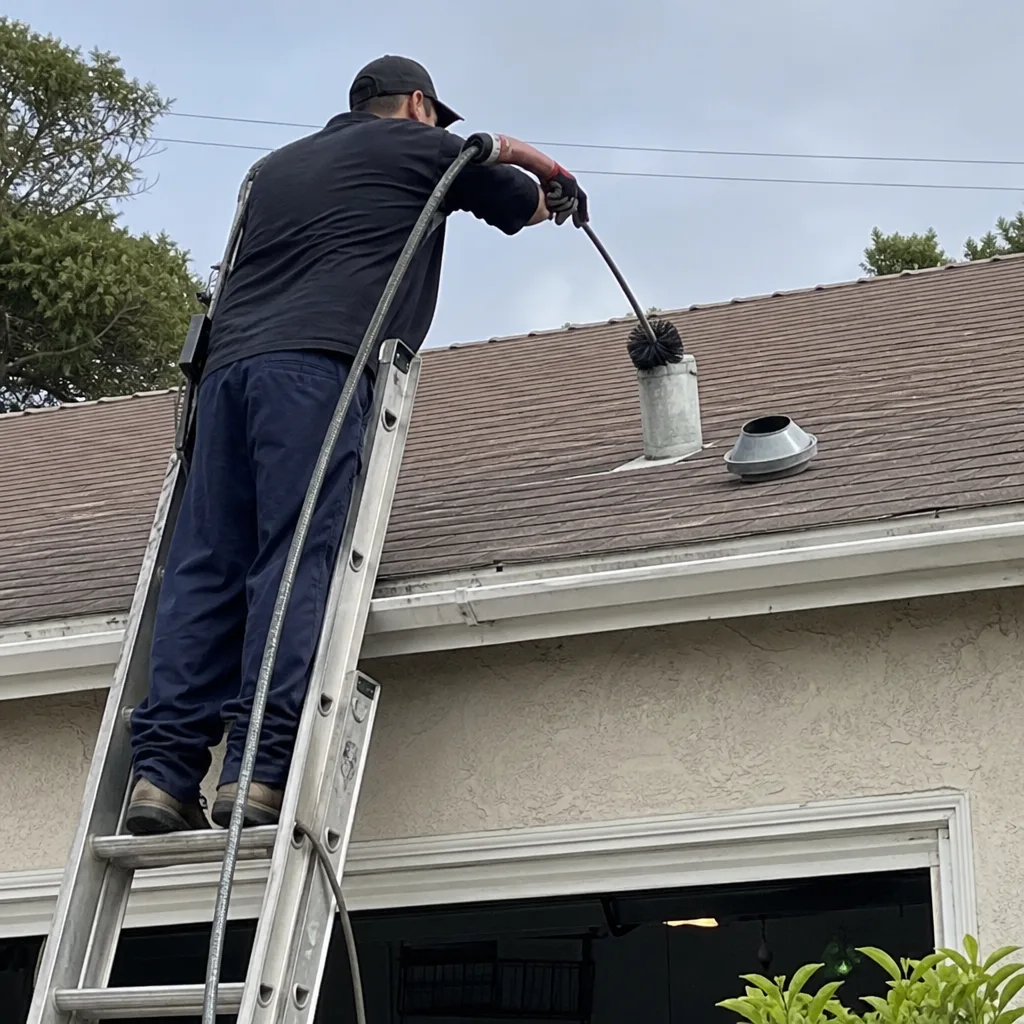
Last updated November 2, 2026
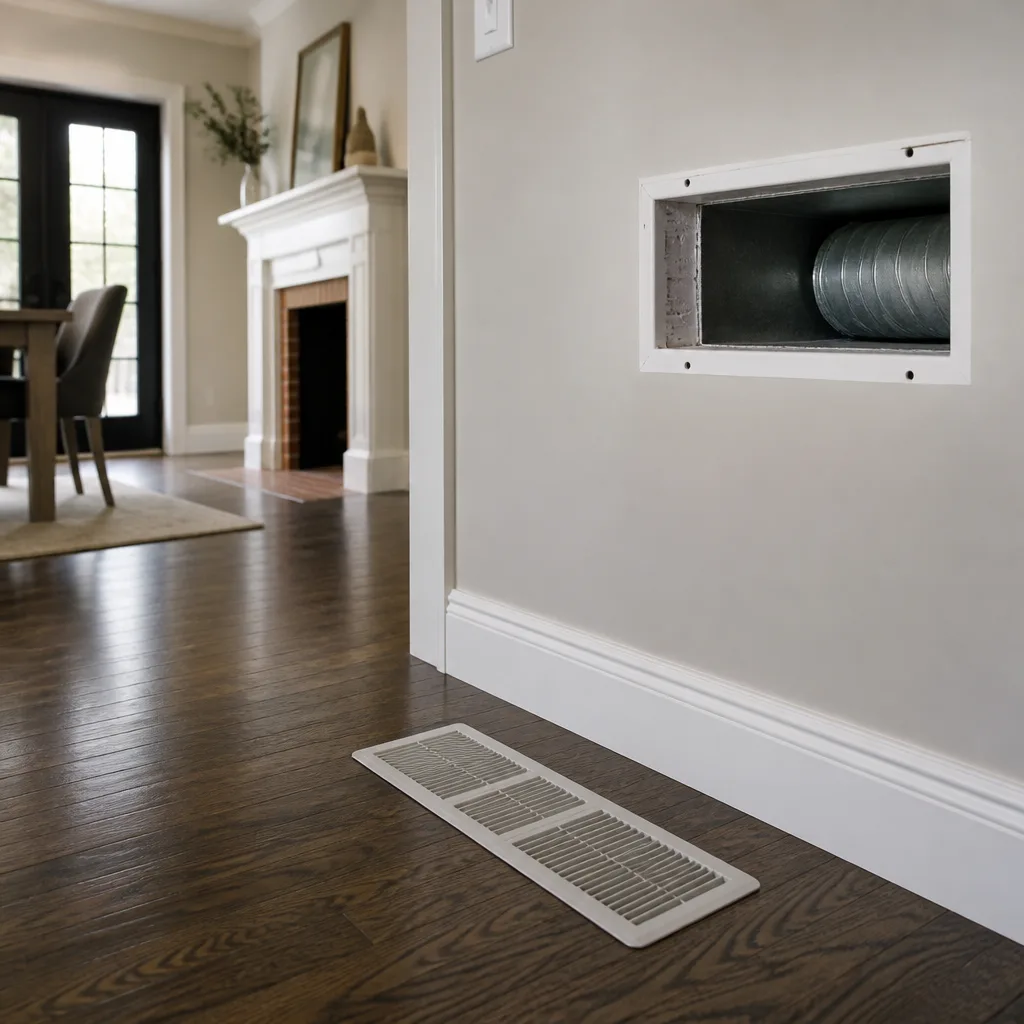 Whole-home duct cleaning
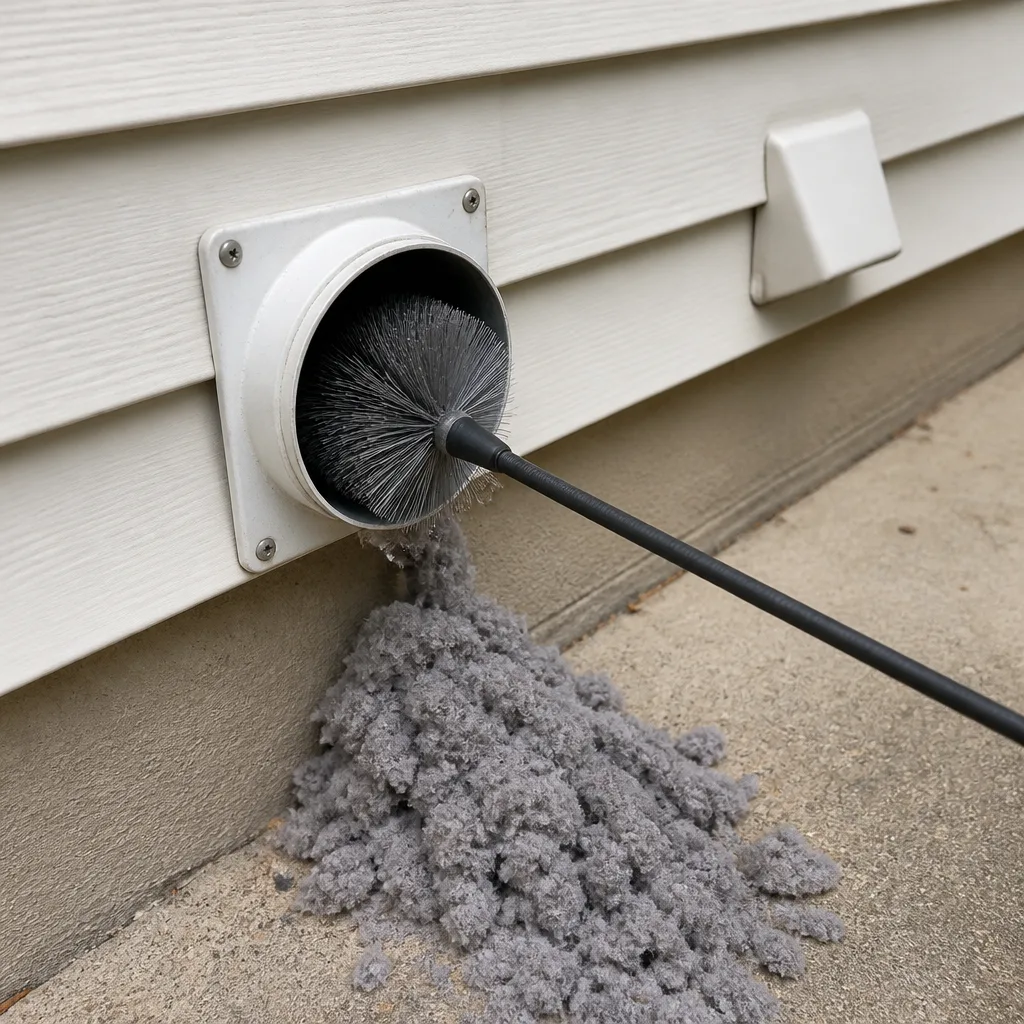 Dryer vent cleaning
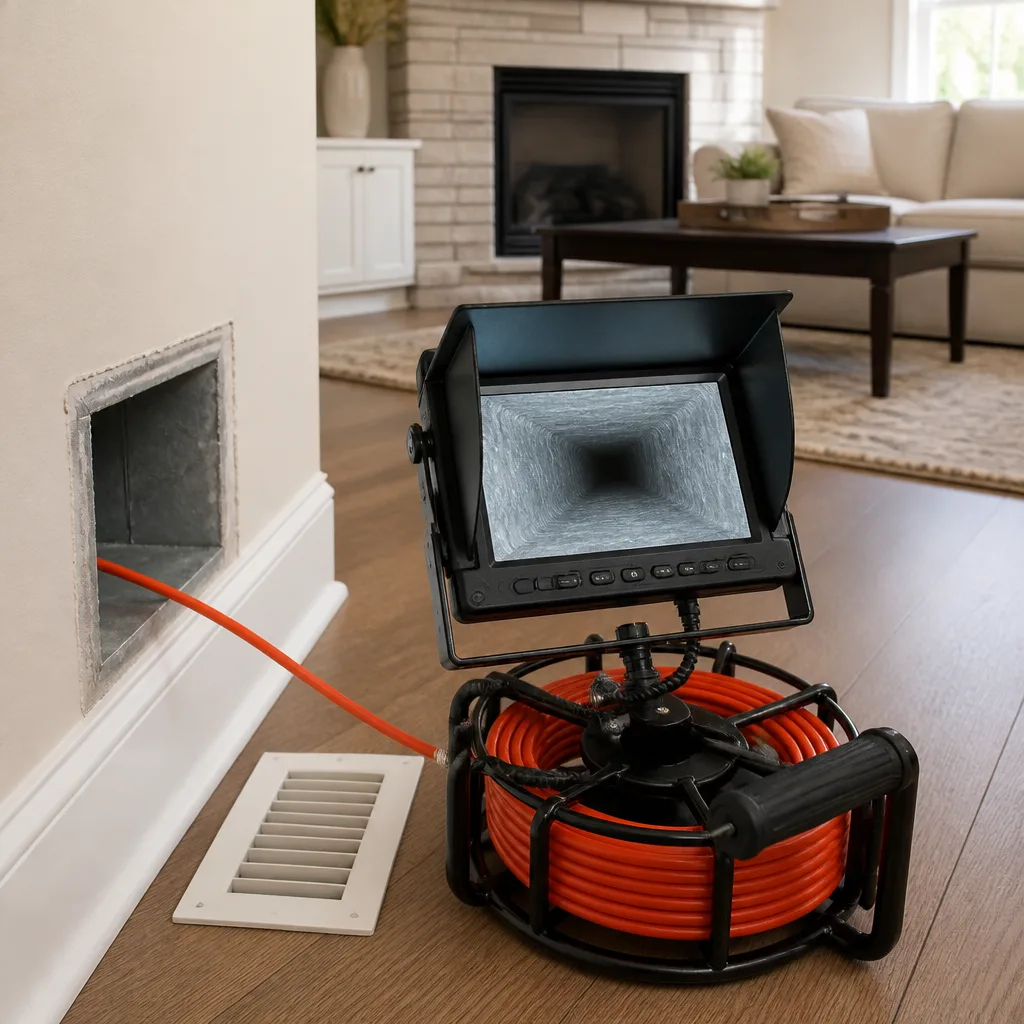 Camera inspection
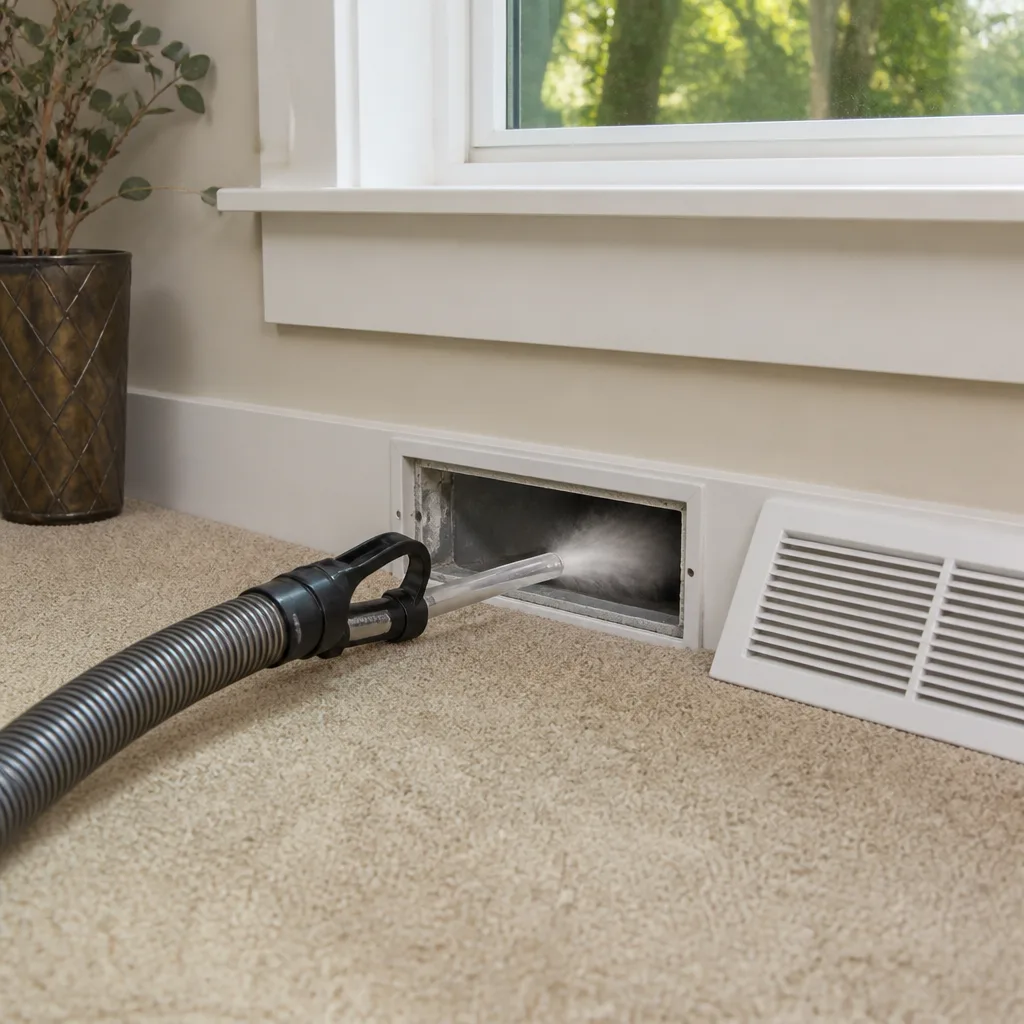 Sanitizing & deodorizing
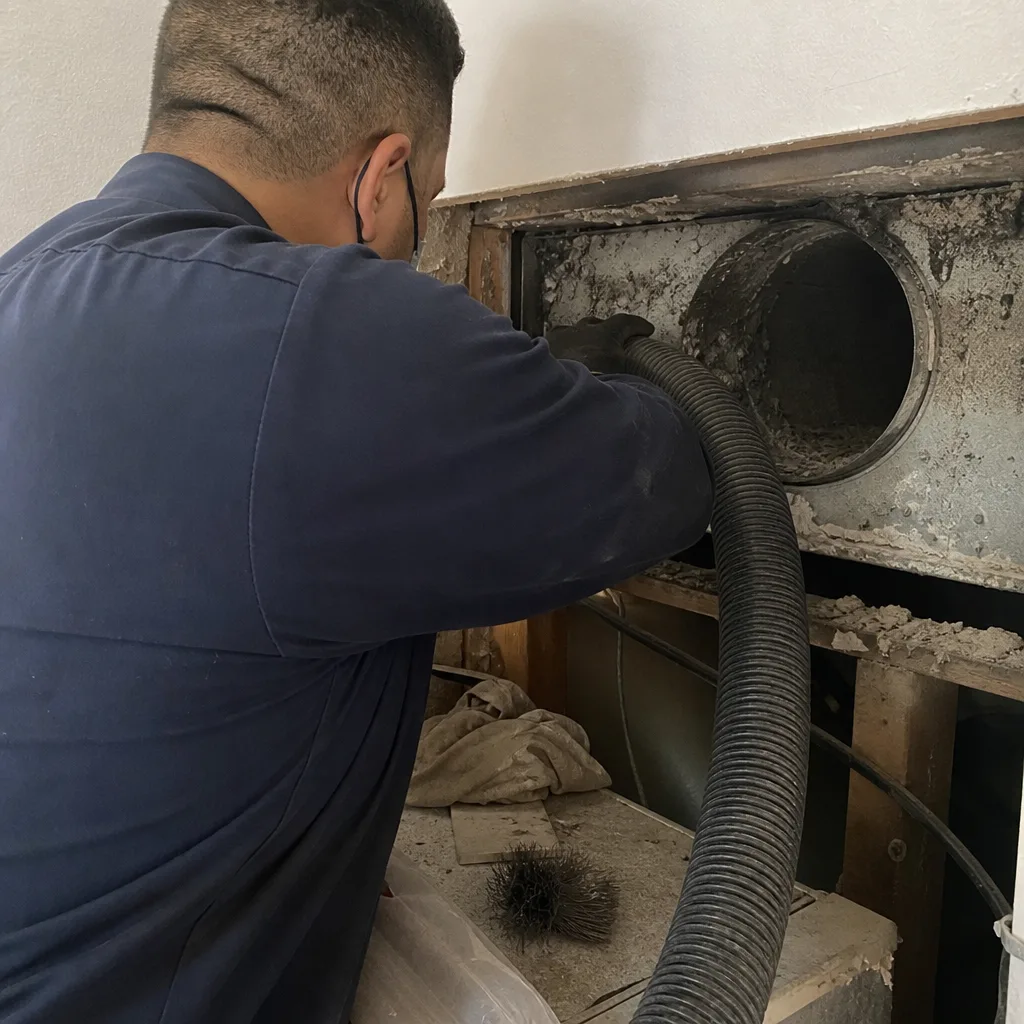
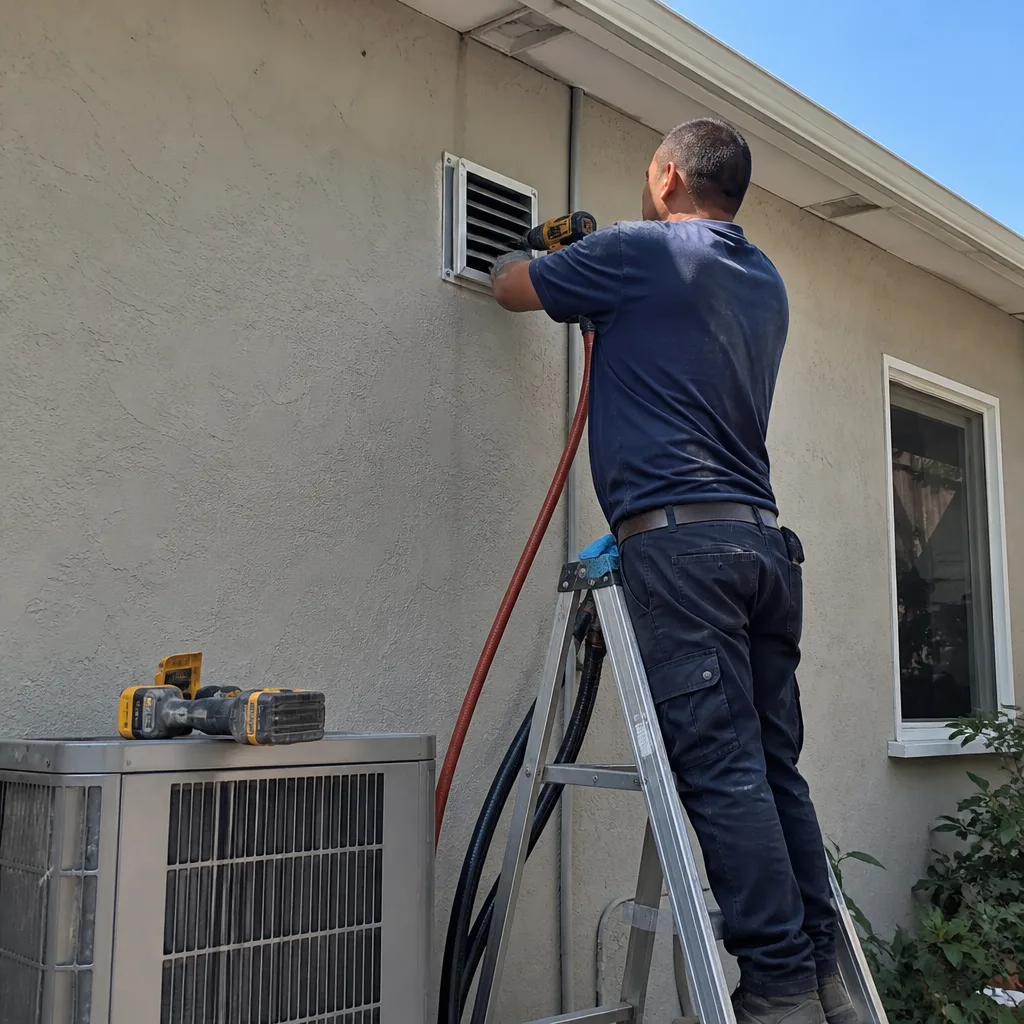
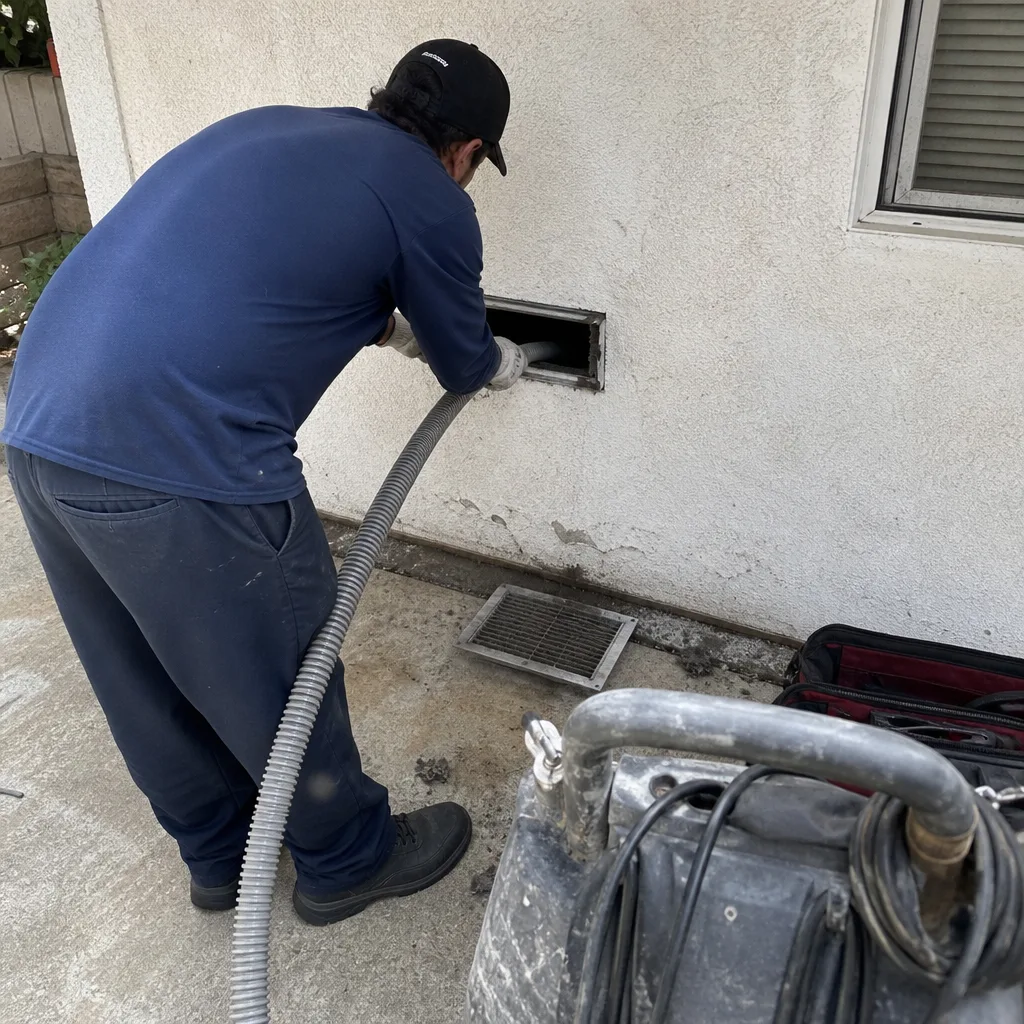
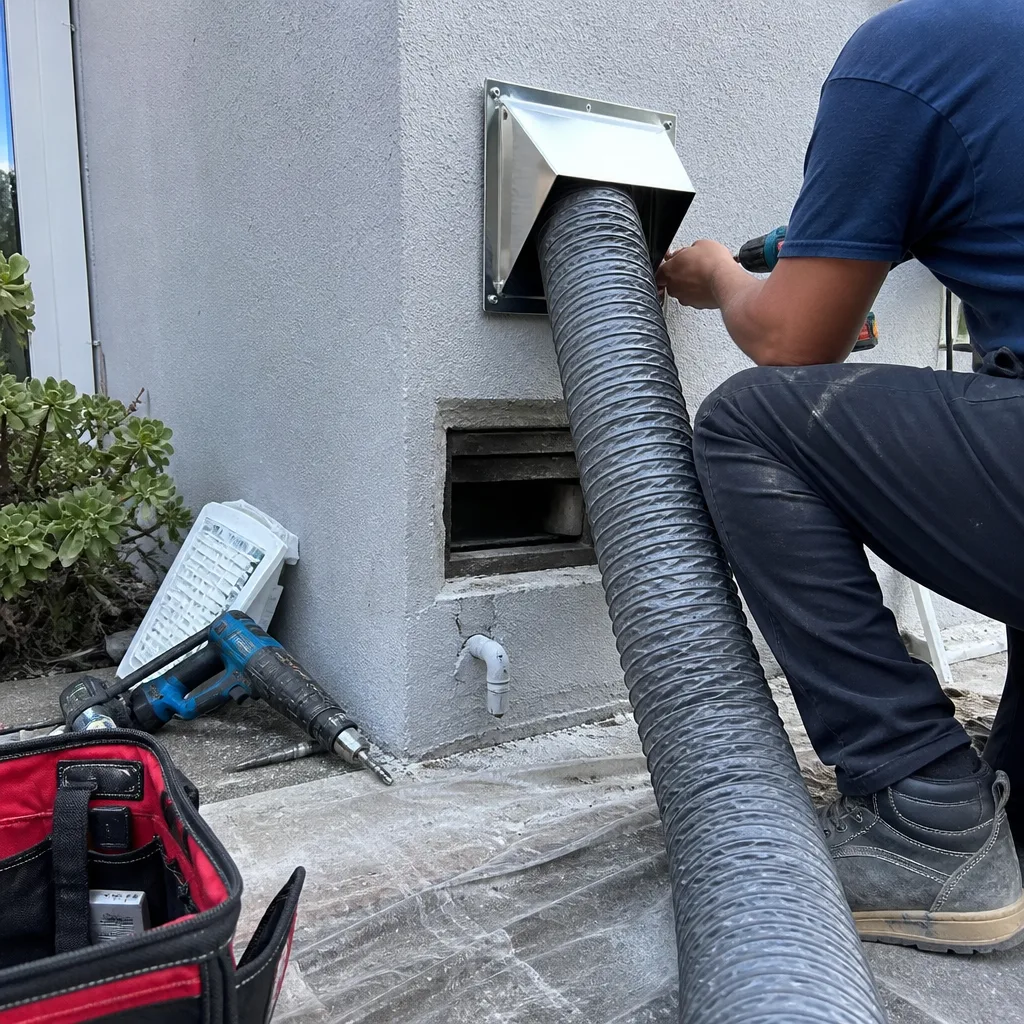
Whole-system duct and dryer vent check with before-and-after photos - you see exactly what came out of your vents
That "$99 whole-house special" is a bait ad - the real number appears once they are in your hallway, or the "clean" is a shop-vac at the register. We photograph the inside of your ducts before and after instead.
Air Duct Cleaning Warning Signs: A Downey Homeowner’s Reference Guide
If one room in your Downey home is always 4 to 6 degrees hotter than the rest with the AC running, that’s not an insulation problem. It’s a duct system telling you exactly where the blockage or collapse is. Most homeowners don’t recognize the early warning signs of contaminated or failing ductwork because they’re looking for the obvious: visible dust, bad smells, a vent that’s clearly disconnected. By the time those show up, the problem has been building for weeks or months. Our The Complete Air Duct Cleaning Guide for Downey Homeowners walks you through what actually matters, what to check, and when to call someone who can diagnose the whole system rather than just vacuum a few registers.
Quick Answer
The most reliable early warning signs that your air ducts need cleaning in Downey are: one or more rooms consistently running warmer than the rest of the house with the AC on, a furnace filter that loads up with gray or brown debris within 2 to 3 weeks of replacement, and new or worsening allergy symptoms in household members that don’t respond to filter changes. Visible dust at registers and musty smells are real indicators, but they’re late-stage signals. If you’re seeing those, the contamination or blockage has already been active for some time.
Styles & brands we work with
- Whole-home duct cleaning
- Dryer vent cleaning
- Camera inspection
- Sanitizing & deodorizing
Table of Contents
- Room-by-Room Temperature Mapping: The Most Overlooked Diagnostic
- What Your Filter Loading Pattern Is Actually Telling You
- Musty Odor at Registers: What It Means Structurally
- Occupant Health Patterns as a Duct-Cleaning Trigger
- The Post-Renovation Contamination Window
- Visible Signs: Dust, Debris, and What They Confirm
- Common Mistakes to Avoid
- When to Call a Professional
Room-by-Room Temperature Mapping: The Most Overlooked Diagnostic
Before you call anyone about air duct cleaning in Downey, do this: walk your house with a basic indoor thermometer. Check each room, write down the readings, and compare. A difference of 2 to 3 degrees between rooms is normal, especially in two-story homes or rooms with large windows facing south. A difference of 4 to 6 degrees or more, consistently, with the system running, is not normal. That differential is your ductwork signaling a restriction.
Here’s what the mapping tells you:
- A single hot room usually points to a collapsed or severely kinked branch duct, a disconnected run in the attic or crawlspace, or a damper that’s been closed and forgotten.
- Multiple hot rooms on one side of the house suggests a main trunk line restriction or a return-air imbalance, where supply air is being pushed but not enough air is being pulled back.
- Every room running warm while the AC runs constantly often means the evaporator coil is dirty or the return side is so restricted that the system can’t move air at all. In Downey, where summer temperatures routinely push into the 90s, this is the difference between a system that cycles normally and one that runs 14 hours a day.
This is where most companies stop being useful. A temperature map tells you there’s a restriction. It doesn’t tell you whether that restriction is a mechanical failure, a collapsed duct, or contamination buildup. The distinction matters because the fix is different. A collapsed duct needs Air Duct Repair in Downey, not a cleaning. A contamination restriction needs professional extraction with real equipment, not a residential vacuum pass.
We’ve mapped hundreds of Downey homes and the pattern is consistent: when a homeowner says “the upstairs is always hot,” there’s almost always a duct-level explanation. Sometimes it’s a damper. Sometimes it’s 20 years of accumulated debris in the return. Sometimes it’s a duct that’s separated at a joint and is pulling attic air. None of these are visible from the living room.
What Your Filter Loading Pattern Is Actually Telling You
Look at the filter you’re about to replace. What color is it? How evenly is it loaded? Most people swap filters without thinking about what they’re seeing. That’s a missed diagnostic opportunity.
Here’s the distinction that matters:
- Even gray loading across the entire filter surface is normal. That’s the filter doing its job, capturing dust from room air that passes through the return.
- Heavy loading in the center only, with clean edges suggests the return duct itself is the dust source. Debris inside the return is being pulled toward the filter and deposited centrally, while the edges stay comparably clean.
- Brown, tan, or sandy-colored debris often indicates insulation fibers, drywall dust, or attic particulate being drawn into the return through a leak or separation. This isn’t room dust. It’s structural debris from inside the duct system.
- A filter that’s visibly dirty within 2 to 3 weeks of installation, especially during mild weather when windows are closed, means the ducts are shedding material. A clean duct system in a typical Downey home should allow a quality filter to run 60 to 90 days before significant loading.
The filter is a sample of what’s moving through your system. If it’s loading fast, the source is upstream. That means the ducts themselves. Most Air Duct Cleaning services will sell you a basic cleaning and move on. A full-system approach means identifying whether that filter loading comes from accumulated debris, a compromised return pulling attic air, or damaged duct lining shedding fibers. You can’t fix what you haven’t diagnosed.
For context on what a complete cleaning actually involves, see our guide to Air Duct Cleaning in Downey. For the return-air side specifically, a return that’s pulling from an unconditioned attic is a separate problem from contamination, and it requires repair, not just extraction.
Musty Odor at Registers: What It Means Structurally
Musty odor at the registers is one of the most commonly reported duct problems, and it’s also one of the most commonly misdiagnosed. Here’s the structural reality: the smell alone can’t tell you whether you’re dealing with moisture, biological growth, or decomposing organic debris. Those three causes smell similar but require different responses.
What we look for when a Downey homeowner reports musty odor:
- Is the odor constant or intermittent? A smell that’s present anytime the system runs suggests contamination inside the ductwork or at the coil. A smell that only appears when the AC first kicks on for the season often points to condensation that accumulated during the off-season in Downey’s mild winter, when systems sit idle for weeks.
- Is it worse in specific rooms? Odor isolated to one room or one register suggests a localized problem: a duct section that’s gotten wet, a dead rodent in a specific run, or debris accumulation at a low point in that branch.
- Does it smell like dirt, or does it smell like something died? “Musty” and “organic decay” get lumped together by homeowners, but they’re different. A true dead-animal smell is sharp and localized. Mustiness is usually broader and tied to moisture or accumulated dust. If the odor is sharp and isolated to one vent, that’s a carcass, and no amount of cleaning will fix it until the source is removed.
The Downey climate plays a role here. Summer humidity in the LA basin is moderate, but coastal influence and seasonal temperature swings create condensation cycles inside duct systems, especially in unconditioned attics. When warm, humid air hits a cool duct surface, condensation forms. That moisture sits. Over time, it creates conditions where biological growth can establish, particularly in ducts with accumulated dust, which provides an organic food source.
Here’s what matters: cleaning alone doesn’t resolve a moisture problem. If the ductwork has condensation issues due to poor insulation or a leaking joint, the growth will return after cleaning. That’s why our approach includes identifying the cause, not just extracting the symptom. In some cases, the fix involves cleaning plus targeted repair or insulation. In others, it’s a matter of sealing a return leak that’s pulling humid air from the attic. The smell is a signal, not the diagnosis.
Occupant Health Patterns as a Duct-Cleaning Trigger
Here’s a truth that most duct cleaning guides won’t tell you: new or worsening respiratory symptoms in otherwise healthy occupants are a more reliable cleaning trigger than visual inspection. Why? Because you can’t see what’s moving through the air at 0.3 to 10 microns. But your body responds to it.
The pattern to watch for:
- Symptoms that improve when you leave the house and return when you come home. This is the single strongest indicator of an indoor air quality problem, and duct contamination is a primary vector.
- New allergy-type symptoms (sneezing, itchy eyes, congestion, mild cough) in a household with no history of seasonal allergies, or symptoms that continue through seasons when pollen counts are low.
- One occupant affected more than others. People with existing respiratory conditions (asthma, COPD) or compromised immune systems will respond to particulate that doesn’t bother others. A child or elderly family member who’s suddenly symptomatic while others in the house feel fine is not a fluke. It’s a sensitivity response to something in the air.
- Poor sleep quality, morning congestion, or dry throat that improves after leaving the bedroom. Bedrooms are often served by the longest duct runs and the return path is frequently undersized in older Downey homes, which means particulate stays suspended longer.
This is where our equipment selection matters for a reason beyond marketing. We run Rotobrush and Nikro professional duct-cleaning systems simultaneously, not because it sounds impressive, but because each does something the other doesn’t. The Rotobrush system provides agitation that breaks the mechanical bond between debris and duct walls. The Nikro system provides the negative-air extraction and HEPA filtration that captures what’s dislodged. Used independently, each leaves material behind. Used together, they remove what other setups miss. This is the same category of approach used in commercial and remediation environments, and it’s why we stock Abatement Technologies air-filtration equipment alongside our cleaning systems.
If you want to understand what those systems actually do inside a duct, start with Duct Cleaning Downey home page for an overview of our full-system approach.
The Post-Renovation Contamination Window
If you’ve had any renovation work done in a Downey home, from a bathroom remodel to a full addition, the clock is running on your ductwork. Here’s what happens: drywall dust, sawdust, and construction debris become airborne during the work. Some of it settles on surfaces. Some of it gets pulled into the return air stream and deposited inside the duct system. And here’s the part most homeowners don’t understand: construction dust behaves differently than ambient household dust.
Drywall dust is fine and alkaline. It’s smaller than typical household dust, which means it travels further through the air stream and penetrates deeper into the duct system. It also bonds differently. Ambient dust is fluffy and loose; it comes out relatively easily with adequate agitation. Drywall dust, especially when it’s been through a few humidity cycles, forms a fine, chalky layer that adheres to duct walls and resists basic extraction.
What this means practically:
- If your renovation involved drywall work, sanding, or demolition of any kind, assume the ducts are contaminated. The dust that settled on your furniture is only a fraction of what moved through the system.
- The contamination window matters. Within the first 30 to 60 days after renovation, the dust is still relatively loose and extraction is straightforward. After several months of AC use, especially through a Downey summer with its humidity cycles, that dust compacts and bonds. The cleaning becomes more involved.
- Paint overspray and texture overspray are separate problems. These bond to duct surfaces at a chemical level and often require mechanical removal rather than air extraction alone. If your renovation included spraying texture or paint, mention it when you call. It changes the cleaning approach.
Some homeowners assume the contractor’s post-renovation cleanup covers the ducts. It doesn’t. Standard construction cleanup covers surfaces, floors, and visible debris. The duct system is outside the scope of virtually every renovation contract. If you don’t address it separately, that drywall dust stays in your system and becomes part of the air you breathe for years.
This is also a scenario where repair capability matters. Renovations create vibration, and vibration can loosen duct joints, shift sections, or cause separations. A post-renovation inspection often finds both contamination and mechanical compromise. Our Air Duct Repair in Downey service exists precisely because these problems travel together, and fixing one while ignoring the other means the contamination returns.
Visible Signs: Dust, Debris, and What They Confirm
By the time you can see the problem, it’s been developing for a while. But visible signs still matter, because they tell you what kind of contamination you’re dealing with and how urgent the response should be.
Here’s what to look for, and what each sign actually confirms:
- Dust streaks or gray smudges on the wall around a register. This pattern forms when supply air escapes around the register face and deposits fine particulate on the wall. It often indicates a poor register seal, but it also means the air stream itself is carrying enough particulate to leave a visible deposit. Clean air doesn’t stain walls.
- Visible dust accumulation on the register louvers themselves. Register faces collect dust from room air, so some buildup is normal. But heavy, crusty, or dark accumulation on the back side of the louvers or inside the register boot suggests the source is inside the duct, not the room.
- Debris visible at the return grille. The return is where room air enters the system. If you see dust bunnies, pet hair, or construction debris clinging to the return grille, that material has already passed through into the return duct. What you’re seeing on the grille is a sample of what’s inside.
- Small piles of fine dust or grit below a register on the floor or furniture. Supply air blowing across a register can deposit debris that’s heavy enough to fall out of the air stream. This indicates the duct is carrying material dense enough to settle, which usually means accumulated debris that’s been disturbed, or insulation particles entering the air stream through a breach.
- Visible mold or biological growth inside the register boot. This is the only visible sign that demands immediate action. If you can see growth on the inside surfaces of a register or boot, you’re looking at the leading edge of something that extends deeper into the system. This requires professional assessment and often involves more than cleaning alone.
Here’s the important frame: visible signs confirm a problem, but their absence doesn’t confirm a clean system. Ducts that run through attics, crawlspaces, and wall cavities are not visible from the living space. The ductwork in most Downey homes, especially homes built before 1990, is original to the structure and has never received professional cleaning. Thirty or forty years of accumulation doesn’t always show up at the registers. It shows up in the filter, in the temperature differentials, and in the way the house feels.
Common Mistakes to Avoid
- Waiting for visible dust before acting. By the time debris is visible at registers, the duct system has been contaminated for months. Acting on airflow, filter, and health signals gets ahead of the problem instead of responding to its late-stage symptoms.
- Assuming the AC system is the problem when it’s actually the ducts. Downey homeowners often replace or repair HVAC equipment when the real issue is restriction, leakage, or contamination in the distribution system. A new condenser doesn’t fix a collapsed return or a contaminated supply run.
- Using a residential vacuum to “clean” the ducts. A household vacuum lacks the reach, the agitation capability, and the negative-air extraction power to remove bonded debris from duct surfaces. It moves loose material around. It doesn’t clean the system. We use Rotobrush and Nikro equipment because residential tools physically cannot do the job.
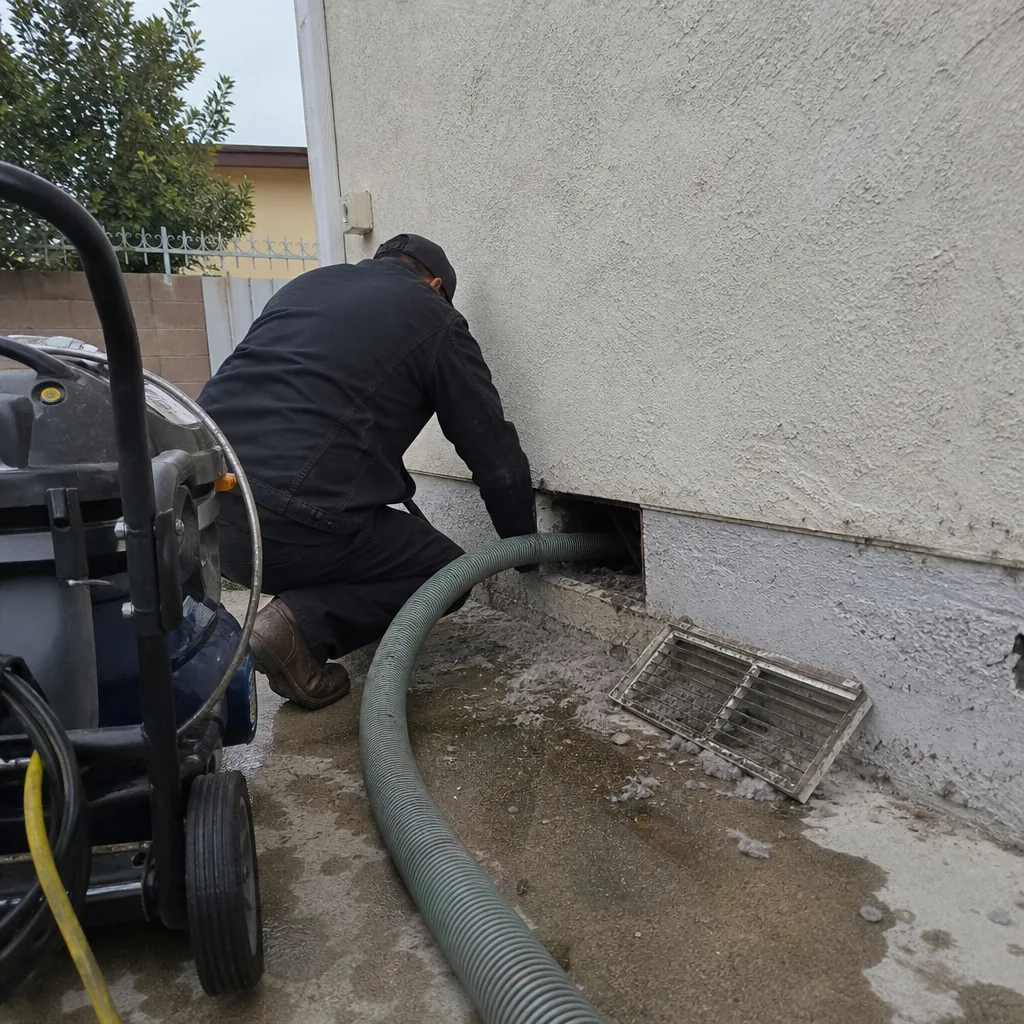
- Ignoring the dryer vent while addressing the HVAC ducts. Dryer vents are a fire hazard independent of air quality. A home with contaminated HVAC ducts and a clogged dryer vent has two separate but equally urgent problems. We address both. Our Dryer Vent Cleaning in Downey service exists because these issues are frequently discovered together during inspections.
- Assuming a cleaning will fix a leak or a separation. If cold attic air or humid crawlspace air is entering the system through a breach, no amount of cleaning will resolve the air quality issue. The breach has to be found and repaired first, or the contamination returns. This is why repair and cleaning are separate services that frequently need to be combined.
- Falling for the $99 whole-house coupon. Duct cleaning is priced per system, per access point, per square foot of duct surface. A flat $99 price that doesn’t distinguish between a 1,200-square-foot Downey ranch and a 4,000-square-foot two-story is a bait quote, not an estimate. Real pricing accounts for the actual system, and that pricing is established before work starts, not after.
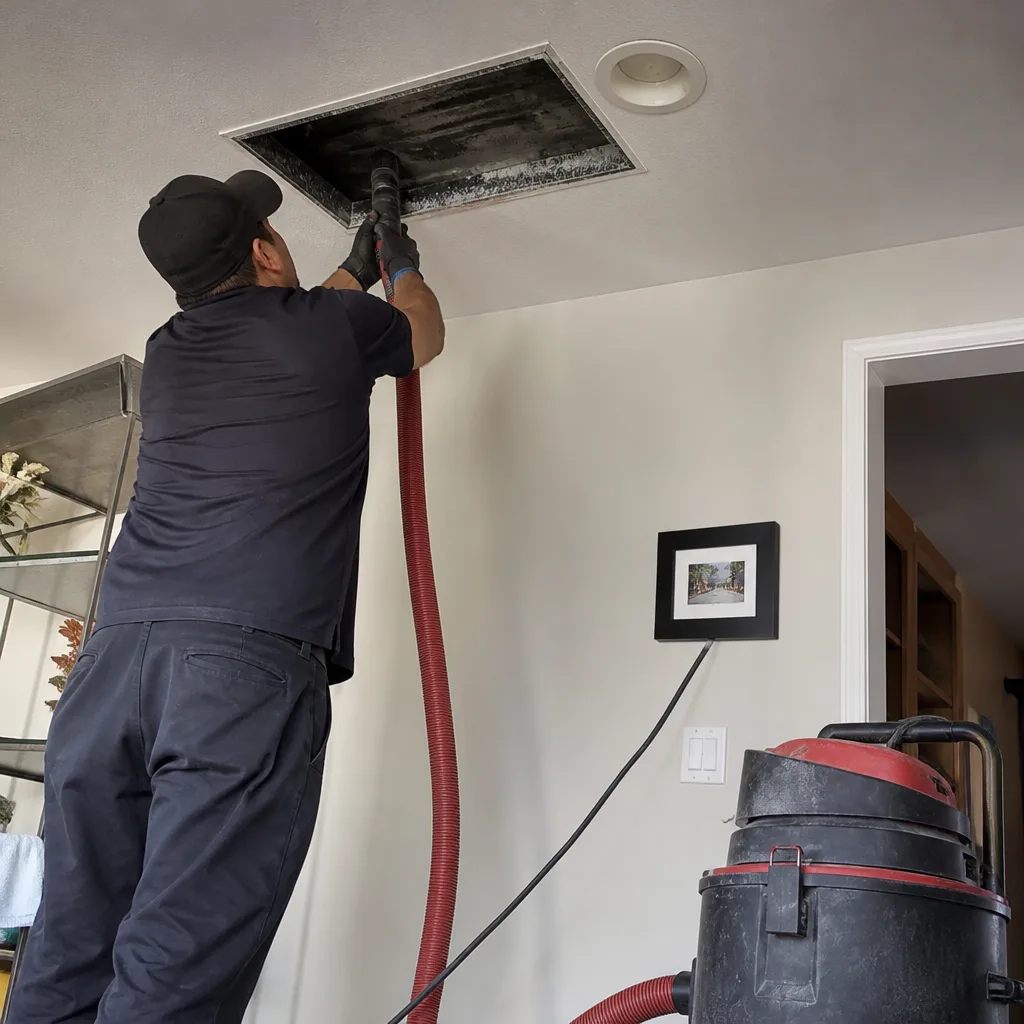
- Skipping the post-cleaning verification. A legitimate cleaning includes before-and-after documentation, ideally photos from inside the ducts. If a company can’t show you what they did, you have no way to verify they did anything. We document every job with before-and-after visuals of the actual duct interiors.
When to Call a Professional
Some situations call for professional assessment because the stakes are higher than dust. If you have visible mold growth inside a register or boot, call someone. If you’ve had a renovation with drywall sanding and the system has been running since, call someone. If a household member has new respiratory symptoms that improve when they leave the house, call someone. If you’ve mapped your rooms and found a consistent 4-plus degree differential that isn’t explained by sun exposure or closed doors, call someone. If your filter is loading heavily within 3 weeks of replacement, call someone. And if you’ve never had the ducts cleaned in a home that’s more than 10 or 15 years old, that alone is reason enough for an assessment.
Duct Cleaning Downey offers free estimates in Downey with no obligation. We’ll assess the system, show you what’s there or not there, and give you a flat price before any work begins. Call (855) 382-4683 to schedule an evaluation.
See the difference
 Before
 After
 Before
 After
 Before
 After
Frequently Asked Questions
You know your air ducts need cleaning if your furnace filter loads with visible debris within 2 to 3 weeks of replacement, if one or more rooms run consistently warmer than the rest of the house with the AC on, or if occupants experience allergy-type symptoms that improve when they leave the house. Visible dust at registers and musty odors are late-stage confirmations. Call (855) 382-4683 for a free assessment in Downey if any of these patterns match what you’re seeing.
Air duct cleaning in Downey typically ranges from $400 to $900 for a complete single-system residential cleaning, with larger homes or heavily contaminated systems running higher. The cost depends on the size of the system, the number of access points, the level of contamination, and whether repair work is also needed. We provide one flat price per system before work starts. Call (855) 382-4683 for an exact quote.
Most Downey homes benefit from professional duct cleaning every 3 to 5 years, with the interval shortened if you have pets, smokers in the household, recent renovation work, or occupants with respiratory conditions. Homes near the 710 or 5 freeway corridors may also accumulate particulate more quickly from vehicle emissions and brake dust. If you’re unsure whether your system is due, an assessment is the fastest way to find out.
Yes. Contaminated ductwork circulates the same particulate through the living space continuously, which means occupants are exposed to dust, pollen, pet dander, and biological material at higher concentrations than they would be from a clean system. The effect is most noticeable in people who already have allergies, asthma, or other respiratory sensitivities. If symptoms improve when you leave the house and return when you come home, the indoor environment is likely a contributing factor.
Air duct cleaning removes accumulated debris, dust, and biological material from inside the duct system. Air duct repair addresses structural problems: leaks, separations, collapsed sections, or damaged insulation. They’re different services, but they frequently go together because a compromised duct introduces contamination that cleaning alone can’t permanently resolve. We provide both services so the whole system gets diagnosed and corrected in one relationship.
Cheap duct cleaning quotes usually come from companies that do a partial pass rather than a full-system cleaning: they may clean only the supply side and skip the return, they may use a basic vacuum without the agitation needed to break bonded debris from duct walls, or they may quote a teaser price and upsell aggressively once onsite. A legitimate full-system cleaning with professional equipment and before-and-after documentation costs what it costs because the work is real and verifiable. Call (855) 382-4683 for a flat-price estimate on your actual system, not a generic number.
The Bottom Line
The ducts in your Downey home are not passive pipes. They’re an active part of your indoor environment, and they signal their condition through temperature differentials, filter loading patterns, and the way your household feels long before visible dust or odors appear. Learning to read those signals is the difference between catching a problem early and responding to a system that’s been compromised for months or years – see our more guides & resources for deeper dives on each topic. And when you do act, act on the whole system: cleaning the debris, repairing the breaches, and verifying the work was actually done. That’s the standard we apply on every job. Start with an assessment. You’ll know more about your home in 30 minutes than most homeowners learn in a decade.
Written by the team at Duct Cleaning Downey, serving Downey since 2017.