
Last updated November 3, 2026
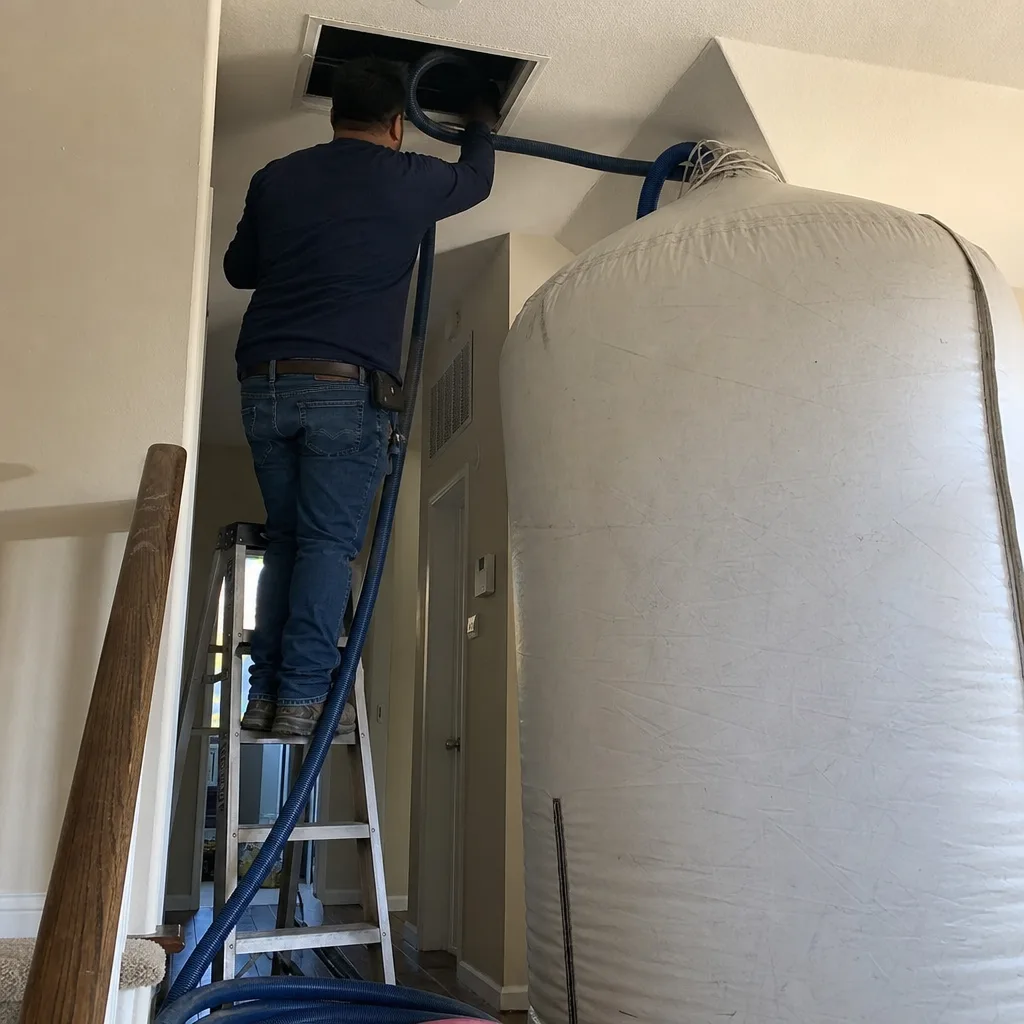
 Whole-home duct cleaning
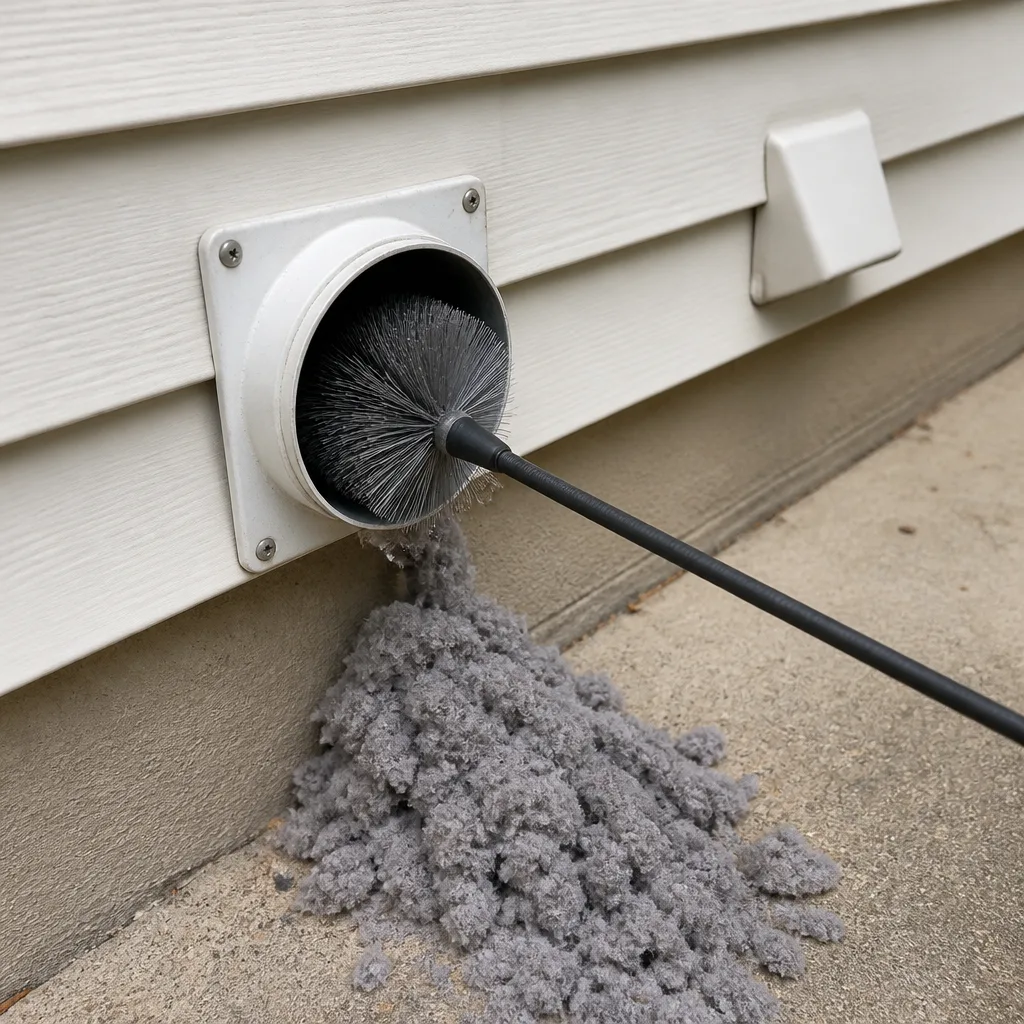 Dryer vent cleaning
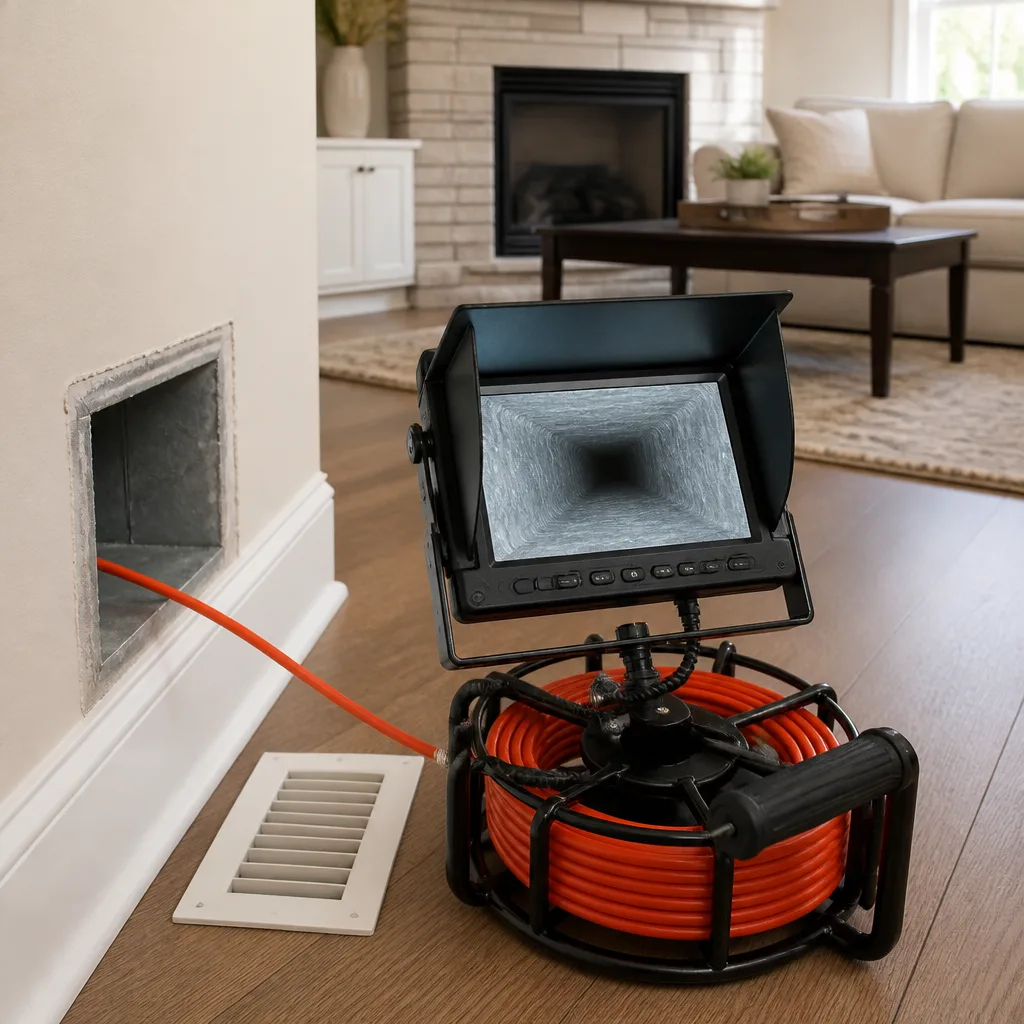 Camera inspection
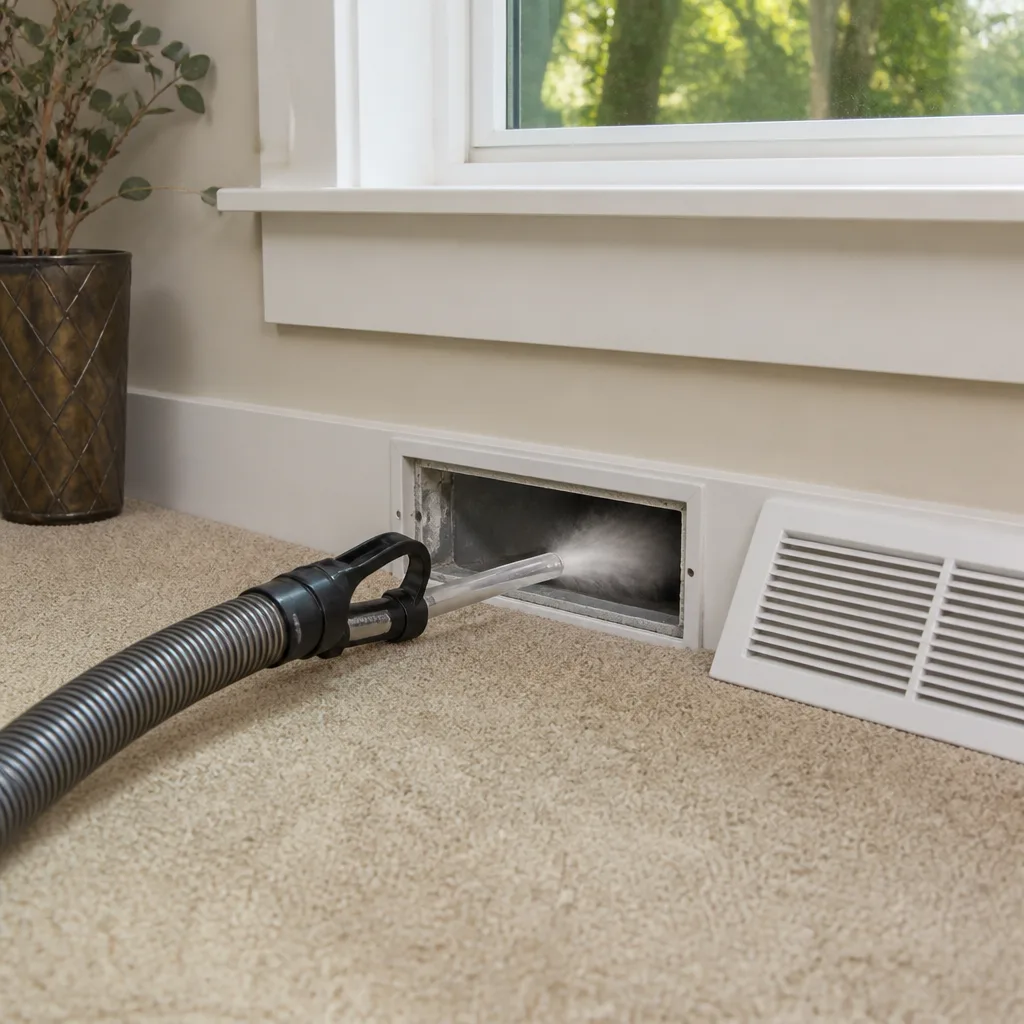 Sanitizing & deodorizing
Whole-system duct and dryer vent check with before-and-after photos - you see exactly what came out of your vents
That "$99 whole-house special" is a bait ad - the real number appears once they are in your hallway, or the "clean" is a shop-vac at the register. We photograph the inside of your ducts before and after instead.
Choosing the Right Air Duct Cleaning Brand: A Buyer’s Guide for Downey
The company van, the uniform, and the website tell you nothing about whether a crew runs a truck-mounted negative air machine or a modified shop vac, and those two tools produce completely different results on the same ductwork. Most Downey homeowners assume the duct cleaning industry sorts itself into recognizable brand tiers the way appliances or power tools do. It doesn’t. What actually separates competent operators from the rest is the category of equipment they run and the scope of work they perform, and once you learn to ask the right questions about CFM ratings, brush systems, and source-removal language, you can screen out roughly 80% of underqualified crews before they ever set foot in your home. This guide walks through exactly what to look for in an Air Duct Cleaning provider serving Downey homes, from the equipment specs that matter to the service-scope red flags that most buyers miss.
Styles & brands we work with
- Whole-home duct cleaning
- Dryer vent cleaning
- Camera inspection
- Sanitizing & deodorizing
Quick Answer
Choosing the right air duct cleaning company in Downey comes down to equipment category, not brand name. Look for a provider that runs truck-mounted or high-CFM portable negative air machines with rotary contact brush systems, confirms they work to NADCA ACR standards by describing their source-removal process, and offers repair capability alongside cleaning so damaged ducts don’t re-contaminate your system the moment the crew leaves.
Table of Contents
- The Equipment Categories That Define Service Quality
- Source-Removal Language: How to Read a Service Description
- NADCA ACR Standards: What They Require and How to Ask
- Why Downey’s Housing Stock Changes the Equation
- The Three Questions That Separate Specialists from Single-Tool Crews
- Why Repair Capability Matters as Much as Cleaning
- What Honest Duct Cleaning Should Cost in Downey
- Dryer Vents: The Part of the Duct System Most Buyers Ignore
- Common Mistakes to Avoid
- When to Call a Professional
- Frequently Asked Questions
- The Bottom Line
The Equipment Categories That Define Service Quality
Here’s the honest truth about duct cleaning equipment: brand recognition means almost nothing to a homeowner because the major professional brands don’t advertise to consumers. You’ve never seen a Rotobrush commercial during a Dodgers game. You won’t find a Nikro display at Home Depot. These systems sell to contractors, not to the public, which means most Downey residents evaluating duct cleaning companies have no frame of reference for what good equipment even looks like. That’s a problem, because the equipment category, not the logo, determines how thoroughly debris gets extracted from your system.
Professional duct cleaning equipment falls into two broad camps: negative air machines and agitation tools. A negative air machine is essentially a high-powered vacuum that creates suction at the register while the technician works upstream, pulling loosened debris toward the collection point rather than letting it recirculate through rooms. These machines are rated by CFM, or cubic feet per minute of airflow. Truck-mounted units typically pull 10,000 to 15,000 CFM, which is enough to overcome the pressure drop across a long residential trunk line. Portable electric units run lower, often in the 3,000 to 6,000 CFM range. For most Downey single-family homes, either category works, but the key is that the machine must be a true negative air system with HEPA or high-efficiency filtration, not a repurposed carpet-cleaning vacuum. We run Rotobrush and Nikro systems simultaneously on our trucks, both industry-recognized professional equipment built specifically for ductwork, not residential workarounds.
Agitation is the second half of the equation. A vacuum alone won’t remove the film of dust adhered to duct walls by years of condensation and static cling. The industry uses two main agitation methods: rotary contact brushes and air whips. Rotary brushes are spinning bristle heads attached to flexible shafts that physically scrub the duct interior. Air whips are compressed-air nozzles that blast debris loose with high-pressure air. Both work, but rotary contact brushing generally provides more consistent contact with the duct surface and better removal of the compacted debris common in older Downey systems that haven’t been cleaned in a decade or more. If a company can’t tell you which agitation method they use and why, that’s an immediate signal they may be running a basic vacuum pass and calling it cleaning.
We also stock Abatement Technologies air-filtration equipment, the same category of gear used in environmental remediation and mold-abatement projects. That’s not a marketing line. It’s an indication that the company takes airborne particulate control seriously enough to invest in equipment designed for contamination scenarios far more demanding than typical residential dust. When you see that level of equipment on a Downey service truck, you’re looking at an operator who approaches duct cleaning as contamination control, not maintenance theater.
Source-Removal Language: How to Read a Service Description
Every duct cleaning company in the Downey area has a website that says they clean ducts. The wording that actually tells you something is whether they describe source removal, and most residential operators either don’t use the term or can’t explain it when asked. Source removal is exactly what it sounds like: the physical extraction of accumulated debris from the interior surfaces of the duct system, using mechanical agitation combined with negative air pressure to move that debris out of the ducts and into a collection system, not just stir it around. Companies that clean to this standard will describe their process in specific sequence: agitate, extract, verify. Companies that can’t or won’t describe source removal are usually running what the industry quietly calls a “blow-and-go,” where a technician opens a few registers, pushes a brush around what they can reach, and leaves the loosened dust to redistribute through the house.
When you read a service description, look for these markers of a source-removal operator. First, they’ll mention negative air pressure or vacuum extraction attached to the system, not just a portable vacuum held at each register. Second, they’ll describe agitation as a distinct step: rotary brush, compressed air, or both. Third, they’ll discuss verification, which usually means before-and-after photography or camera inspection. If the description talks only about “cleaning your vents” or “removing dust from your registers,” that’s surface-level thinking. Vents and registers are the visible parts of the system. The ducts themselves, the trunk lines running through walls and under slabs, are where the actual contamination load sits.
This matters for a specific reason in Downey. Many homes in the city were built in the 1950s through the 1970s, and a significant portion of that housing stock has never had its ductwork cleaned, or had it cleaned once by an operator who didn’t remove source debris. That means the accumulated load isn’t light surface dust you can wipe away. It’s compacted material that has adhered to duct walls over decades. The difference between a crew that agitates and extracts that material under negative pressure and a crew that disturbs it with a vacuum wand is the difference between solving the problem and making it airborne throughout the house.
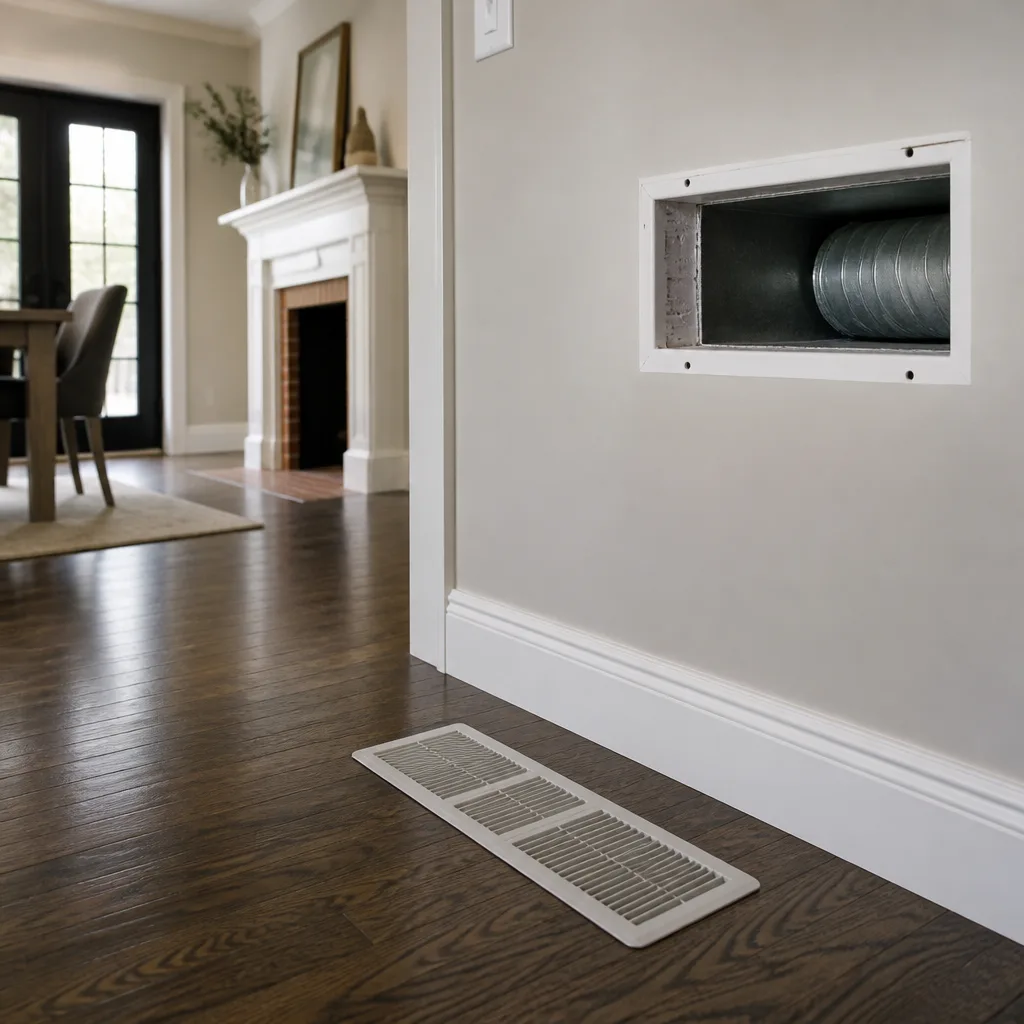
If you want to understand the full scope of what a proper Air Duct Cleaning in Downey should include, the process should account for the entire system: supply ducts, return ducts, registers, the blower compartment, the evaporator coil if accessible, and the air handler. A company that only quotes supply-side cleaning is leaving half the contamination in place.
NADCA ACR Standards: What They Require and How to Ask
NADCA, the National Air Duct Cleaners Association, publishes the industry-standard Assessment, Cleaning, and Restoration (ACR) standard, and it’s the closest thing this industry has to a technical benchmark. The 2021 edition of the ACR standard specifies that cleaning must include source removal, that all components of the HVAC system be inspected, that porous surfaces like fiberglass duct board be assessed for moisture damage, and that the work be verified by visual inspection. It’s a legitimate standard with specific technical requirements, and any competent duct cleaning company should be able to confirm they work to it. But here’s the problem: mentioning NADCA by name on a website doesn’t mean anything by itself. Plenty of operators drop the acronym onto a service page without ever having read the standard.
The right way to ask is specific. Don’t ask “Are you NADCA certified?” because certification and standard compliance are two different things, and the company you’re vetting may have neither. Ask this instead: “Do you clean to the NADCA ACR standard for source removal, and can you walk me through what your cleaning process includes step by step?” A company that works to that standard will describe source removal without hesitation, because that’s the core requirement. They’ll talk about negative air pressure, mechanical agitation, collection, and verification. A company that hedges, changes the subject to price, or gives you a vague answer about “thorough cleaning” is signaling that they don’t operate to a published technical standard at all.
You can also ask about containment. The ACR standard addresses protecting the occupied space during cleaning, which for a Downey homeowner means the crew should be taking steps to keep extracted debris from re-entering living areas. That typically means negative air equipment running throughout the process, sealed access points, and proper ventilation. If the answer to “How do you keep the debris you’re removing from blowing back into my house?” is silence or confusion, you’ve learned something important.
We work to Guardsman-grade cleaning standards on residential ductwork. Guardsman is a benchmark more commonly associated with higher-specification commercial and institutional cleaning protocols, and the fact that we apply it to homes means our baseline for what counts as clean is set higher than the residential default. The same tools used in remediation environments, brought to your home.
Why Downey’s Housing Stock Changes the Equation
Downey is not a new-construction market. Drive through the neighborhoods south of Firestone Boulevard or the streets around Furman Park and you’ll see homes from the 1950s, 1960s, and 1970s, many of them slab-on-grade construction. That’s a critical detail for duct cleaning, because slab-on-grade homes in this part of Los Angeles County frequently have ductwork running through or beneath the concrete slab. Under-slab ducts introduce a set of problems you simply don’t find in newer raised-foundation or attic-ducted homes: moisture intrusion, especially in years with heavy winter rains, can create condensation inside the ducts that turns accumulated dust into a caked-on layer; older metal trunk systems rust at the seams; and inspection access is often limited to a handful of register openings rather than a spacious attic crawl.
This housing reality means a national brand name on a franchise van is less relevant than whether the crew understands the specific failure modes of older Downey duct systems. A technician who has never worked on under-slab ducts may not know what to look for at the register boots, where moisture wicking from the slab can accelerate corrosion. A crew that mostly services newer suburban tract homes in other markets may not recognize the signs of asbestos-containing duct wrap, which is present in some homes from this era and requires an entirely different protocol. Local specialization in Downey’s housing stock matters more than the logo on the equipment.
For homeowners in these older Downey homes, the implications are practical. First, ask whether the company has experience with slab-on-grade duct systems, because cleaning them correctly requires managing moisture, not just movement of air and debris. Second, understand that if your ductwork has never been properly assessed, you may find damage during a cleaning, because decades-old metal ducts develop rust-through and separated seams. That’s why repair capability matters. A cleaning-only company will either ignore the damage they find or tell you to call someone else. The better model is a provider that can clean and then repair what the cleaning reveals, in a single service relationship. That’s how we handle our Air Duct Repair in Downey work: the cleaning diagnoses, and when we find leaks, separated seams, or rusted sections, we fix them on the same visit rather than handing you a list and a referral.
The Three Questions That Separate Specialists from Single-Tool Crews
You don’t need to become a duct-cleaning equipment expert to vet a company in a five-minute phone call. Three questions will do the job, because each one probes a specific layer of capability and a single-tool crew will struggle with all three. Here they are:
- “What do you use to verify the work was done?” A full-system specialist will describe camera verification: before-and-after inspection of representative sections of ductwork, documented for the homeowner to review. If the answer is “we just clean it,” or “you’ll see the difference in your filters,” that’s an operator who doesn’t verify anything. Verification is how you know the cleaning actually removed debris instead of just moving it around.
- “Do you clean the blower and coil as part of the job?” The blower motor and evaporator coil are part of the air pathway, and a proper source-removal cleaning includes them, or at minimum assesses their condition. A crew that only cleans ducts but never opens the air handler compartment is skipping a major contamination surface. If the answer is confusion about what you mean by coil, that tells you what you need to know.
- “Can I see camera footage of my ducts before and after?” This is the simplest one, and you’d be surprised how many operators can’t say yes. A company running inspection cameras as standard practice has invested in the equipment and training to document their work. A company that can’t show you your own ducts is asking you to take the result on faith. We always can.
Ask those three questions to any duct cleaning operation in the Downey area and the answers will sort them for you. Most cleaners stop at the vent cover. We go further.
Why Repair Capability Matters as Much as Cleaning
Here’s a scenario we’ve seen in Downey repeatedly. A homeowner schedules a basic duct cleaning with a low-cost provider. The crew arrives, runs a vacuum through the registers, collects their fee, and leaves. A month later, the dust is back. The homeowner assumes the cleaning was ineffective, but what actually happened is that the cleaning revealed a problem nobody addressed: a separated seam in the return trunk, a rusted-out section under the slab, a disconnected register boot. Contaminated air from the crawlspace or slab cavity is being pulled into the system after the cleaning, re-contaminating the ducts immediately.
This is why repair capability is part of the buyer’s equation, not an afterthought. A company that offers air duct repair as a standalone service, not just as a footnote to cleaning, is equipped to diagnose and fix the compromised ductwork that leads to chronic re-contamination. That means sealing leaks with proper mastic, not duct tape; replacing rusted metal sections rather than patching them; and re-supporting sagging flex runs rather than leaving them crimped and restricted. When the company cleaning your ducts is also the company that can fix what’s wrong with them, you get a system that stays clean instead of a recurring problem. Duct damage is an air-quality hazard. We address it.
For Downey property managers, this point lands even harder. A rental unit with chronic tenant dust complaints or allergy issues often has a duct problem, not a housekeeping problem. Sending a cleaning-only vendor into that property repeatedly without addressing the underlying duct damage means repeated tenant complaints, repeated service calls, and no resolution. A full-system provider that can clean and repair in one scope of work solves the problem in one mobilization. We clean it. We repair it. We improve it.
What Honest Duct Cleaning Should Cost in Downey
Duct cleaning pricing in the Los Angeles County market, including Downey, typically runs between $350 and $750 for a complete single-family system, with factors like system size, number of returns, accessibility, and whether the air handler and coil are included moving that number up or down. A larger two-story home with multiple zones and under-slab access challenges may push toward $900 or more. A small single-level home from the 1950s with straightforward attic access might land in the $300 to $450 range. These are whole-system numbers, not per-vent prices, and any company quoting per-vent pricing is doing something you should be suspicious of, because it encourages the classic bait-and-switch: a low per-vent figure that multiplies into an inflated invoice once the crew counts every opening in the house.
Here’s what an honest line-item breakdown looks like for a typical Downey home:
- Complete supply and return duct cleaning (all registers): $250 to $450
- Air handler / blower compartment cleaning: $75 to $150
- Evaporator coil cleaning (accessible units): $75 to $150
- Camera inspection and verification: $50 to $100
- Optional sanitization or deodorization: $75 to $150
- Dryer vent cleaning (add-on or standalone): $95 to $185
Be wary of any quote below $200 for a full-system cleaning in Downey. At that price point, the operator is either not running real negative air equipment, not cleaning the entire system, or planning to upsell aggressively once they’re in the house. The industry’s bait-and-switch reputation exists because low teaser pricing works to get a crew in the door, and then the invoice grows. We price differently: one flat price per system, agreed before work starts, no per-vent math, and you see before-and-after photos of your own ducts when we’re done. That’s the only pricing model that makes sense for an honest service.
Dryer Vents: The Part of the Duct System Most Buyers Ignore
Every article about air duct cleaning focuses on HVAC ducts, and that’s understandable. But the duct system in your Downey home includes another run of ducting that carries lint, heat, and moisture: the dryer vent. The National Fire Protection Association lists dryers as the cause of thousands of home fires annually, and the leading contributing factor is lint accumulation in the exhaust duct. Lint is combustible. It’s that simple. A dryer vent that hasn’t been cleaned in three years, which describes a significant number of homes in Downey, poses a fire risk that has nothing to do with the brand of dryer or the quality of the lint trap.
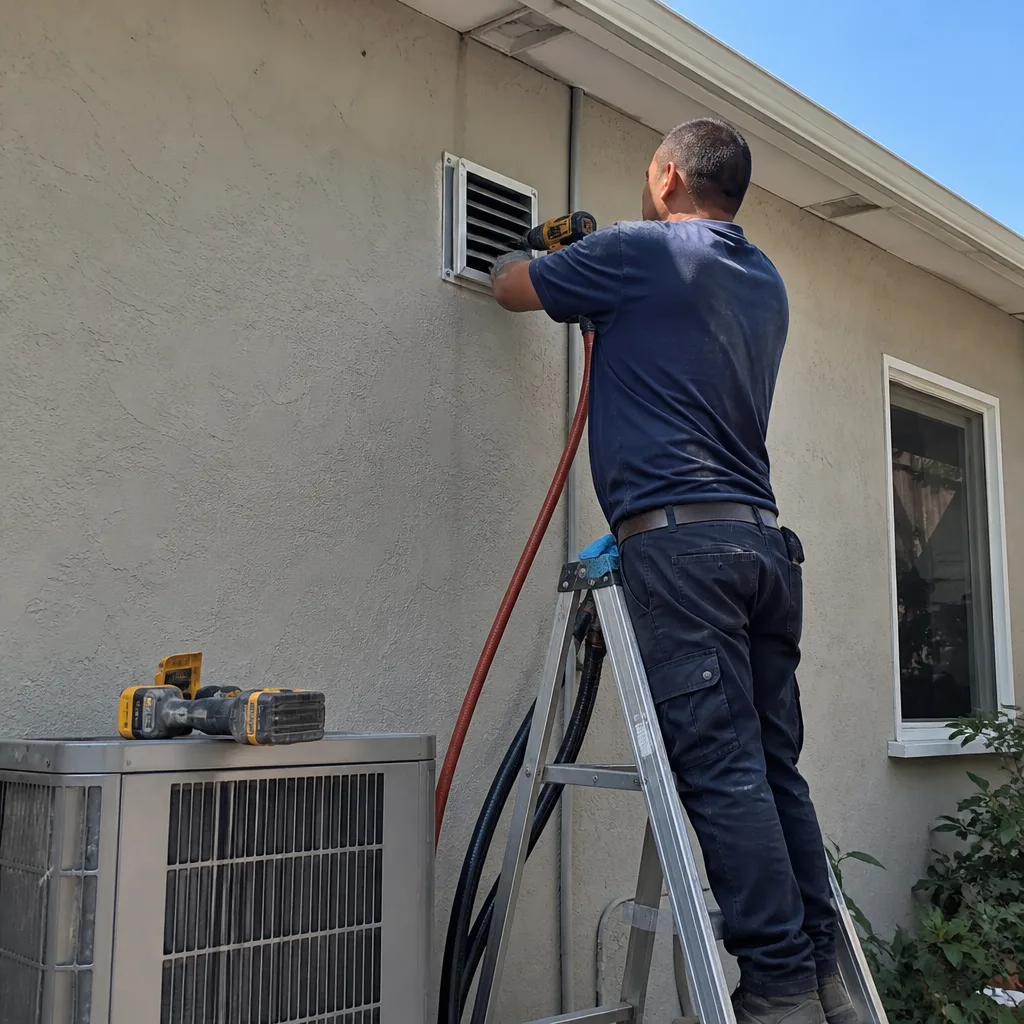
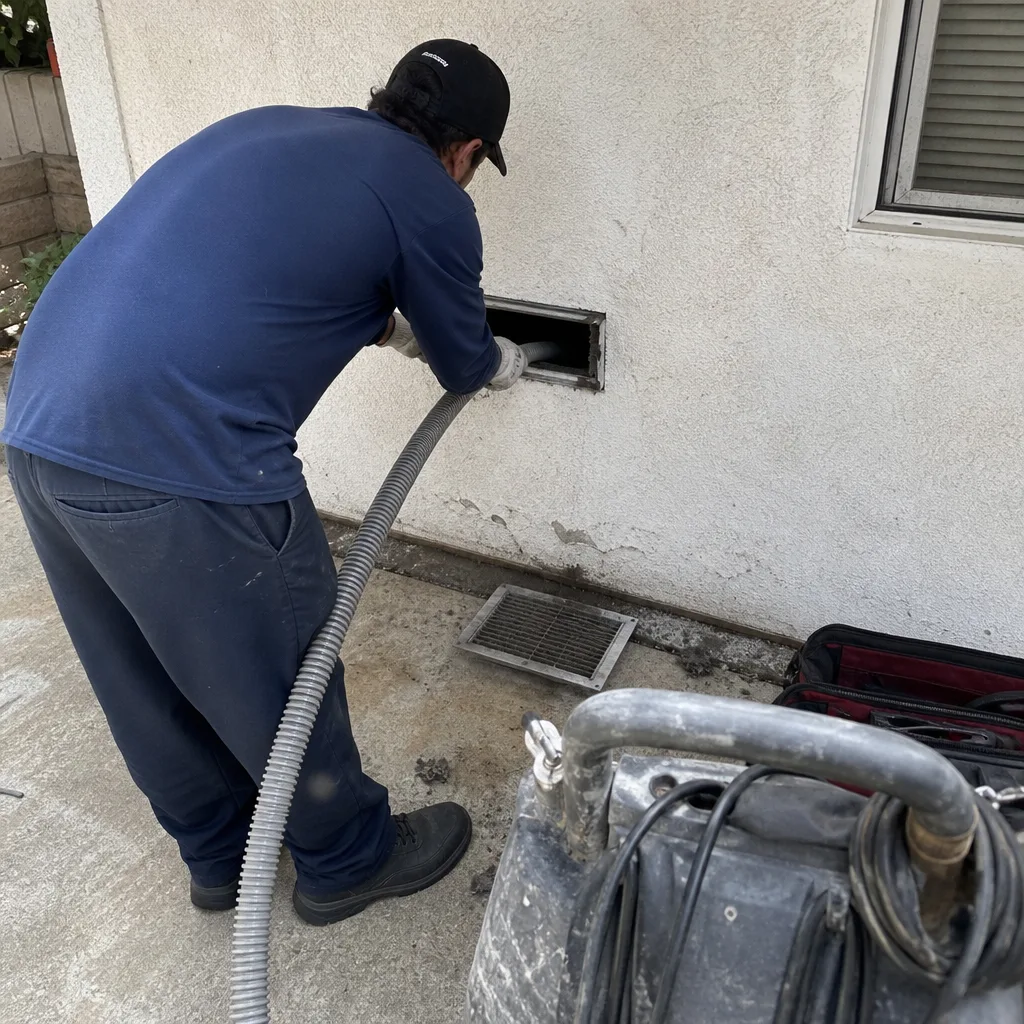
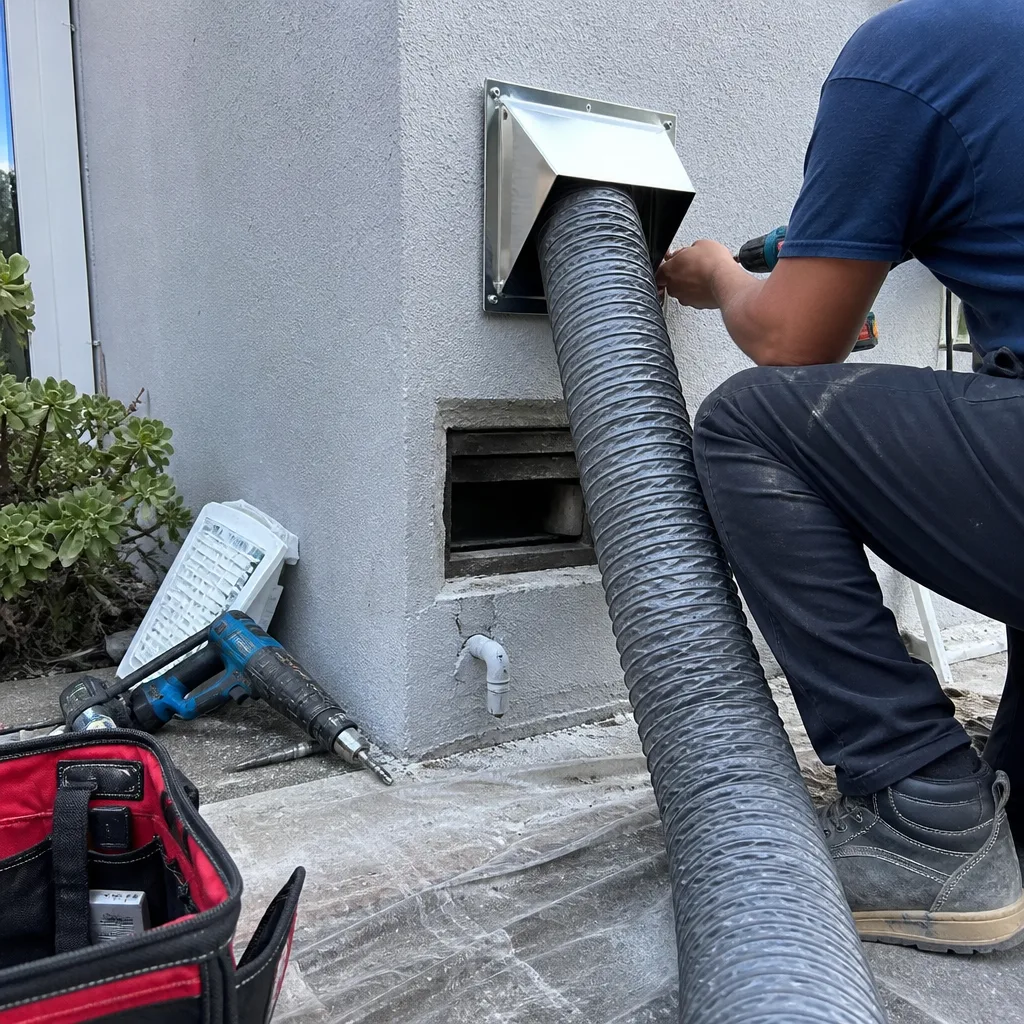
A full-system duct specialist addresses this as part of the same service relationship. We handle Dryer Vent Cleaning in Downey as a standalone service and as an add-on to HVAC duct cleaning, because the tools and the access skills overlap. The equipment is similar: rotary brush systems sized for the smaller vent diameter, combined with negative air or powered collection to pull loosened lint out through the termination point rather than pushing it backward into the laundry room.
Dryer vents are a fire hazard. Duct damage is an air-quality hazard. We address both, and that’s the level of coverage you should expect from any provider you’re considering. A company that cleans HVAC ducts but won’t touch your dryer vent is only managing half the risk profile in your home.
Common Mistakes to Avoid
- Choosing on price alone. A $79 whole-house duct cleaning special in Downey is almost certainly a loss-leader designed to get a technician into your home to upsell you. Whole-system source-removal cleaning with real equipment cannot be delivered profitably at that price.
- Assuming a franchise brand name means better service. National duct cleaning franchises are independently owned and operated, and the quality varies from franchise to franchise. The brand on the van tells you nothing about the equipment category or the technician’s training.
- Skipping the verification step. If the company doesn’t offer before-and-after camera documentation, you’re being asked to trust that the work was done because they said so. Verification is a standard part of proper source-removal cleaning, not an optional upsell.
- Ignoring the dryer vent. Many homeowners schedule HVAC duct cleaning and never think about the dryer exhaust, even though it’s the duct run most likely to create a fire hazard.
- Not asking about repair capability. If your cleaning reveals damaged ductwork, as is common in older Downey slab-on-grade homes, a cleaning-only provider leaves you with a problem they can’t solve, and you’ll re-contaminate quickly.
- Trusting per-vent pricing. Per-vent pricing structures invite manipulation: a low unit price that balloons once every opening is counted. Honest providers quote a whole-system price up front.
- Not confirming the cleaning includes the air handler and coil. The blower and coil are part of the air path. Missing them is like cleaning your kitchen but leaving the refrigerator interior untouched.
When to Call a Professional
You should schedule a professional duct cleaning in Downey if you’ve lived in your home for more than three years and have never had the system cleaned, if you notice visible dust accumulating on registers despite regular filter changes, if household members experience unexplained allergy symptoms that improve away from home, or if you smell a musty odor when the system starts up. For The Complete Air Duct Cleaning Guide for Downey Homeowners and more details, see our resources. The same call is warranted if your dryer takes longer than one cycle to dry clothes, which signals a restricted vent. After any significant renovation, construction dust will have made its way into the system, and after any water event or pest activity in the duct area, an inspection is warranted. Duct Cleaning Downey offers free estimates in Downey, call (855) 382-4683 and we’ll assess your system and give you an honest, specific number.
Frequently Asked Questions
Air duct cleaning in Downey typically costs between $350 and $750 for a complete single-family system, with larger or older homes pushing toward $900. That’s a whole-system price including supply ducts, return ducts, registers, and usually the blower compartment. Any quote under $200 should be treated as a red flag for bait-and-switch pricing models. Call (855) 382-4683 for an exact quote on your Downey home, estimates are free.
Ask for camera verification, meaning before-and-after video or photos of representative duct sections taken during the job. A legitimate source-removal operator runs inspection cameras as standard practice and can show you exactly what the interior of your ducts looked like before and after. If the company can’t provide this, you have no way to verify the work was performed at all.
Cheaper quotes in the Downey market usually reflect a different category of equipment and a different scope of work. A $99 special typically means a portable vacuum at the registers without true negative air extraction, no air handler or coil cleaning, and no verification. Real source-removal cleaning with professional equipment like Rotobrush or Nikro systems costs more because it does more. The cheaper quote often becomes expensive once the upsell begins.
Newer Downey homes still accumulate debris, especially during the first few years when construction dust from drywall, insulation, and flooring settles into the system, but the urgency is lower than in the 1950s through 1970s slab-on-grade stock that dominates much of the city. Even a newer system benefits from inspection every three to five years, because duct leaks can develop and introduce attic or wall-cavity air regardless of the home’s age.
NADCA compliance means the company works to the ACR standard, which requires source removal: mechanical agitation combined with negative air pressure and collection, followed by visual verification. Ask a company to describe their process against that standard. If they can walk you through source removal step by step, they’re operating to a published technical benchmark. If they just say “we’re NADCA certified” and can’t describe the process, keep looking.
Duct cleaning can reduce the recirculation of accumulated dust, pet dander, and other particulate matter through your home’s HVAC system, which may help allergy sufferers who react to those triggers, but it’s not a medical treatment. The benefit comes from removing the reservoir of debris in the ductwork that keeps reintroducing allergens into the air stream. Call (855) 382-4683 for a free assessment of what’s actually in your Duct Cleaning Downey system.
The Bottom Line
Choosing the right air duct cleaning company in Downey doesn’t require brand loyalty to a name you’ve never heard of. It requires understanding equipment categories, asking about source-removal process, demanding verification, and giving preference to providers who can repair what they find. You’ll know you’re talking to a real operator when they can describe their equipment in specific terms, confirm they clean the full air pathway including blower and coil, offer camera proof of the work, and price the job as one flat number rather than per-vent arithmetic. You can start with our trusted Duct Cleaning Downey home base here.
Written by the team at Duct Cleaning Downey, serving Downey since 2017.
See the difference
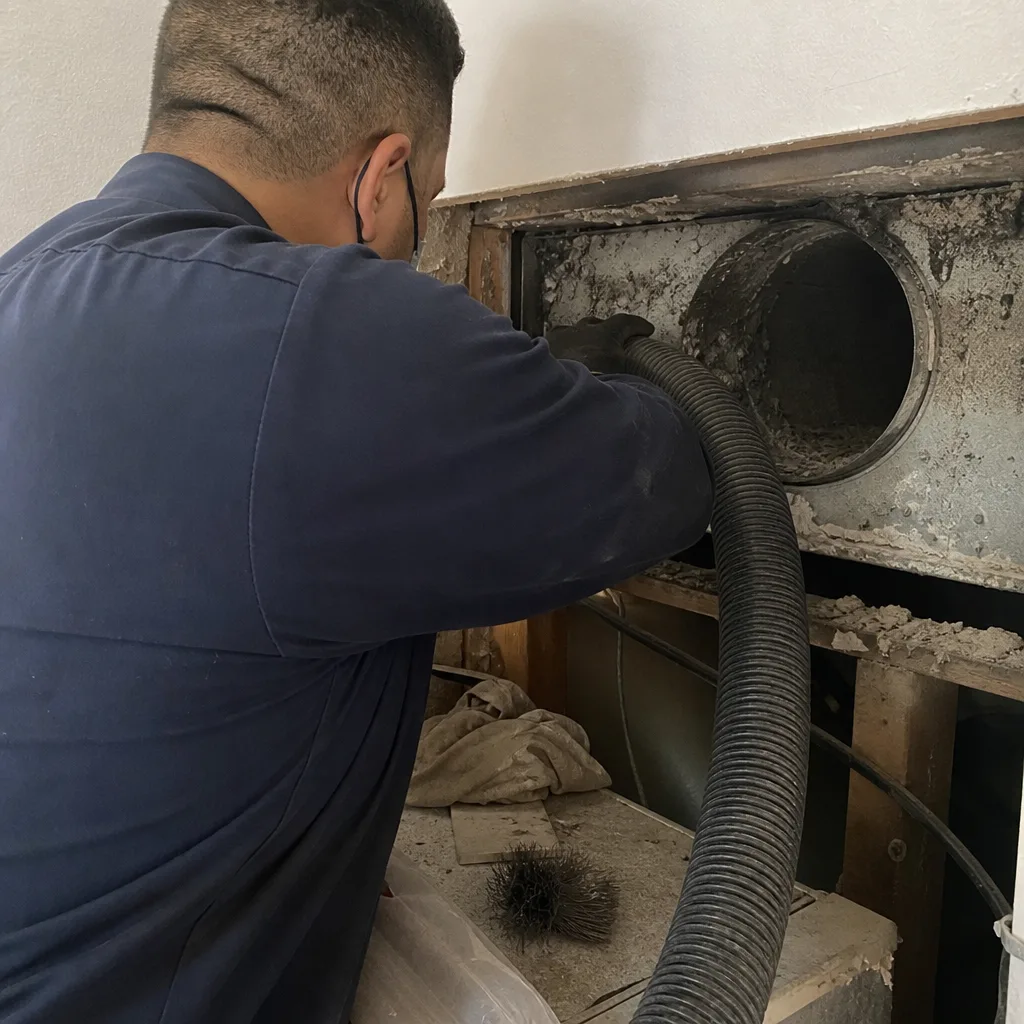 Before
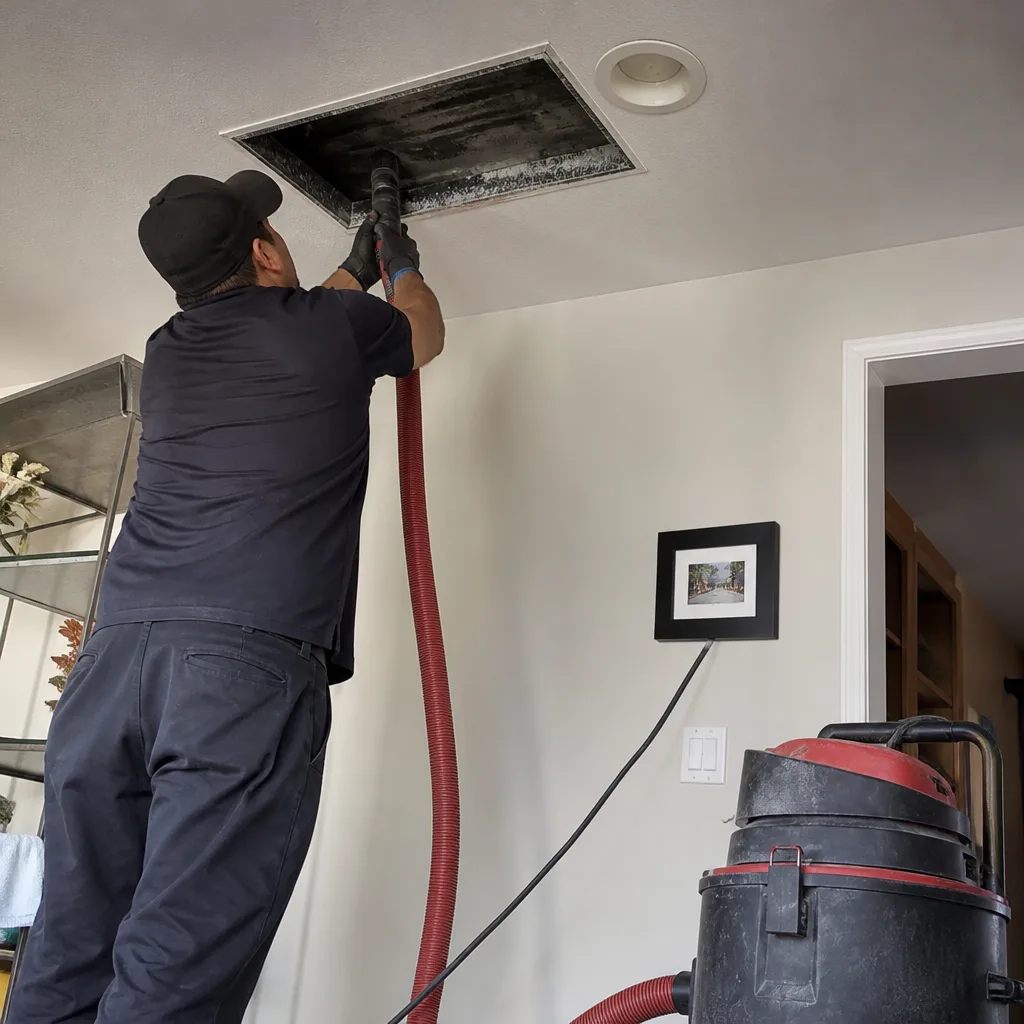 After
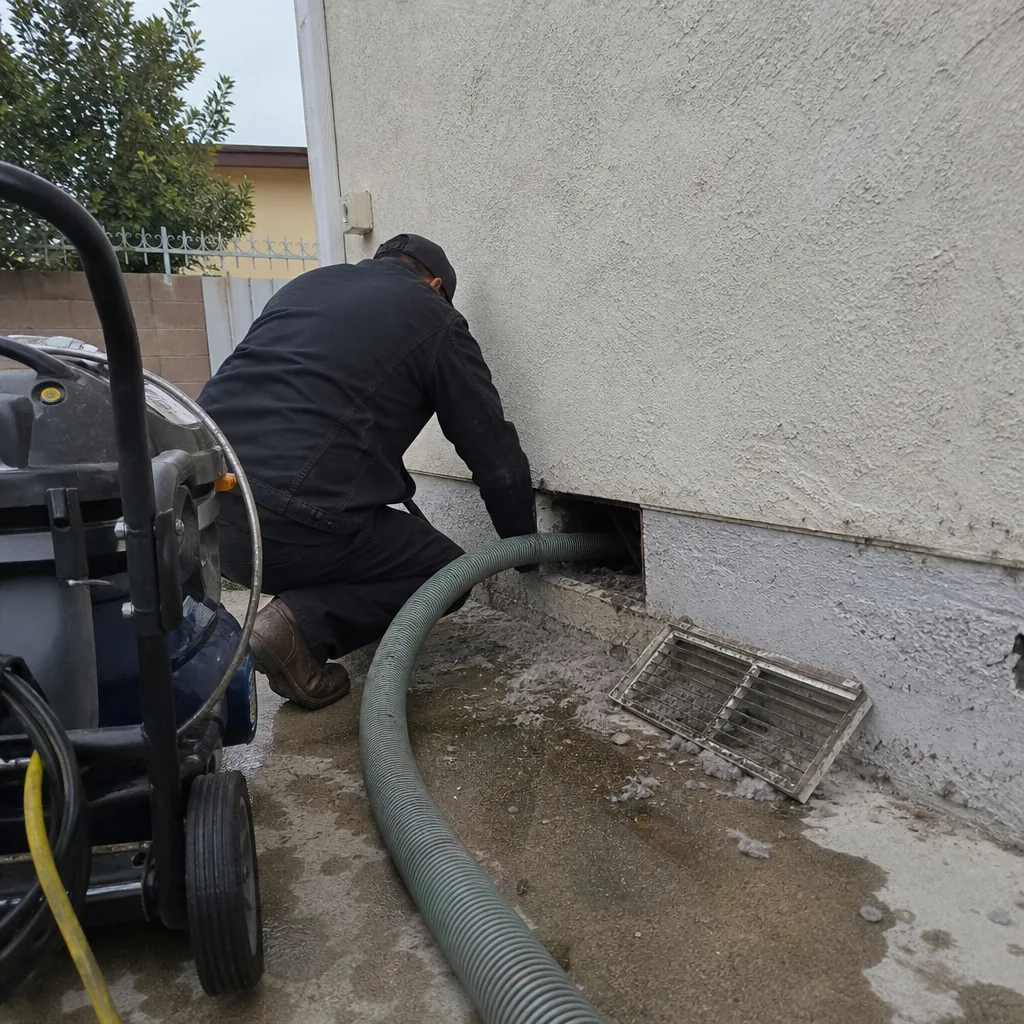 Before
 After
 Before
 After