
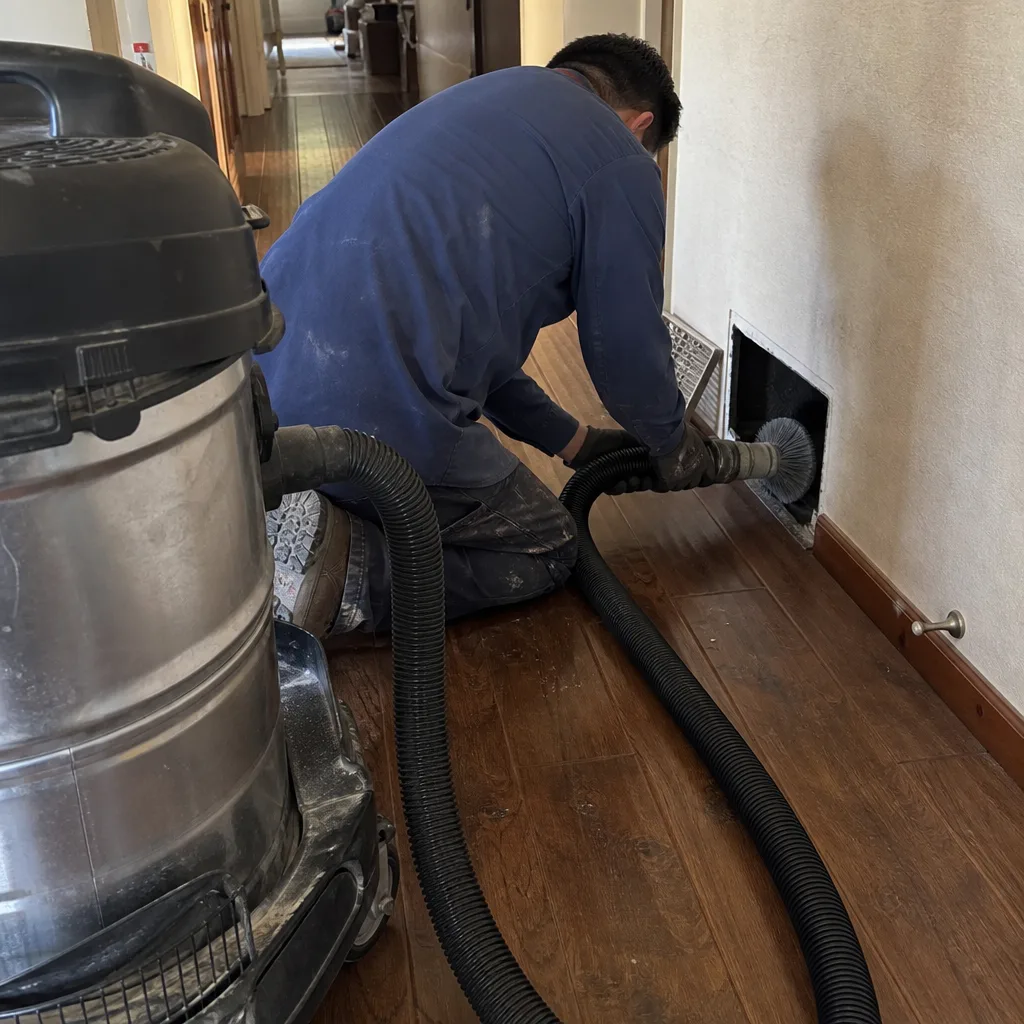
Last updated November 2, 2026
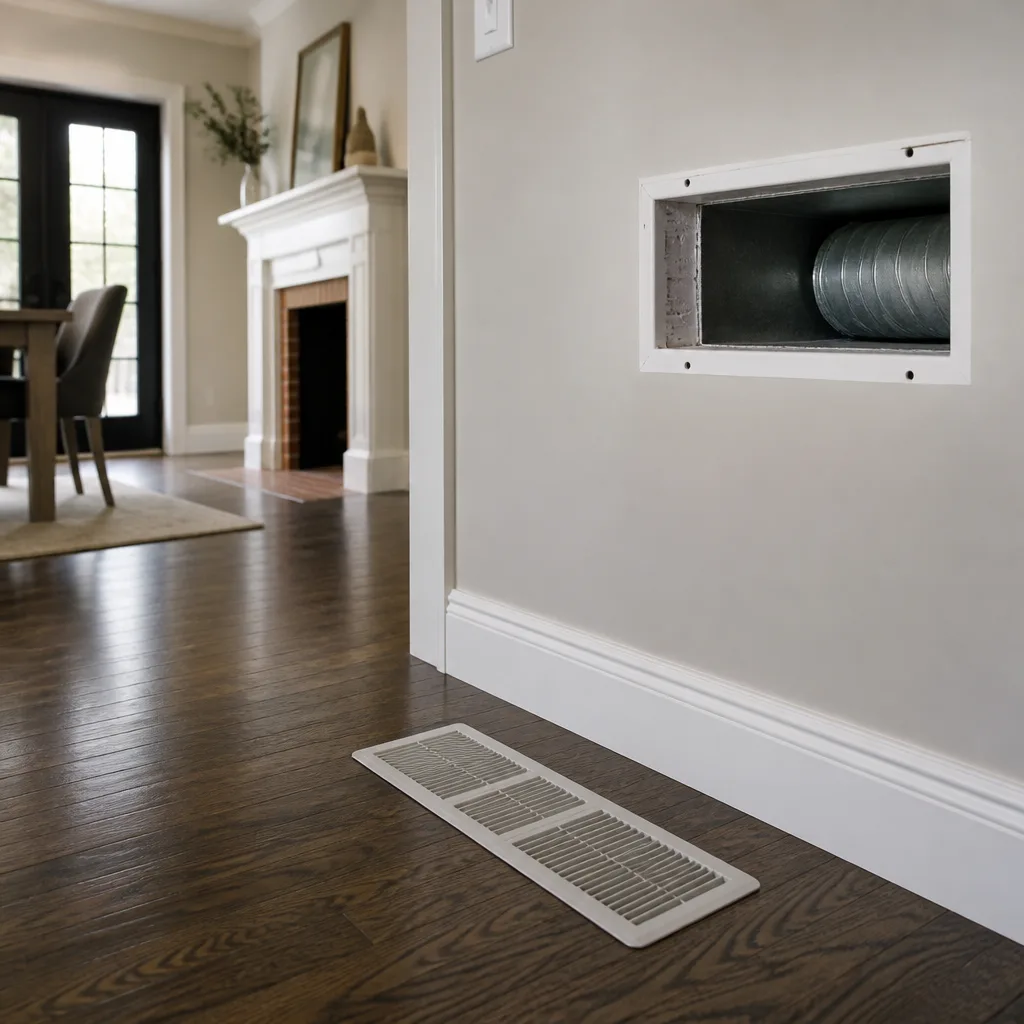 Whole-home duct cleaning
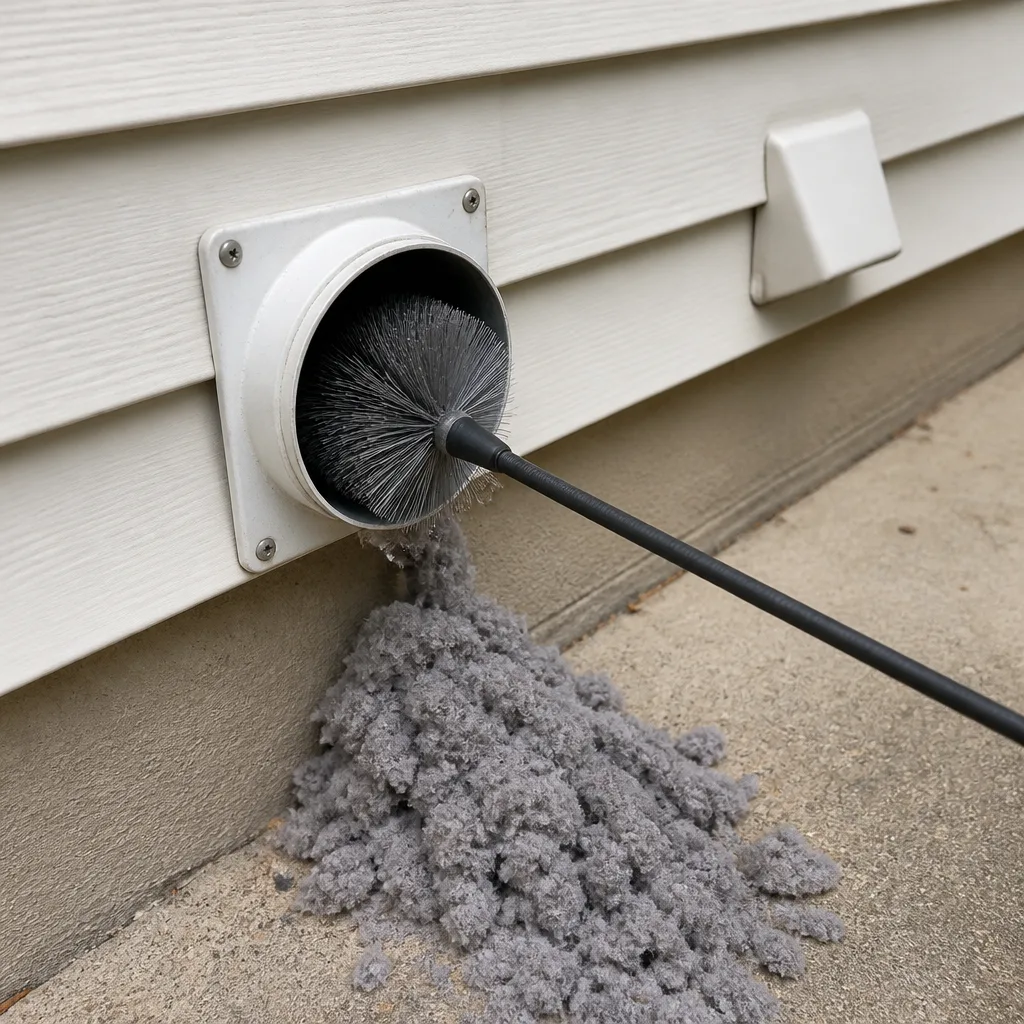 Dryer vent cleaning
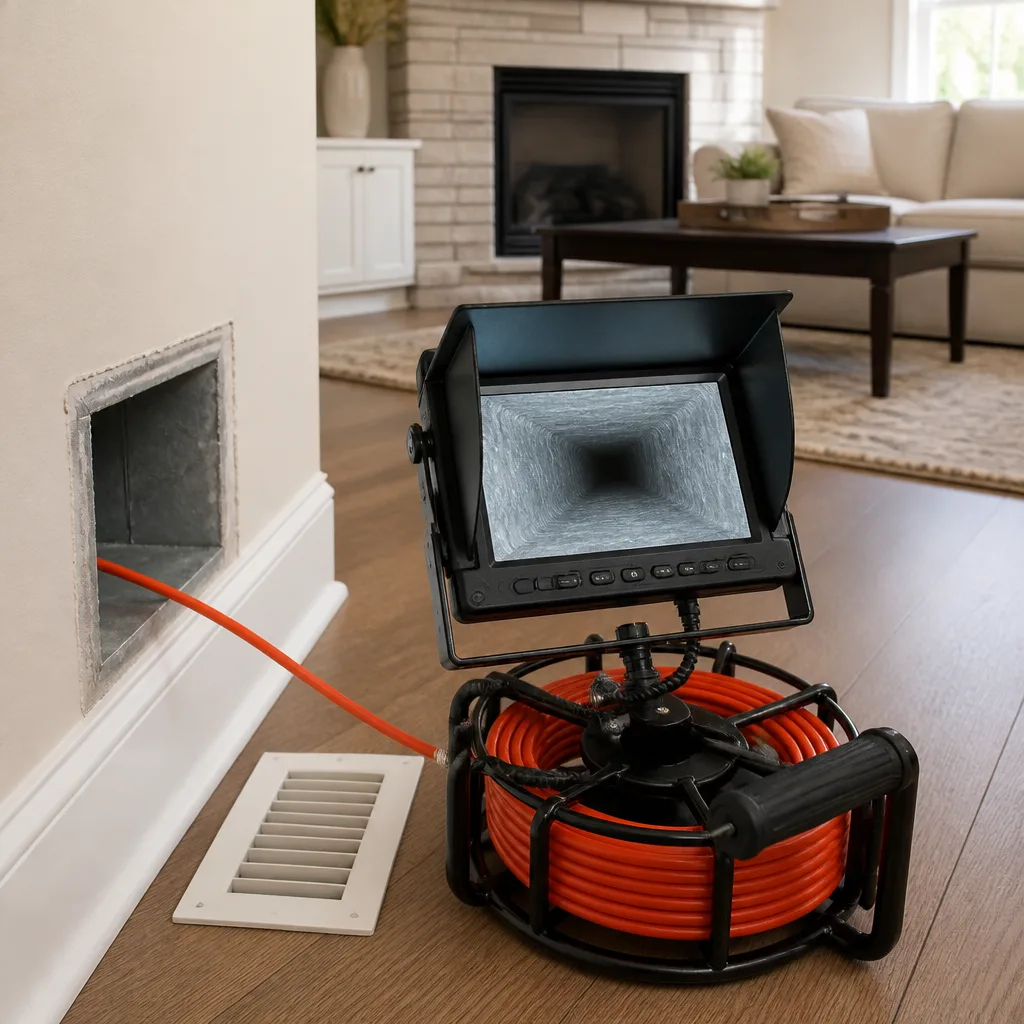 Camera inspection
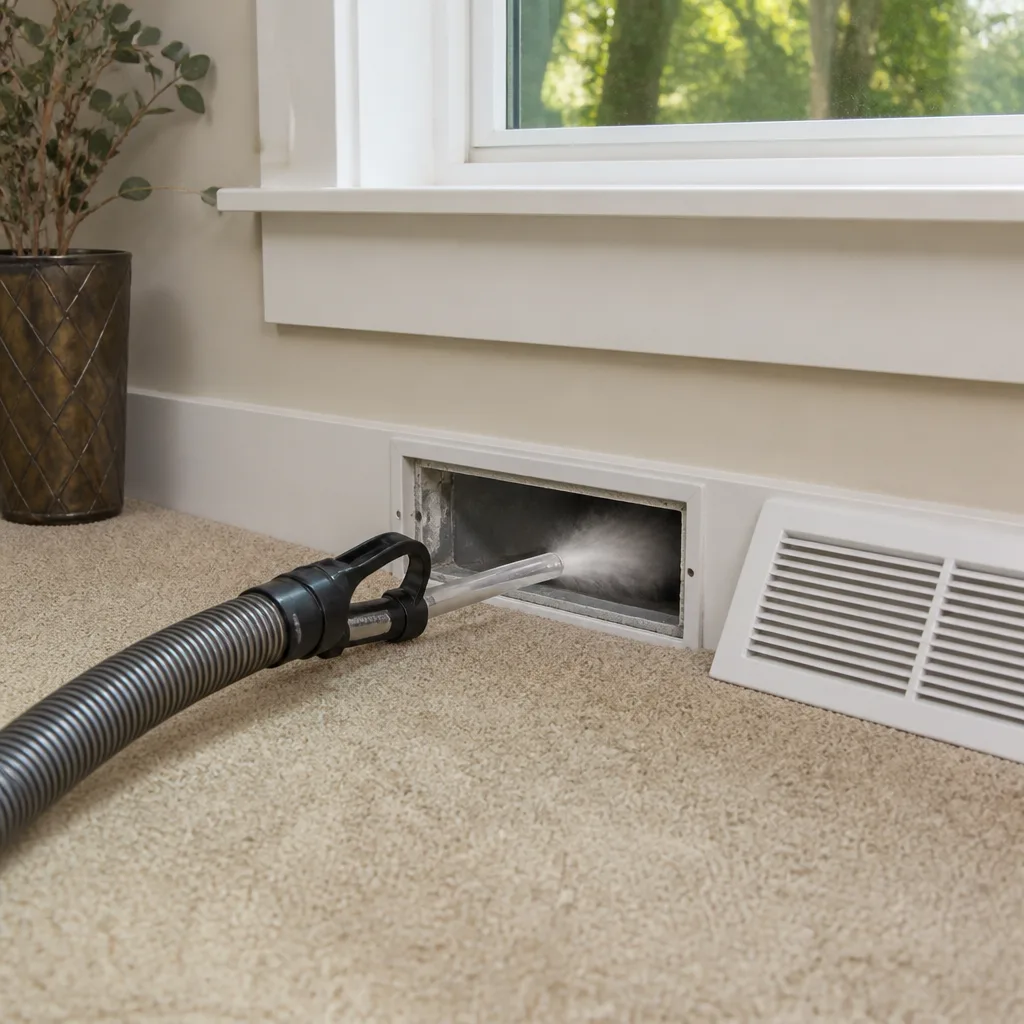 Sanitizing & deodorizing
Whole-system duct and dryer vent check with before-and-after photos - you see exactly what came out of your vents
That "$99 whole-house special" is a bait ad - the real number appears once they are in your hallway, or the "clean" is a shop-vac at the register. We photograph the inside of your ducts before and after instead.
Air Duct Cleaning Troubleshooting: Common Problems and How to Fix Them
A clogged supply duct in one zone can trick a homeowner into replacing a perfectly functional HVAC unit, a $6,000 mistake that a $300 duct inspection would have prevented. We’ve watched it happen in Downey more times than we’d like to count. This guide walks through the Air Duct Cleaning Warning Signs: A Downey Homeowner’s Reference Guide that point to ductwork trouble, the root causes behind them, and what a proper diagnostic process looks like before any cleaning begins. By the end, you’ll know whether your problem is a filter swap, a duct repair, or a full-system cleaning.
Styles & brands we work with
- Whole-home duct cleaning
- Dryer vent cleaning
- Camera inspection
- Sanitizing & deodorizing
Quick Answer
The most common air duct problems fall into five categories: debris accumulation, duct leakage, disconnected or collapsed flex duct, microbial growth, and return-air imbalance. Each produces distinct symptoms, from uneven room temperatures and weak airflow to musty odors that return within weeks of a basic cleaning. A proper fix starts with identifying which category you’re dealing with, because the solution ranges from changing a filter to sealing leaks to full duct replacement.
Table of Contents
- Symptom-to-Cause Mapping: What Your HVAC Is Trying to Tell You
- Filtration Problem or Duct Contamination? How to Tell the Difference
- Why Musty Odors Come Back After a Basic Cleaning
- Duct Leakage: The Invisible Efficiency Killer
- When DIY Troubleshooting Ends and a Scoped Inspection Begins
- Dryer Vent Troubleshooting: A Separate but Related Hazard
- Repair or Clean? What the Diagnostic Reveals
- Common Mistakes to Avoid
- When to Call a Professional
- Frequently Asked Questions
- The Bottom Line
Symptom-to-Cause Mapping: What Your HVAC Is Trying to Tell You
HVAC systems don’t fail silently. They send signals, and the signal almost always points to a specific location in the ductwork. The problem is that most homeowners in Downey read those signals wrong. Here’s the symptom-to-cause map we use on every diagnostic call.
Uneven room temperatures. One bedroom stays hot in August while the living room freezes. The instinct is to blame the thermostat or the compressor. In our experience across Downey homes, the actual culprit is usually a disconnected or collapsed flex duct segment. Flex duct is the flexible aluminum-and-foil tubing that connects the main trunk line to individual registers. It’s held together with zip ties and tape. Over time, especially in attics that hit 130 degrees in a Southern California summer, the adhesive on that tape degrades, and a segment separates. The conditioned air you’re paying for dumps into the attic instead of the bedroom. This is an Air Duct Repair in Downey issue, not a cleaning issue.
Weak airflow from one specific register. If one vent barely moves air while others seem fine, check two things before calling anyone. First, is the damper on that register closed or partially blocked by furniture? Second, is the register face itself caked with debris? If both check out, you’re likely looking at a partial blockage inside the branch duct. We’ve pulled toys, drywall chunks from renovation debris, and even a flattened section of flex duct from inside branch lines.
Spiking utility bills with no change in usage. Your AC works twice as hard when ducts leak. A 20% to 30% duct leakage rate is common in homes built before 2000, and it means a fifth to a third of your conditioned air never reaches the rooms. We’ll cover this more in the leakage section below.
Dust accumulating on surfaces within days of cleaning. This signals either a return-side leak pulling attic or crawlspace air into the system, or a filter that’s doing nothing because air is bypassing it entirely through gaps in the filter slot.
Filtration Problem or Duct Contamination? How to Tell the Difference
Here’s the fastest way to avoid an unnecessary service call: change your air filter before doing anything else. A $12 filter change resolves a surprising number of symptoms. But if the symptom persists after a fresh filter and a week of normal operation, the problem is downstream of the filter, and that means ductwork.
The test is simple and takes two minutes.
- Replace the existing filter with one that’s appropriate for your system. Don’t go heavier than the system was designed for. A MERV 13 filter in a system designed for MERV 8 strangles airflow and creates new problems. Check the existing filter’s rating and match it.
- Clean the register faces. Use a vacuum with a brush attachment on every supply and return register you can reach. Note what comes off. Fine gray dust is normal. Thick, dark, greasy buildup is not.
- Run the system normally for 5 to 7 days. Watch the symptom. Does the weak airflow persist? Is the dust still settling on your television screen by day three? Do you still smell that faint musty odor when the blower kicks on?
If the symptom clears up, it was a filtration issue. If it doesn’t, you have duct contamination or duct leakage. Both are fixable, but neither is fixed by changing a filter. That’s the point where a professional Air Duct Cleaning in Downey with the right diagnostic tools becomes the cost-effective next step, because guessing costs more than diagnosing.
Why Musty Odors Come Back After a Basic Cleaning
This is the most common complaint we hear from Downey homeowners who’ve already paid for a duct cleaning once. The smell comes back. Sometimes within days, sometimes within a few weeks. The reason is that a basic vacuum-and-brush pass removes loose debris but doesn’t address microbial growth that’s adhered to or embedded in the duct lining.
Musty odor in ductwork is almost always biological. It’s mold, mildew, or bacteria colonizing the dust, insulation, or condensation residue inside the ducts. A brush and vacuum remove the food source in some cases. In others, they just disturb the colony and spread spores through the rest of the system. We’ve seen this happen after low-cost cleanings that use residential-grade shop-vac equipment instead of professional systems.
The fix requires two things that a basic cleaning doesn’t provide. First, the growth must be physically removed, which means agitation that reaches the duct surfaces, not just the loose debris. This is where commercial-grade equipment matters. We run Rotobrush and Nikro systems simultaneously, the same category of gear used in environmental remediation settings, because the agitation heads reach what a handheld brush can’t. Second, the surfaces need an EPA-registered antimicrobial treatment designed for HVAC use. Without that second step, any remaining spores recolonize the moment humidity rises again. In Downey, where summer humidity combines with salt air from the coast, that recolonization happens fast.
We also carry Abatement Technologies air-filtration equipment on this type of job. That’s the same category of negative-air and HEPA filtration gear used in remediation environments, and it’s what prevents the cleaning process itself from contaminating the rest of your home. If a duct cleaning company shows up without enclosed filtration, ask them how they’re keeping the disturbed contaminants out of your living room. The answer matters.
Duct Leakage: The Invisible Efficiency Killer
Debris isn’t the only thing that goes wrong in ductwork. In fact, in terms of energy waste, it’s not even the most expensive problem. Duct leakage is. A typical home in the Downey area loses 20% to 30% of its conditioned air through gaps, disconnected joints, and degraded seals. That’s air you’ve already paid to heat or cool, escaping into an attic or crawlspace where it does nothing.
Visual inspection misses most of it. You can shine a flashlight on a duct joint and see no obvious gap, yet the joint leaks 15 cubic feet per minute under pressure. The only way to quantify leakage is a pressure test. A technician seals off the registers, pressurizes the duct system, and measures how much air escapes. The result tells you two things: whether the leakage rate is worth fixing, and where the worst leaks are likely located.
What you can see from the living space offers clues. Check for these signs.
- Rooms farthest from the air handler are consistently under-conditioned year-round, even in mild weather
- Dust streaks or dark stains around register boots where attic air gets pulled into the conditioned space
- A persistent musty or dusty smell when the system first kicks on, even after cleaning
- Higher-than-expected summer bills in a Downey climate where the AC runs for months, not weeks
Leakage matters for another reason. Return-side leaks pull air from your attic or crawlspace into the system, then spread it through the house. That’s a direct indoor air quality problem. It’s not just wasted energy. It’s attic dust, fiberglass particles, and whatever else is up there, delivered to every room. Duct sealing is a repair, not a cleaning, and it’s one of the services we handle as a full-system provider rather than referring out. The Air Duct Repair in Downey scope covers sealing, segment replacement, and reconnection.
When DIY Troubleshooting Ends and a Scoped Inspection Begins
There’s a real limit to what you can diagnose from the living room. Here are the thresholds we tell homeowners in Downey to watch for. If you cross one, a scoped inspection is the next step, not another DIY attempt.
Visible debris at the register face. If you remove a register and see thick buildup on the inside of the boot, especially if it’s dark, greasy, or fibrous, that indicates the branch line and likely the trunk line are contaminated too. A vacuum from the room side won’t reach it. The system needs professional cleaning with agitation equipment that works from inside the ducts.
HVAC runtime increases of more than 20%. If you track your utility usage, or if your smart thermostat logs runtime, and you notice the system is running significantly longer to hold the same temperature, something changed. That something is usually airflow restriction or leakage. Both are duct problems.
Symptoms that return within days of a filter change. Covered above. This is the single most reliable signal that the problem is downstream of the filter.
Any odor that intensifies when the blower runs. Musty odor that’s present even when the system is idle could be carpet, drywall, or a plumbing leak. But odor that gets stronger when the blower kicks on is coming from inside the duct system. That’s a duct problem, and it needs professional treatment.
One room that never reaches the thermostat set point. If you’ve adjusted dampers, cleaned the register, checked for furniture blockage, and the room still misses by 4 degrees or more, the branch duct serving that room is likely compromised. A scoped inspection with a camera reveals a kink, a collapse, or a disconnection in minutes.
Dryer Vent Troubleshooting: A Separate but Related Hazard
While we’re talking about ductwork, the dryer vent deserves its own troubleshooting lens because the stakes are different. An HVAC duct problem costs you comfort and money. A dryer vent problem can cost you your house. Lint accumulation is the leading cause of dryer fires in the United States, and blocked vents also force dryers to run longer and work harder.
Watch for these symptoms.
- Clothes take more than one full cycle to dry, especially towels and heavy cotton
- The dryer exterior gets unusually hot during a normal cycle
- The laundry room feels humid while the dryer runs
- You can’t feel strong airflow at the exterior vent hood when the dryer is on
- There’s a burning smell during operation, which means immediate cessation of use and professional attention
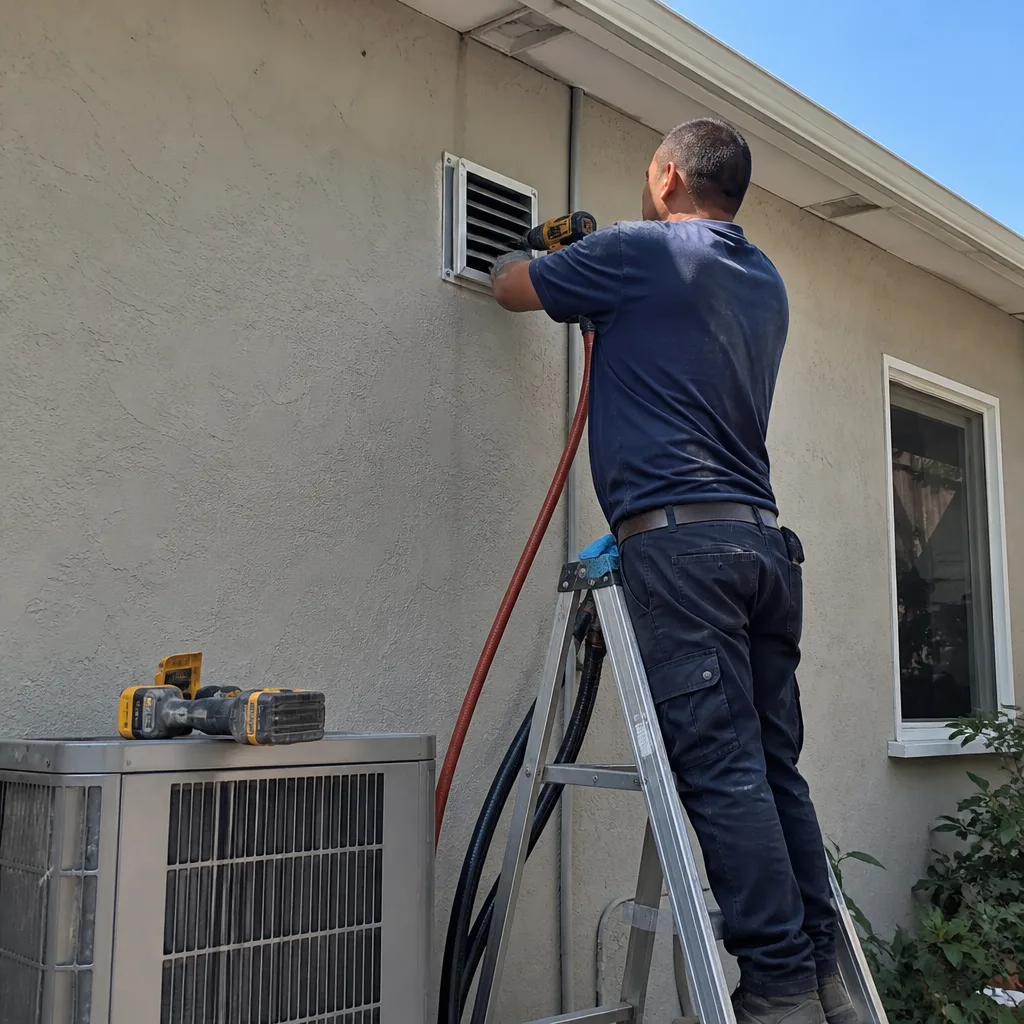
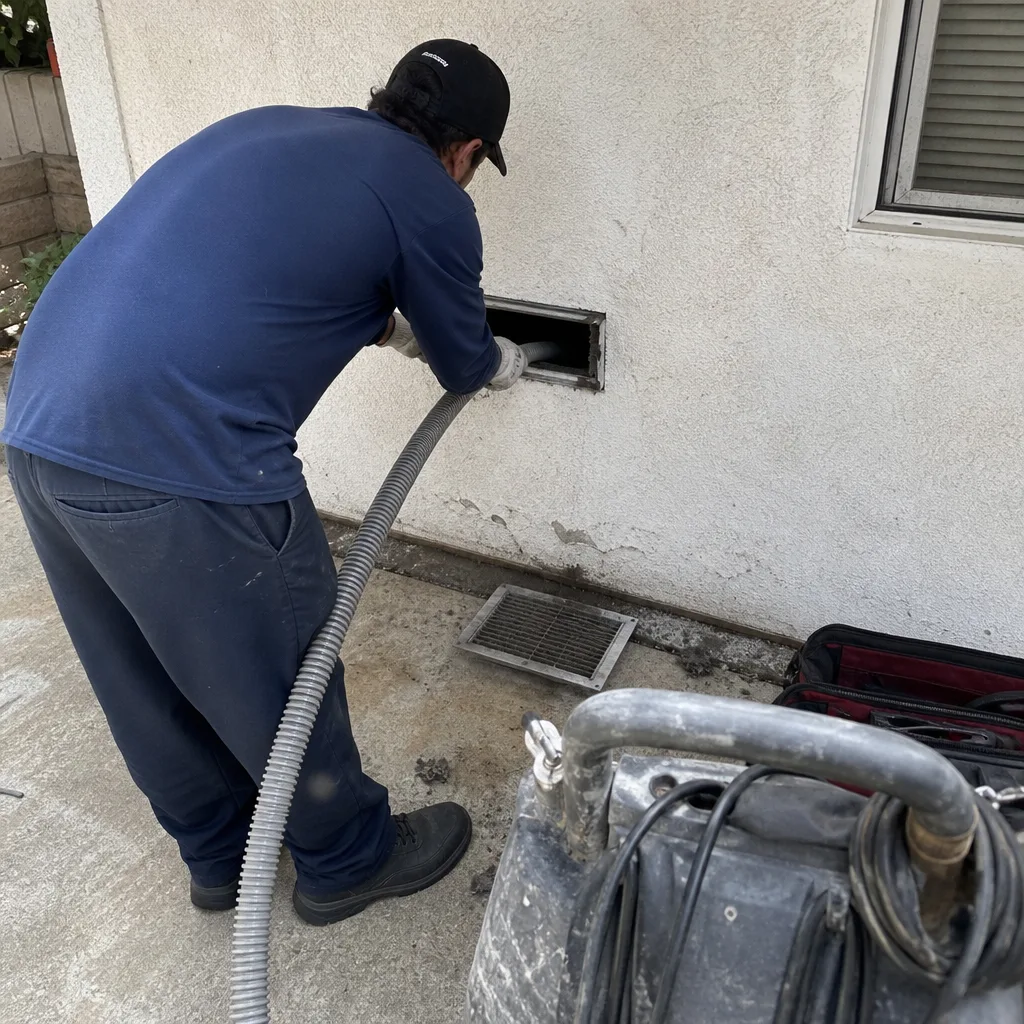
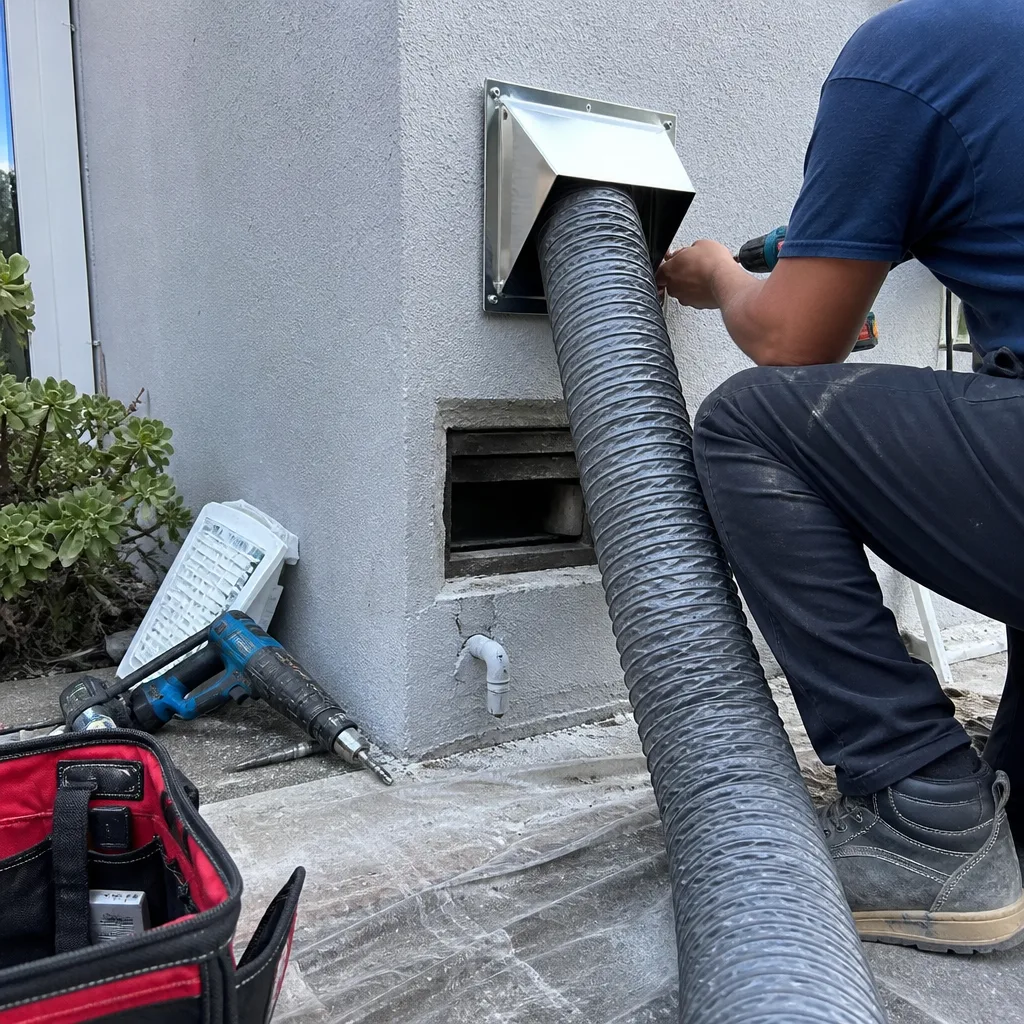
Our Dryer Vent Cleaning in Downey service addresses the full vent run, from the dryer connection through the wall to the exterior termination. Many dryer vents in older Downey homes are long runs with multiple elbows, which makes them lint traps by design. Professional cleaning keeps the vent flowing and keeps the fire risk down. This is not a job a leaf blower or a shop vac from the outside handles properly. The run needs to be cleaned mechanically from both ends.
Repair or Clean? What the Diagnostic Reveals
This is the question that separates a thorough provider from a one-tool crew. Some duct problems are solved by cleaning. Others are solved by repair. Treating one with the other wastes money and leaves the symptom in place.
Cleaning solves: dust and debris accumulation, pet hair and dander buildup, construction debris from renovation, moderate microbial growth on accessible duct surfaces, and odor from accumulated organic material.
Repair solves: disconnected flex duct segments, collapsed or kinked flex duct, leaking joints and seams, missing or damaged register boots, undersized branch lines causing persistent imbalance, and return-side leaks pulling attic air into the system.
Some jobs require both. If your ducts have accumulated 15 years of dust and a supply branch disconnects itself in the attic, cleaning alone won’t restore airflow to that bedroom, and repair alone leaves a contaminated system pushing dirty air through a newly sealed run. A full-system provider handles both in a single visit. That’s why we run Duct Cleaning Downey home as a full-scope operation covering cleaning, repair, and dryer vent service under one roof. No separate contractors, no finger-pointing between vendors, no missed handoffs.
We also service and install Honeywell and Aprilaire air-quality systems. If your home needs filtration beyond what a standard filter slot provides, a whole-home media filter or electronic air cleaner changes the equation. After a proper cleaning, these systems maintain the result. It’s the difference between treating the symptom once and building a longer-term fix for indoor air quality.
Common Mistakes to Avoid
- Replacing the HVAC unit before inspecting the ducts. A struggling compressor is often just airflow starvation from blocked or leaking ductwork. Diagnose before you replace. A $300 inspection beats a $6,000 mistake.
- Using a heavier filter to “solve” a dust problem. A high-MERV filter in a system that wasn’t designed for it chokes airflow and makes the system run longer. The dust problem isn’t fixed by a better filter if the dust is entering through return-side leaks.
- Treating musty odor with air fresheners or fog bombs. Masking the smell doesn’t remove the biological source. The colony keeps growing, and now you’ve added fragrance chemicals to the air you breathe.
- Hiring a duct cleaner who can’t repair. If the technician finds damaged ductwork and can’t fix it, you’ve paid for half a job and you’ll be hiring someone else to finish it. Ask before booking whether the company handles duct repair in-house.
- Ignoring the dryer vent because “it’s a different system.” It’s all ductwork. A blocked dryer vent is a fire hazard, and a single provider handling both means one relationship with one service standard.
- Assuming a visual check covers leakage. You can’t see most duct leaks from inside the house. Pressure testing is the only way to quantify what’s escaping. Visual inspection is a good start, not a complete diagnostic.
- Delaying the fix because “it’s been like this for years.” Duct problems compound. Leaks widen, contamination spreads, and energy waste continues month after month. The cost of the fix doesn’t go down by waiting.
When to Call a Professional
Call a professional when the symptom persists after a filter change, when one room never reaches temperature, when musty odor returns after a prior cleaning, or when visual inspection shows contamination at the register face. Also call when your dryer takes two full cycles to dry a load or when you can’t feel airflow at the exterior vent hood. These are threshold conditions. They indicate a problem that diagnostic equipment is built to find and that DIY methods won’t fix. Air Duct Cleaning from Duct Cleaning Downey offers free estimates in Downey, call (855) 382-4683 to schedule an inspection.
Frequently Asked Questions
Air duct cleaning for a typical single-family home in Downey generally falls between $450 and $900, depending on the number of systems, the extent of contamination, and whether microbial treatment is required. Homes with multiple HVAC units or heavily contaminated systems fall higher. The best way to get an exact quote is to call (855) 382-4683 for a free estimate based on your specific system. A flat price per system should be agreed before work starts, so there are no surprises.
Cheaper quotes usually come from companies that run a basic vacuum pass without full agitation, skip the antimicrobial treatment, and use residential-grade equipment instead of professional systems like Rotobrush or Nikro. The lower price reflects less work and less capable equipment. In many cases, the homeowner ends up paying again a few months later because the odor or the dust problem returns. Ask what equipment the company uses and whether the price includes the full treatment, not just a basic pass, and consult our Choosing the Right Air Duct Cleaning Brand: A Buyer’s Guide for Downey for further guidance.
A reputable company provides before-and-after photos of the duct interiors, taken with the same inspection camera before and after the service. You should see the same duct surfaces, with the contamination visibly gone in the after photos. If a company won’t show you inside your own ducts, that’s a red flag. Ask for photo documentation of your actual system, not stock images.
For most homes in Downey, every 3 to 5 years is the practical interval, assuming no major renovation, no significant water event, and no unusual contamination source. Homes with pets, smokers, or family members with allergies may benefit from shorter intervals. The right answer depends on what the system actually looks like inside, which is what an inspection reveals. Call (855) 382-4683 to have your system inspected and get a recommendation based on its actual condition.
A shop vacuum from the register face reaches only a few inches into the branch duct. The trunk line, the return drop, the plenum, and the interior surfaces of the branch runs are all out of reach. Worse, a DIY pass can loosen debris without capturing it, spreading it through the system and into the living space. Professional cleaning uses enclosed negative-air filtration and agitation equipment that works throughout the entire duct system, not just what you can touch from the vent cover.
They’re separate systems with different conditions and different equipment. Dryer vents carry hot, humid, lint-laden air outward through a small-diameter run, and the primary concern is fire risk from lint accumulation. HVAC ducts carry conditioned air through larger trunk and branch lines, and the primary concerns are contamination, leakage, and airflow restriction. Both need attention, but they’re not the same service and not the same tools. We handle both, because both matter for safety and air quality.
The Bottom Line
Your HVAC system talks. The symptoms you’re noticing, weak airflow, hot rooms, musty smells, climbing bills, all point to specific duct causes that are identifiable and fixable. The trick is reading them correctly before spending money on the wrong fix. A filter change resolves filtration problems, but persistent symptoms mean the ductwork itself needs attention. Cleaning resolves contamination. Repair resolves leakage and disconnection. Both are part of the same system, and both are handled by a full-system provider with the right equipment, the right scope, and the right diagnostic process. Start with an inspection. It’s cheaper than guessing. For more guides & resources, visit our blog.
Written by the team at Duct Cleaning Downey, serving Downey since 2017.
See the difference
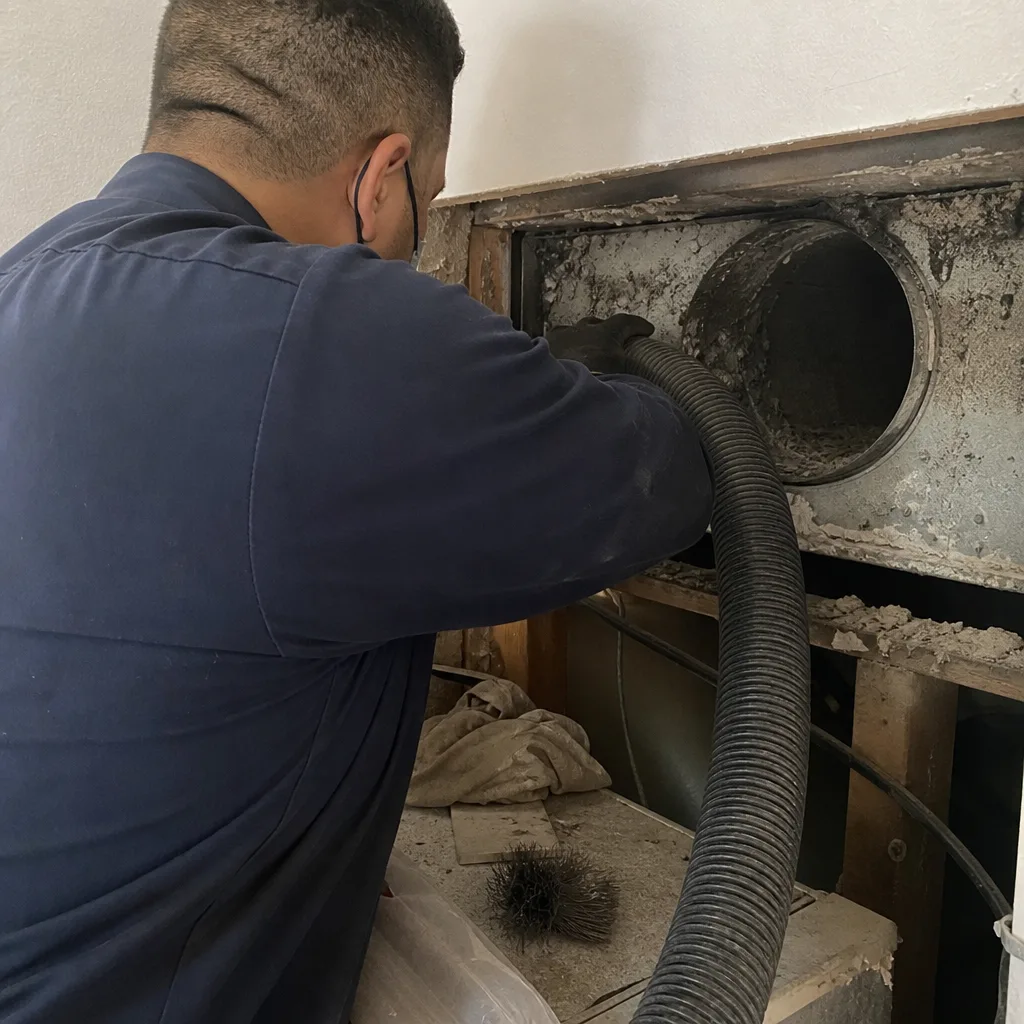 Before
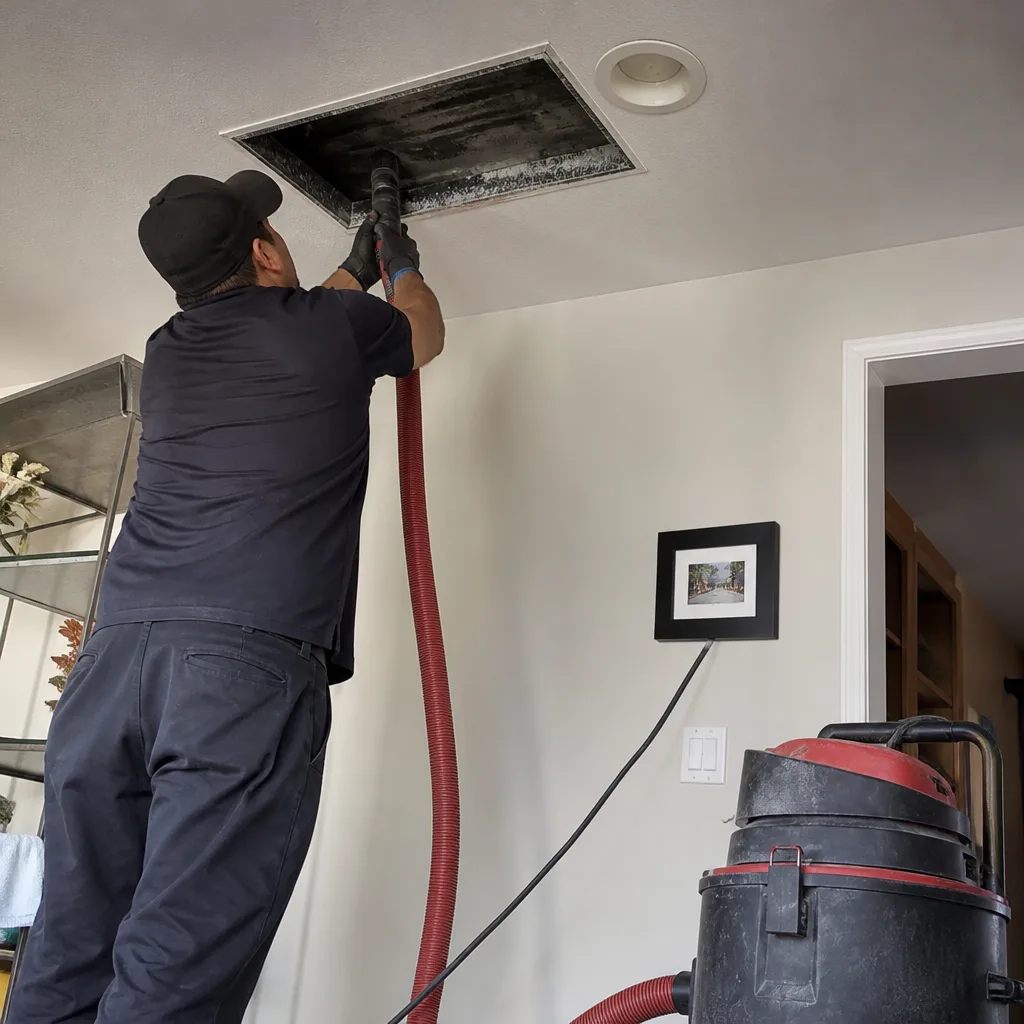 After
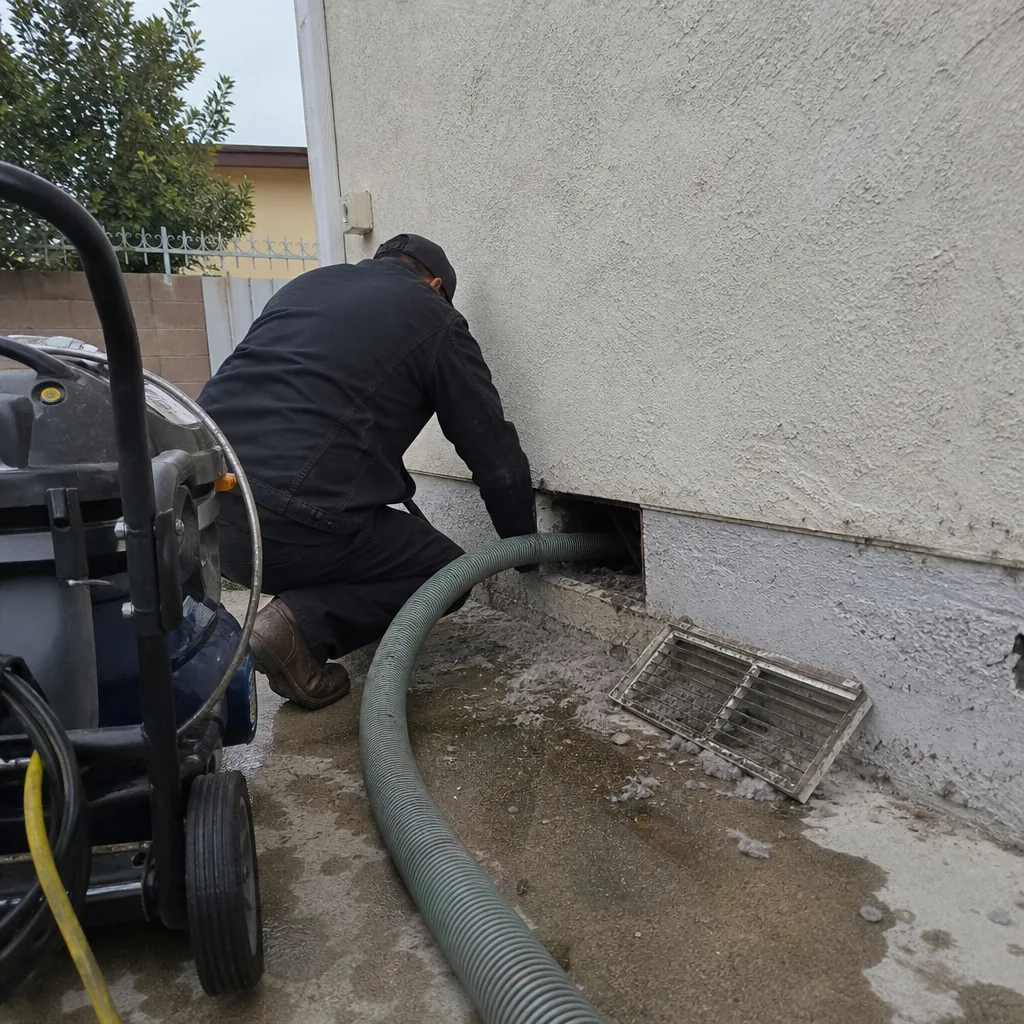 Before
 After
 Before
 After